
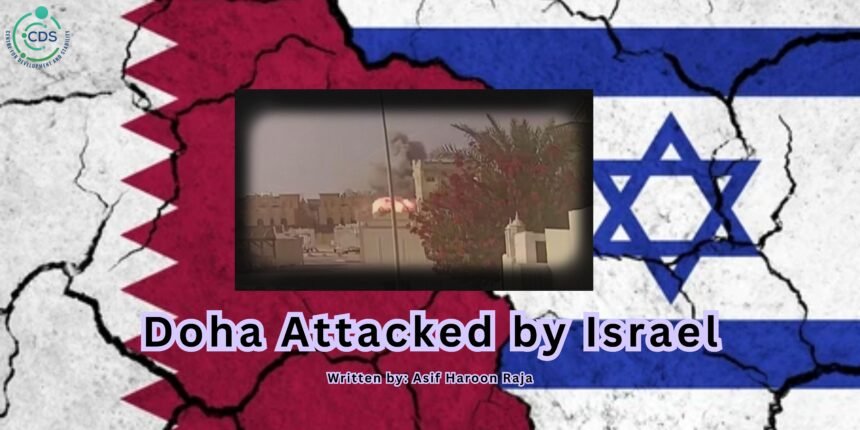

White House Press Secretary Karoline Leavitt fielded a barrage of questions regarding Israel’s air strike in Doha earlier today.
- The author Brigadier (Retd.) Asif Haroon Raja, is a war veteran, defence and political analyst, international columnist, author of five books, and ex-Chairman of the Thinkers Forum Pakistan. He is currently Director of the Measac Research Centre, Patron-in-Chief of the CDS Think Tank, and Administrator of Fact Check. He frequently appears on TV talk shows and delivers lectures on strategic affairs.
- *The views and opinions expressed herein, and any references, are those of the author and do not necessarily reflect the editorial policy of the Centre for Development and Stability (CDS).
Leavitt admitted that the strike did not advance either Israeli or American objectives.
She described Qatar as a “close ally” and added that President Trump “felt very badly about the location of the attack.”

While she reiterated that Trump considered the elimination of Hamas a legitimate goal, she also revealed that Washington had been notified of the strike earlier in the day.
Following the attack, Trump phoned both Prime Minister Netanyahu and the Emir of Qatar, assuring Doha that “such a thing will not happen again on their soil.”
Despite such assurances, the brazen Israeli strike inside Qatar—targeting the Hamas negotiating team—sent shockwaves across the globe.
Although no Hamas leaders were killed, the message was unmistakable: Israel disregards international law, UN resolutions, human rights, and the sanctity of negotiations.
Its obsession with achieving Greater Israel continues to override all other considerations.
Israel’s intentions are transparent: liquidation of Hamas, expulsion or extermination of Palestinians in Gaza, and military occupation of the enclave.
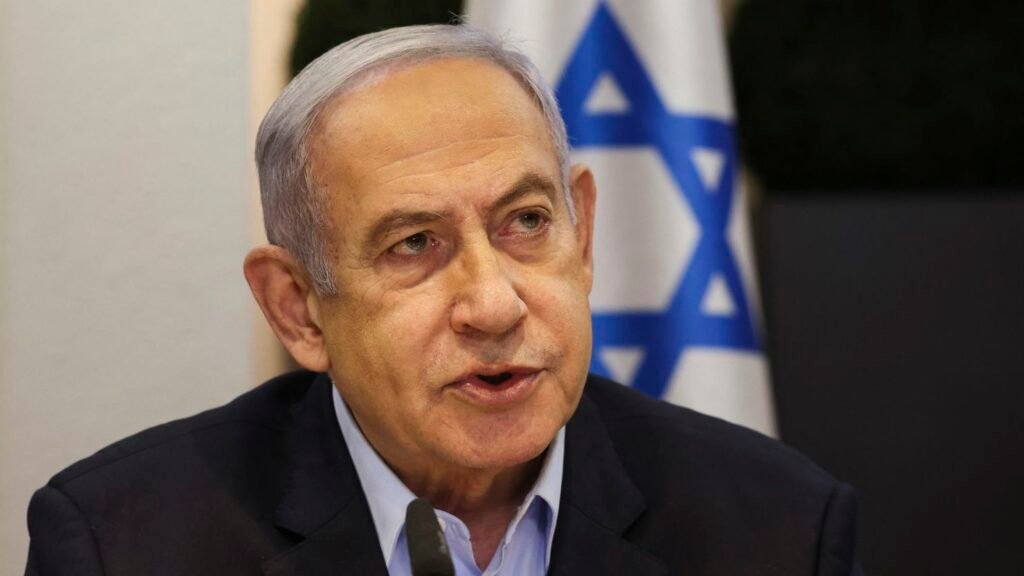
Netanyahu and his war cabinet appear willing to go to any length—even contemplating the sacrifice of Israeli hostages.
Reports of depleted uranium use in Syria and possibly Yemen further underscore this disregard for humanitarian norms.
The genocidal war against the besieged Palestinians has unfolded with full American complicity.
Washington was consulted before Israel expanded operations into southern Lebanon, Yemen, the West Bank, and Syria.
The U.S. even participated directly in Israel’s June offensive against Iran, deploying stealth bombers and bunker busters to hit nuclear facilities.
Every act of Israeli barbarity has carried American approval—including the strike in Doha and, most likely, the attack on the Tunis peace flotilla.
Reactions in the Arab world have been muted.

Saudi Arabia and the UAE expressed “deep concern,” and Riyadh even offered resources to Qatar—but neither is likely to act militarily. Qatar itself will eventually reconcile.
The GCC as a bloc, and the OIC as a whole, remain passive, watching Gaza’s destruction from afar. Their rulers, consumed by the preservation of their Sheikhdoms, have lost the will to resist.
The attack also exposed glaring vulnerabilities.
Despite its immense wealth, Qatar lacks a credible early-warning and air defense system capable of intercepting such strikes.
Similarly, the much-vaunted Islamic Military Alliance, formed by Saudi Arabia in 2017 with contributions from 46 Muslim countries, has never been mobilized—neither against the Houthis in Yemen nor to defend Palestinians from slaughter.
Equally perplexing is Washington’s willingness to authorize a strike on Qatari soil.
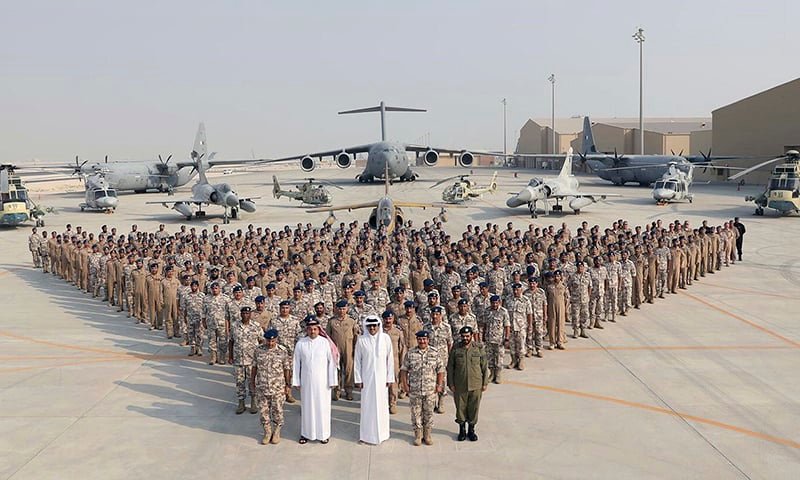
Qatar hosts the largest U.S. CENTCOM base in Doha, and has been at the forefront of Gaza mediation efforts since 2023, playing a crucial role in securing two ceasefires.
It also hosted the Taliban’s political office in 2013 and provided Hamas a safe platform for its leadership.
Despite such services—and despite close personal ties with Trump—Qatar has discovered the same bitter truth known to every American ally: when Israel dictates, Washington obeys.
In conclusion, the Arab League’s silence is telling. Many of its members view Hamas as an obstacle to the Abraham Accords of 2020, which prioritize normalization with Israel and a “one-state solution” over Palestinian aspirations.
Israel’s aggression in Doha may have failed tactically, but strategically, it revealed the impotence of Arab states, the duplicity of Washington, and Tel Aviv’s unrestrained drive toward its expansionist dream.