
The prophets of doom were feeling depressed after seeing Pakistan earning kudos form the world and achieving good results in various fields. They found themselves left with little ammunition to berate the incumbent government and the army.
- The author Brigadier (Retd.) Asif Haroon Raja, is a retired Brig, war veteran, defence security and political analyst, columnist, author of five books, ex-chairman TFP, Patron-in-chief CDS Think Tank, Director Meesakh Research Centre, Chief Election Commissioner Tehreek-e-Jawanan Pakistan, takes part in TV talk shows daily.
- *The views and opinions expressed herein, and any references, are those of the author and do not necessarily reflect the editorial policy of the Centre for Development and Stability (CDS).
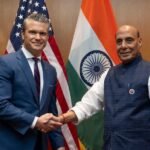
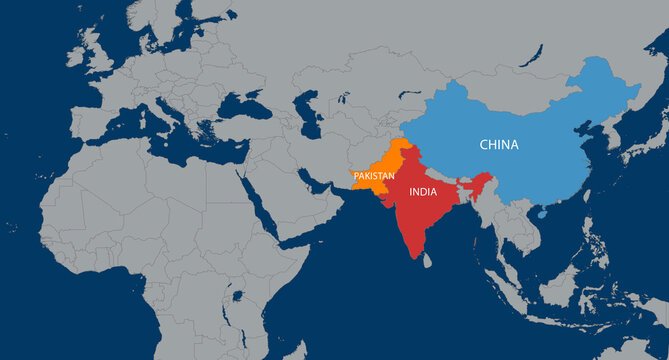
The ten-year defence agreement signed by India and the US has given an opportunity to the chronic detractors to degrade the foreign policy of Pakistan and to mock at the excitement of the ones on power over the soaring Pak-US relationship in the aftermath of Pakistan’s classic victory over India in May. They are holding the rulers responsible for making so many enemies.
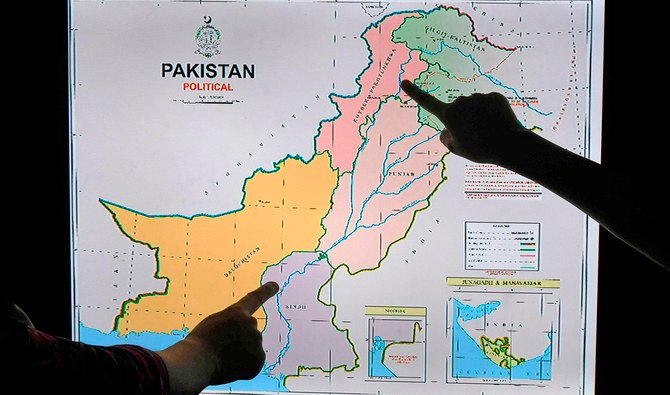
Taking a look at our history, Pakistan never created disputes or claimed territories of its neighbours and always sought peace.
The same was not true for India and Afghanistan, which never reciprocated Pakistan friendship and goodwill , and missed no opportunity to exploit its internal weaknesses and vulnerabilities.
India never reconciled with the existence of Pakistan and garnered support from the former USSR to divide Pakistan in 1971, and then of the USA to harm Pakistan. Afghanistan created troubles for Pakistan at the very outset.
Due to security compulsions, Pakistan had to abandon its nonaligned status and join western pacts for its safety. Security was placed higher than economics.
Alliance with the duplicitous USA didn’t bear desired results. Neither in the 1965 war, or the 1971 war, or the Kargil conflict.

After 9/11, Pakistan has remained a victim of international conspiracies hatched by the Indo, US, Israel, Western, Afghan nexus with the sole aim of denuclearizing Pakistan and making it a client state.
They have tried all possible options in the last 25 years, but failed to achieve their core objectives. They are still continuing to derail Pakistan through proxy and hybrid war, diplomatic and economic war, and a three front threat.
Who is defeating the conspiracies, dangerous plans and keeping a horde of enemies at bay?
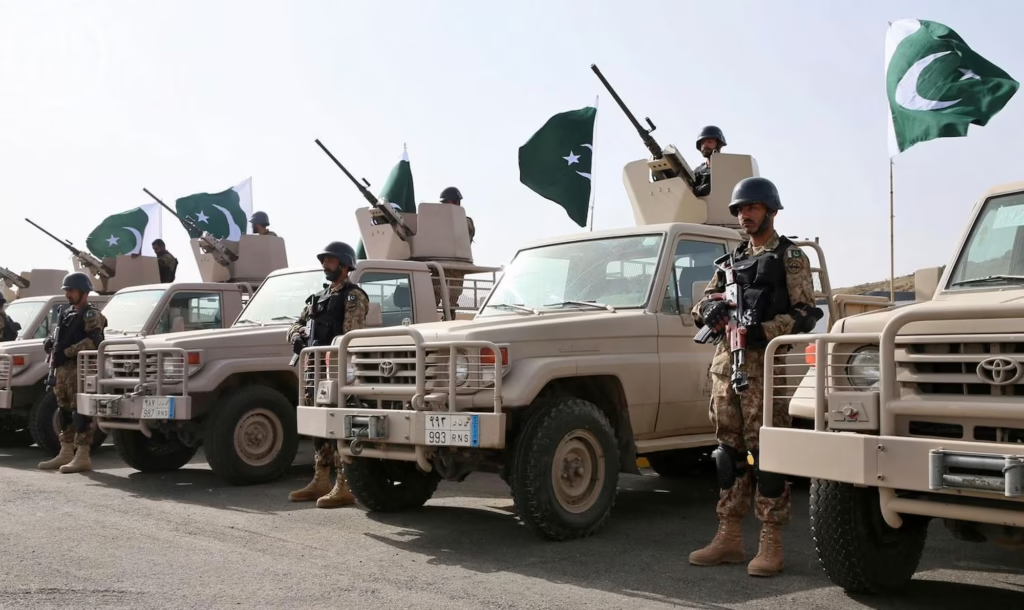
The Pak armed forces, led by the Army and the ISI, whose steely trunks couldn’t be breached.
The current threat is not bigger than the one Pakistan faced from 2001 to Aug 2021. During that period, there were military contingents from 48 countries led by the USA and NATO, and substituted by six powerful intelligence agencies operating from Afghanistan, with no dearth of resources.
The US has inked half a dozen high profile strategic agreements with India during the 20-year war on terror, including the current one signed in 2005, extended in 2015, and now extended again.
Did all those defence agreements impacted Pakistan’s security? If not, why should this old pact impact Pakistan, especially when it is China centric?
So why the alarm bells? So far, the US hasn’t issued any anti-Pakistan statement. It will therefore be premature to draw a conclusion that the situation has reversed to pre 7 May 2025.
Pakistan fought all the wars and conflicts with India on its own, and also faced the threats of combined forces in Afghanistan during the war on terror single-handedly.
Today, things are much better for Pakistan and it stands on a much stronger wicket than ever before. It is rapidly transforming into a hard State, and it demonstrated its strength in the recent Doha and Istanbul talks.
Both India and Afghanistan have been taught a lesson, one by one. With China as its strategic partner, Saudi Arabia as the defence partner, Pakistan can handle the twin threat effectively, and is well-prepared to take on the challenge.
So, let’s not convert light into dark and see the brighter side of the picture. It is easy to shoot arrows of criticism, merely to belittle and undermine our civil and military leadership for the purposes of political point scoring, or trying to become peacetime Napoleons, rendering so-called counselling, and that too by spent cartridges.
What we should be doing as responsible citizens is to not only suggest ways and means to tackle multiple internal and external challenges, but also play our part in removing the societal divides, forging unity and presenting a unified front.
We should be advising and admonishing the trouble makers, spoilers, detractors, facilitators of Khawarijs and anti-peace elements, rather than lambasting the ones trying to eliminate the scourge of foreign sponsored terrorism at the cost of their lives. It is high time for us to correct our priorities, by placing Pakistan higher than all other interests.
‘Pakistan Sub Kuch Hai; Pakistan Nahi Tou Kuch Bhi Nahi’, should be our motto, and not the other silly motto sung by one political party.