


Pakistan gained independence under the inspiring leadership of Quaid e Azam Muhammad Ali Jinnah on August 14, 1947 on the basis of Islam. Although it was prescribed in the 1956 Constitution that the country will be governed by the injunctions of Quran and Sunnah, practically western democracy, British Westminster parliamentary systems were practiced.
- Doctrine of Necessity
- Decay in Politics
- Lackadaisical Approach of Judiciary
- Rot in Judiciary
- Politicisation of Judiciary
- Constitutional Benches
- 27th Constitutional Amendment in the making
- Opposition to Magistracy
- An Analysis of 27th Constitutional Amendment: Background and Rational Justification
- Towards an Era of Institutional Maturity
- Need for a Constitutional Court
- Judicial Tenure and Transfers
- Revamping the Election Commission
- Restoration of Limited Executive Magistracy
- Educational Reform and National Cohesion
- Revisiting the NFC Award
- Review of Article 243
- Conclusion: Reform for Stability, Not Power Redistribution
- The writer is a retired Brig, war veteran, defence security and political analyst, columnist, author of five books, ex-chairman TFP, Patron-in-chief CDS Think Tank, Director Meesakh Research Centre, Chief Election Commissioner Tehreek-e-Jawanan Pakistan, takes part in TV talk shows daily.
- *The views and opinions expressed herein, and any references, are those of the author and do not necessarily reflect the editorial policy of the Centre for Development and Stability (CDS).
The judicial system governed by Anglo-Saxon laws had inherent flaws, which were not doctored to suit the aspirations of the people of Pakistan.
The first democratic era was consumed in palace intrigues of the two GGs, resulting in the change of seven PMs. This era saw the rise of provincialism, feudalism and elite capture.
Doctrine of Necessity
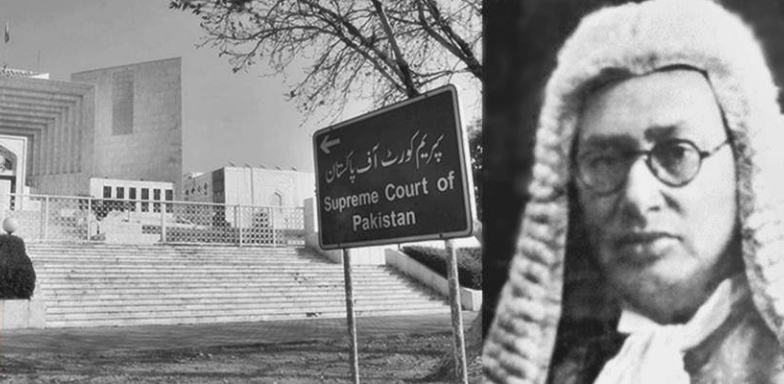
Pakistan’s judicial system received the first blow when the Chief Justice of Pakistan (CJP) Munir Ahmed committed the original sin in 1954. At the behest of the then Governor General (GG) Ghulam Muhammad, he overturned the Sindh High Court judgement, declaring the act of GG unconstitutional and restoring the Constituent National Assembly of PM Khawaja Nazimuddin.
On Oct 7 , 1958, under the doctrine of necessity, CJP Munir and legal wizard Sharifuddin Peerzada legalised President Iskandar Mirza’s illegal acts of dissolving the assemblies, abrogating the 1956 Constitution, declaring martial law in the country and appointing governors in the four provinces.
A similar action was taken on 28 Oct 1958, when Gen Ayub Khan sacked President Mirza, sent him into exile in London and seized power. Ayub Khan wore the hats of President and Martial Law administrator. After enforcing the 1962 Constitution framed by justice Cornelius, he imposed a presidential system. His ten-year rule is acknowledged as the golden rule of Pakistan during which massive reforms and developments took place.
Gen Yahya Khan’s illegal act of declaring martial law in March 1969 after the resignation of Ayub Khan, was legalised by the Supreme Court under the same doctrine of necessity, but was later declared illegal after Yahya Khan was removed from power in Dec 1971.
Doctrine of necessity was applied after every military takeover (Gen Zia in 1977, and Gen Musharraf in Oct 1999).
After each military takeover, provisional constitutional order (PCO) judges were appointed. The judiciary remained closely aligned with the military establishment, and the two entities earned the name of holy cows.
Decay in Politics

Politics and state institutions began to decay and the economy nosedived during the third democratic era. Ethnic and sectarian tensions heightened in the 1990s and terrorism raised its ugly head after 9/11.
Lackadaisical Approach of Judiciary
In the three major army operations launched against TTP in Swat, Bajaur and South Waziristan in 2009, the Army achieved its objectives, but the civil administration and the law courts lagged behind and failed to do their bit. 4000 terrorists arrested by the combat soldiers during the firefight were released by the courts on the plea of lack of evidence.
After another operation in North Waziristan in June 2014 and the dastardly terror attack in the Army Public School in Peshawar on December 16, a 20-point consensus National Action Plan was made to root out terrorism. The reform of the judiciary was one of the important points and it was given 2-year time to remove its inequities. Military courts were set up to expedite convictions and punishment of terrorists.
Rather than carrying out reforms, terrorists sentenced to death or undergoing death sentences were released by the court out of political expediency. No judicial reforms were done even after the second two-year extension. Their lackadaisical approach strengthened terrorism.
Rot in Judiciary
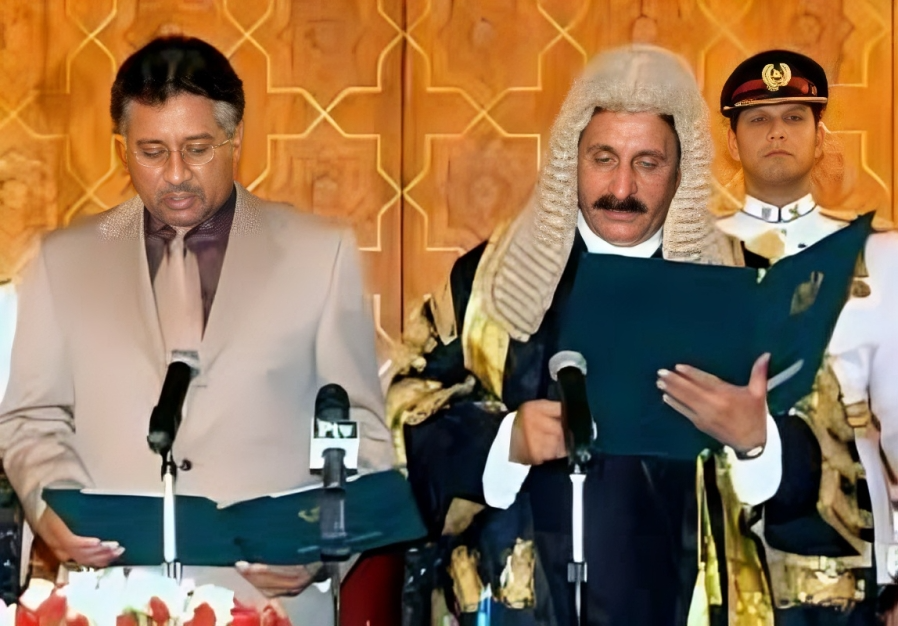
The rot in the judiciary had started during and after the lawyers movement in March 2007 against President Musharraf after he sacked CJP Iftikhar Ch. The countrywide movement was launched for the restoration of CJP and for the independence of the judiciary.
On his restoration in March 2009, CJP Iftikhar became media savvy and he glorified himself by introducing the concept of suo moto actions. Battle lines were drawn between the higher judiciary and the executive, and their confrontation heated up the political temperature.
Politicisation of Judiciary
CJP Saqib Nisar allied with PTI and Lt Gen Faiz Hamid deeply politicised the judiciary. His judicial malpractices, including the concept of like-minded judges in the apex court and high courts, were followed up by his successors Asif Saeed Khosa, Azmat and Farooq Bandial. The cult culture, spawned by Imran Khan, brewed up in 2011 peaked in 2017/18.
Although CJP Faiz Essa tried to bring some reforms and his successor CJP Yahya Afridi is doing the same, the trail of like-minded judges headed by justice Mansour Ali Shah are vitiating the judicial atmosphere.
Infighting among the Supreme Court judges and the Isbd High Court judges, divided the higher judiciary for the first time on the basis of political affiliations, which has damaged the reputation of the judiciary.
Constitutional Benches
Backlog of pending cases in the higher courts mainly because of wastage of time on constitutional matters and trend of filing petitions, impelled the Govt to introduce the 26th Amendment in the Constitution, which paved the way for the establishment of Constitutional Benches. It has given rise to friction between the supreme court judges and the constitutional benches.
The initial aim was to create constitutional courts at supreme court and high courts levels, but due to the stiff stance of the opposition parties, the Govt had to contend with supreme court constitutional Benches .
27th Constitutional Amendment in the making
To remove this anomaly, and to also carry out some essential amendments in the 18th Amendment, the Govt, which now enjoys a comfortable two-thirds majority in the lower house, and is three votes short in the Senate, has decided to table the 27th Amendment.
The PPP and other allies (MQM, ANP, IPP and BAP) have lent their support, although PPP has reservations on matters related to the 18th Amendment . If JUI-F agrees, the deficient votes will be filled.
Apart from overcoming the weakness of constitutional benches, the other purpose of the new amendment is to revisit the 18th Amendment which has fault lines. It has been decided by the policy makers to restore the magistracy system, shift education from provinces to the federation in order to standardise it at the national level, revamp Elections Commission, and to reevaluate NFC Award.
PTI and other opposition leaders are in a state of shock and are alleging that the military establishment had manipulated it. They are provoking PPP that the amendment will give a deathblow to the 18th Amendment and provincial autonomy.
Opposition to Magistracy
There is a school of thought which says that after a long winter the Pakistan Administrative Group (Ex DMG) has managed to get into the sun as the Executive Magistracy gets restored through the 27th Amendment.

They quote Justice A. R. Cornelius , who in the 1960s had done an exhaustive study and had recommended separation of the judicial and the executive powers. He was strongly of the view that the office of the Deputy Commissioner that had concentrated the municipal, judicial, education, health, finance etc at district level had turned that office into a despot.
The 1973 Constitution had also recommended separation of the executive and judicial powers, but those were ultimately separated in 2001 by the Musharraf regime which gave the concept of devolution of powers.
The incumbent Govt is poised to undo that and restore the colonial era DC office that in this age is anachronism.
An Analysis of 27th Constitutional Amendment: Background and Rational Justification
The debate surrounding the proposed 27th Constitutional Amendment signifies an important evolution in Pakistan’s constitutional and institutional journey. It reflects that Pakistan’s governance framework is gradually moving away from structural expansion toward institutional refinement — a transition from creation to consolidation.
Towards an Era of Institutional Maturity
Following the phases of decentralization and judicial reforms, the national focus is now visibly shifting toward enhancing performance, accountability, and constitutional coherence. The proposed reforms appear to be driven not by the urge to redistribute power, but by the desire to improve the functionality and synergy of state institutions.
Need for a Constitutional Court
The establishment of a ‘Constitutional Court’ emerges as a logical and timely step. Its creation would ensure that constitutional disputes are adjudicated swiftly, clearly, and with specialized focus. This reform would allow the Supreme Court to concentrate on its core appellate functions, reducing its workload and enabling more consistent jurisprudence. Global models testify that such courts enhance constitutional interpretation and stabilize the legal system.
Judicial Tenure and Transfers
If the transfer and tenure of judges are organized on structured and transparent lines—similar to the civil service—it could minimize perceptions of favoritism, group influence, and discretionary dominance. Fixed tenures and periodic transfers would not weaken judicial independence; instead, they would institutionalise it, strengthening transparency and integrity.
Revamping the Election Commission
The appointment of the ‘Chief Election Commissioner’ has repeatedly fallen prey to political stalemate, damaging the credibility of the electoral process. Introducing clear timelines and a neutral mechanism for nominations could decisively prevent recurring deadlocks and restore public trust in the electoral framework.
Restoration of Limited Executive Magistracy
Reconsidering the limited restoration of executive magistracy powers also holds merit. Their previous abolition resulted in minor cases being directly routed to the courts, overburdening an already stressed judicial system. Reviving these powers under strict oversight could revive local-level dispute resolution and ensure speedy justice.
Educational Reform and National Cohesion
The Single National Curriculum represents a visionary reform aimed at standardizing education, bridging class-based divides, and reinforcing national harmony. A unified curriculum is essential for promoting civic consciousness, national identity, and equal educational opportunity across socio-economic strata.
Revisiting the NFC Award

Re-evaluating the NFC Award has become a pragmatic necessity. Weak provincial tax collection, flaws in the population-based formula, and federal fiscal pressures demand a balanced reassessment. This is not intended to dilute provincial autonomy, but to promote fiscal balance and financial sustainability through fair and rational distribution of resources.
Review of Article 243
The proposed review of Article 243 is both constitutionally justified and strategically essential. Modern warfare has evolved into a multi-domain reality—encompassing cyber, space, information, and kinetic dimensions. In this environment, synergy, jointness, and unity of command and execution have become indispensable. Constitutional clarity on these aspects is vital for national defense and institutional alignment.
Conclusion: Reform for Stability, Not Power Redistribution
In essence, the 27th Constitutional Amendment does not seek to alter the balance of power but to enhance the efficiency, harmony, and credibility of Pakistan’s constitutional order. Its spirit is not revolutionary but reformative — aimed at stability, coherence, and institutional functionality.
By aligning Pakistan’s governance framework with modern administrative and strategic realities, these reforms can strengthen the federation, ensure justice, and fortify national unity. The true purpose of this amendment is to make the state institutions function with greater responsibility, balance, and precision — the hallmarks of a mature democracy.