
Life is a jigsaw puzzle that cannot be fully understood or explained in its true essence.
- The writer is a retired Brig, war veteran, defence security and political analyst, columnist, author of five books, ex-chairman TFP, Patron-in-chief CDS Think Tank, Director Meesakh Research Centre, Chief Election Commissioner Tehreek-e-Jawanan Pakistan, takes part in TV talk shows daily.
- *The views and opinions expressed herein, and any references, are those of the author and do not necessarily reflect the editorial policy of the Centre for Development and Stability (CDS).
Muslims and Christians both believe in the oneness of Almighty Allah and in the Day of Judgment. The former draw guidance from the Qur’an — which they consider a complete code of life and a guidebook for humanity — and from the Ahadith of the Holy Prophet Muhammad (peace be upon him). The latter believe in Jesus (Prophet Isa, peace be upon him) and the Bible.
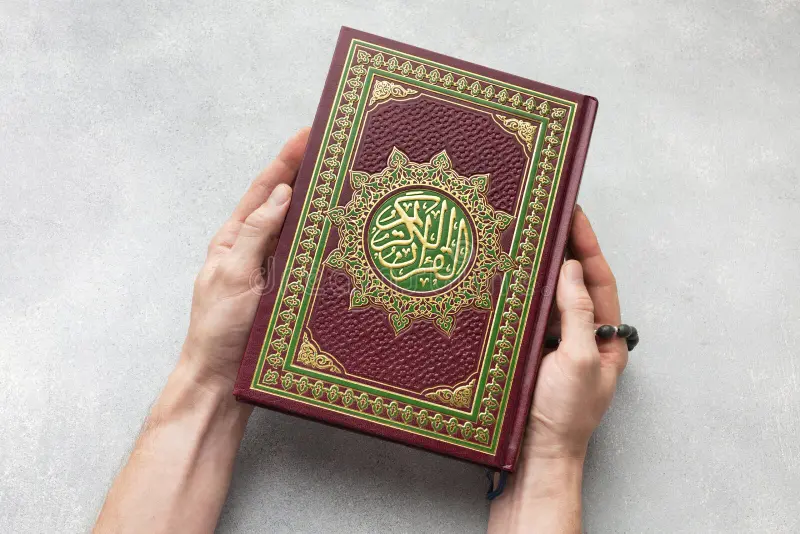
The Qur’an remains in its original form, unaltered since its revelation, whereas the Bible has undergone several revisions by both Catholics and Protestants. All divine books preach peace, amity, and virtuous living, clearly spelling out the do’s and don’ts for human conduct.
In the Qur’an, Allah has bestowed upon human beings the title of Ashraful Makhlukat — the noblest of all creations — and appointed them as His vicegerents (Naib). Yet, He did not decentralize certain aspects of existence: sustenance (Rizq), livelihood (Rozi), health and illness (Shifa o Beemari), honor and disgrace (Izzat o Zillat), fame and infamy (Shuhrat o Ruswai), and life and death (Zindagi o Maut) remain solely under His divine control.
Allah is immortal and all-knowing; He comprehends what we mortals cannot.
The believers, guided by faith, hold firm conviction in Allah and in His prophets — despite never having seen or heard them. They believe that this world is a temporary abode, a testing ground, and that the eternal life hereafter will be one of reward and retribution — heaven for the righteous and hell for the sinful.
The Hindus believe in a pantheon of man-made deities, while atheists deny the very existence of God.
A large segment of humanity today — the so-called liberals and secularists — identify themselves as moderates or enlightened souls, viewing others as orthodox relics of the medieval age. They believe in living each day to the fullest, if they can afford it, and attribute their success to hard work alone, denying the role of divine providence.
The age of great philosophers, who once shaped human thought and challenged religious doctrines through logic and rationalism, is over. Though they questioned belief systems and dogmas, they failed to offer enduring solutions suited to humanity and governance.
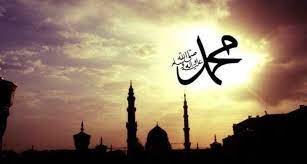
It is widely acknowledged that Prophet Muhammad (peace be upon him) was the finest human guide, and that his Khilafat-e-Madina remains the best model of governance and justice.
Let us reflect upon some hard realities of life.
You did not come into this world by your own will, nor did you choose your parents, your home, or your faith. You did not live exactly as you wished, marry whom you desired, or depart this world when you wanted. You moved from place to place, your abodes kept changing, and you could never freeze the moments of happiness that soon became distant memories. The circle of friends kept evolving, and at every stage, life confronted you with new challenges.

Joys and sorrows, fortunes and misfortunes — all transient — were never within your control. Happiness and contentment, anxiety and despair — these arose from circumstances beyond your command. You never knew what the next moment held. Time flowed like a relentless river, never pausing for anyone. You leapt from the crib to childhood, from youth to middle age, and finally to old age — until the inevitable end.
Every human being opens a book at birth, upon whose pages the events of life are inscribed. Each person is judged by the pattern of deeds written in that life story — a record further maintained by the angels Munkar and Nakir, who note every act of virtue and vice.