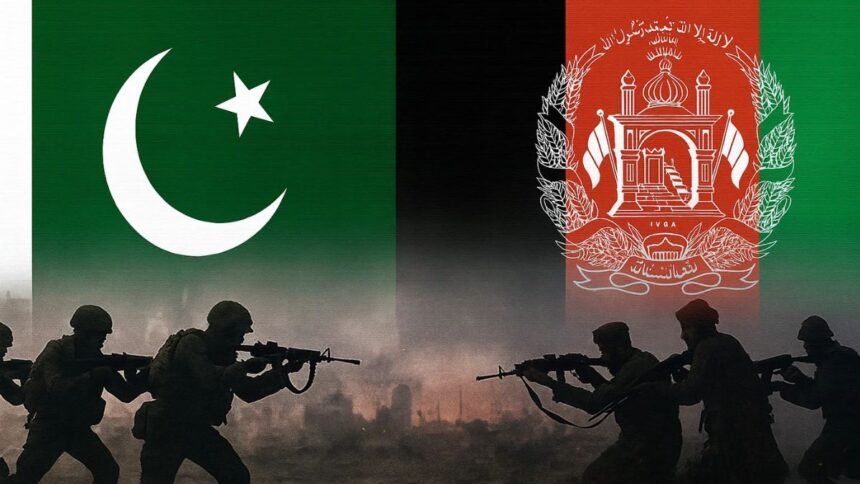

The recent collapse of talks between Pakistan and the Taliban-led government of Afghanistan marks a troubling development in an already volatile regional security landscape. South Asia remains entangled in a complex web of cross-border militancy, great-power competition, and fragile post-conflict governance. Since the Taliban’s return to power in Kabul in 2021, the Afghan soil has regrettably re-emerged as a sanctuary for anti-Pakistan terrorist outfits, most notably Tehreek-e-Taliban Pakistan (TTP). Despite Islamabad’s consistent diplomatic engagement and its historical support for peace in Afghanistan, Pakistan continues to face the brunt of cross-border terrorism that originates from Afghan territory.
- The writer is a Research Fellow at the Maritime Centre of Excellence (MCE), Lahore. He can be reached at: abdullahrehmanbutt1122@gmail.com.
- *The views and opinions expressed herein, and any references, are those of the author and do not necessarily reflect the editorial policy of the Centre for Development and Stability (CDS).
The chain of events leading to the breakdown of talks is rooted in a steady escalation of violence along the Pakistan-Afghanistan border. Over the past several months, Pakistan’s border provinces, particularly Khyber Pakhtunkhwa and Balochistan, have witnessed a surge in deadly terrorist attacks claimed by or linked to the TTP.
These attacks have targeted both civilians and security personnel, and, according to the National Counter Terrorism Authority (NACTA), 2024 was the deadliest year in over a decade, with more than 2,500 casualties. Early indicators in 2025 pointed toward a worsening trend, with over 300 cross-border incidents traced back to Afghan-based militants.
Pakistan has repeatedly raised this issue at every diplomatic forum. The Ministry of Foreign Affairs, in its statement of 25 October 2025, noted that “terrorist attacks emanating from Afghan soil have become intolerable” and that “Pakistan reserves the right to take all necessary measures to ensure its national security.” In response to escalating cross-border militant attacks, Islamabad initially pursued a diplomatic path to address its security concerns with Kabul. The first round of talks was held in Doha, Qatar, on 18-19 October 2025, where Pakistan and Afghanistan, under the mediation of Qatar and Turkiye, agreed to an immediate cease-fire and a commitment to continue dialogue on counterterrorism cooperation.
Building on that understanding, a high-level Pakistani delegation led by Defence Minister Khawaja Muhammad Asif met Afghan officials in Istanbul on 27-28 October to seek verifiable assurances and a written mechanism to prevent militant activity from Afghan soil. After nearly 18 hours of deliberations, the Istanbul talks ended without agreement. Following the discussions, Minister Asif stated that Pakistan had “shown utmost patience,” but “no nation can allow foreign-based terrorists to repeatedly spill its blood.” His remarks reflected the broader sentiment within Pakistan’s strategic community that the time for verbal promises had passed and that only a tangible, enforceable framework could ensure lasting peace along the western border.
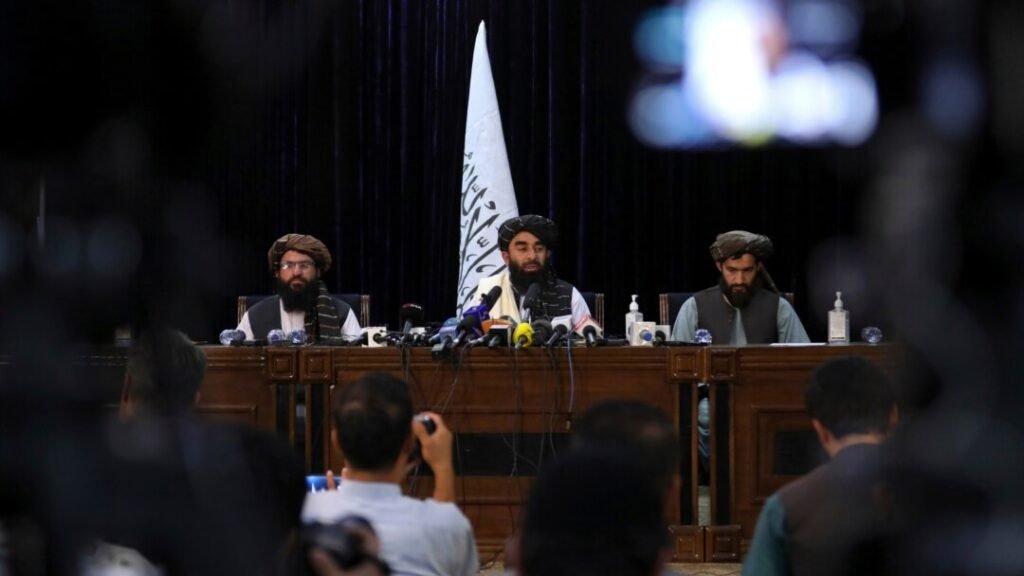
The Taliban government’s continued hesitation to enter a written commitment reveals deeper structural and ideological issues. Pakistan’s primary demand, that Kabul prevent the TTP from using Afghan territory for terrorist activities, directly challenges the Taliban’s internal cohesion. Many within the Taliban movement share ideological and operational linkages with the TTP, particularly through the Haqqani network. This ideological proximity makes any crackdown politically costly for the Taliban regime in Kabul.
Acting Afghan Defence Minister Mullah Mohammad Yaqoob’s comments on 19 October clearly illustrated this mindset. He dismissed Pakistan’s concerns, stating that “many states use the term ‘terrorism’ for political ends.” Likewise, Afghan Interior Ministry spokesman Abdul Mateen Qani warned that any Pakistani “aggression” would be “met with a response that will serve as a lesson.” These statements, viewed in Islamabad, reflect not confidence but deflection; an attempt to shift blame and avoid accountability.
Pakistan’s frustration is further compounded by the Taliban’s pattern of verbal assurances followed by inaction. Despite multiple pledges in 2022 and 2023 to restrain the TTP, Kabul has neither disarmed its fighters nor expelled their leadership. Intelligence reports as well as UN Security Council sanctions data indicate that key TTP commanders, including Noor Wali Mehsud, continue to operate freely in eastern Afghanistan. Islamabad has provided evidence of this to Kabul and international partners on multiple occasions, yet the Taliban leadership continues to deny hosting these militants.
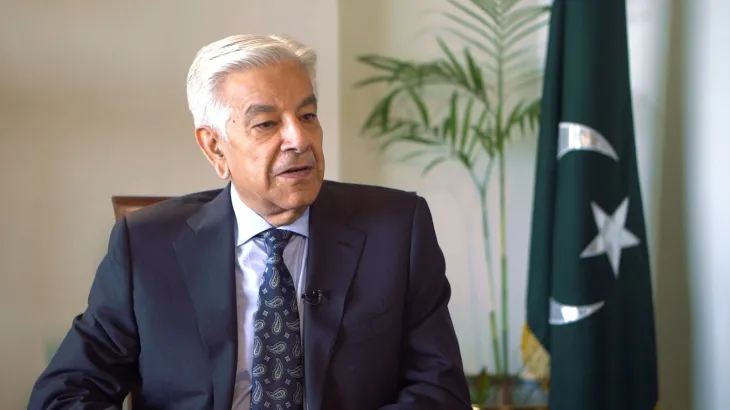
Pakistan’s Minister of Defence, in his post-talks briefing on 28 October, emphasised that “Pakistan cannot accept duplicity in counterterrorism cooperation.” Similarly, Information Minister Attaullah Tarar exonerated the Taliban of “playing the blame game instead of addressing the core issue of TTP sanctuaries.” Pakistan’s view is clear: the Taliban are unwilling to act, not because they cannot, but because doing so would fracture their internal power base.
From a scenario-building perspective, the current impasse may evolve in several plausible directions, shaped by factors such as diplomatic engagement, domestic political dynamics, and regional mediation efforts. By assessing and analysing recent developments, four potential scenarios have been envisioned that could realistically materialize and collectively capture the spectrum of possible outcomes arising from the ongoing situation:
Scenario One (Most Likely) can be characterised as ‘Managed Containment’. Pakistan maintains a policy of calibrated restraint by continuing limited defensive operations against TTP infiltration while pressing for renewed talks. This scenario assumes that Kabul, under regional pressure from China and the Gulf states, will quietly curtail militant movements without admitting it publicly. Border skirmishes will persist, but both sides will avoid open warfare. For Pakistan, this approach preserves strategic balance while keeping diplomatic channels open.
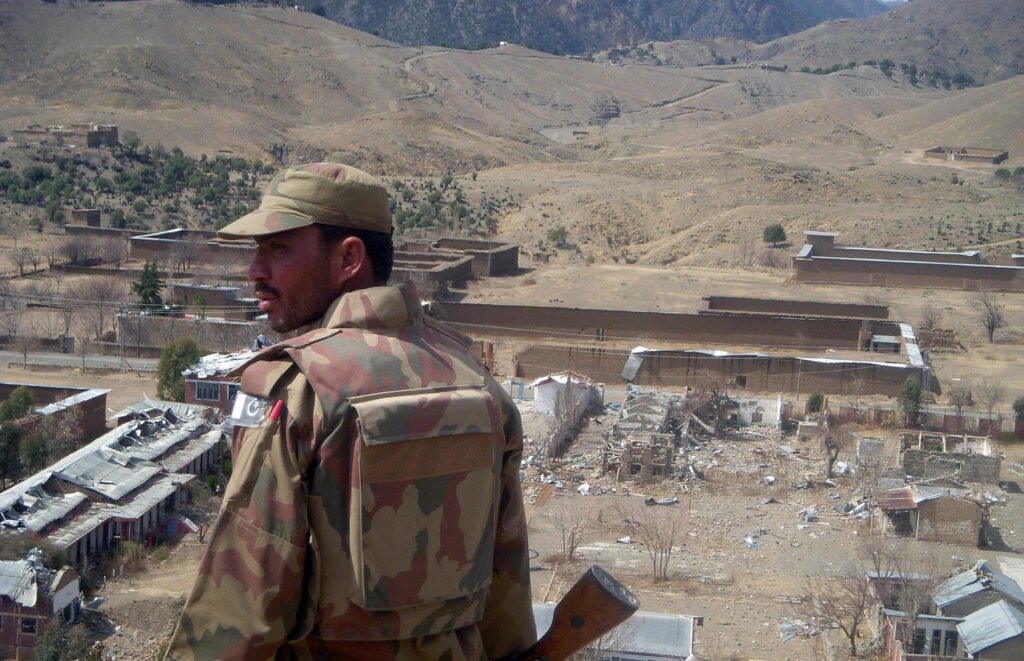
Scenario Two (Plausible) exemplifies the approach of ‘Strategic Escalation’. If TTP attacks intensify in the near future, Islamabad may resort to sustained cross-border precision strikes, similar to the operations conducted earlier this month. While Pakistan will seek to avoid civilian casualties, its patience has limits. Such action, though risky, could force Kabul to reconsider its permissive attitude toward the TTP. Pakistan’s robust intelligence and precision-strike capabilities would make this a short, coercive campaign aimed at deterrence rather than occupation.
Scenario Three (Less Likely) envisions ‘Regionalisation of the Conflict’.
Should Afghanistan retaliate militarily or allow the TTP to intensify attacks, regional actors could become involved. Other than Qatar and Turkiye, China and Saudi Arabia are expected to play a key role in view of their defence cooperation with Pakistan, whereas the United States may tacitly acknowledge Pakistan’s legitimate right to self-defence.This scenario would isolate Kabul internationally and could precipitate internal dissent within the Taliban ranks.
Scenario Four (Desirable but Unlikely) represents the possibility of a ‘Cooperative Breakthrough’. Under sustained diplomatic pressure, Kabul agrees to a written framework for joint counterterrorism action. A trilateral verification mechanism involving Pakistan, Afghanistan, and a neutral facilitator (possibly Qatar, Turkiye or China) is established. TTP networks are gradually dismantled, and trade and transit routes reopen fully. Although optimistic, this scenario would stabilize the entire region, however, it hinges on a fundamental shift in the Taliban’s political will.
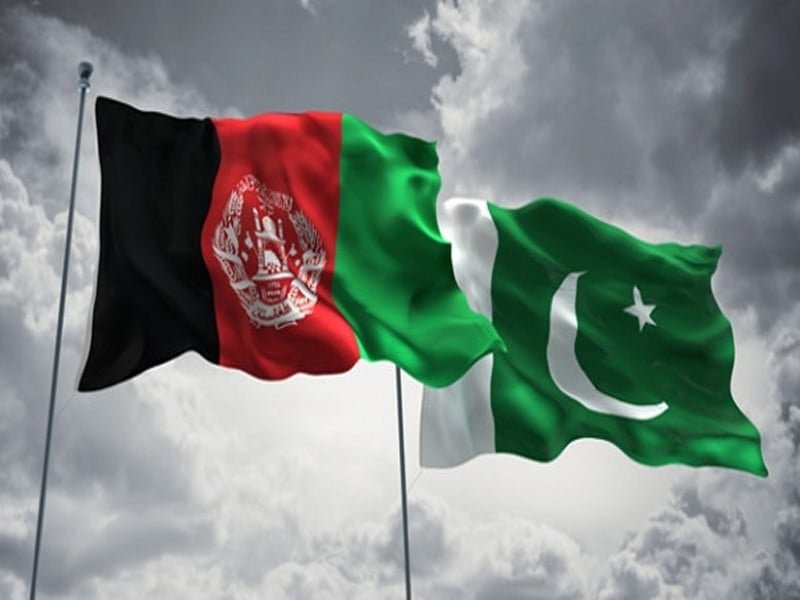
For Pakistan, the strategic imperative is clear i.e. maintain deterrence, pursue dialogue, and keep regional partners engaged. Islamabad must continue presenting evidence of TTP’s activities to international actors, strengthening the legitimacy of its position. Simultaneously, Pakistan’s armed forces must remain prepared for limited yet decisive action to preempt terrorist incursions.
At the diplomatic level, Pakistan can leverage the emerging Pak-Saudi defence pact and China’s regional influence to build a coalition of states that share an interest in regional stability. Moreover, Islamabad’s policy of restraint, despite provocations, reinforces its image as a responsible state acting under international law. The burden of de-escalation, therefore, lies squarely on Kabul.
The failure of the latest talks is not a reflection of Pakistan’s unwillingness to compromise but of the Taliban regime’s refusal to act against terrorism. Islamabad has pursued dialogue, diplomacy, and restraint even as its soldiers and civilians bear the cost of Kabul’s inaction. The reality is that no country can remain passive while cross-border terrorism erodes its sovereignty. Pakistan’s position remains principled: peaceful coexistence is possible only when Afghanistan fulfills its responsibility to ensure that no militant uses its soil against its neighbours. Until that happens, Islamabad will continue to defend itself with patience where possible and with precision where necessary.