
CDSCDSCDS
Font ResizerAa
  • Home
  • Research ArticlesNew
  • Events
  • Media Coverage
  • Gallery
  • About
    • Who We are
    • Board of Directors
  • Contact
Reading: Cross-Border Terrorism at Tajikistan- Afghanistan Border and China’s Emerging Security Dilemma
Share
CDSCDS
Font ResizerAa
  • Home
  • Research ArticlesNew
  • Events
  • Media Coverage
  • Gallery
  • About
    • Who We are
    • Board of Directors
  • Contact
Follow US
Designed & Developed by Odesigning – Creative Web Experts.
Cross-Border Terrorism at Tajikistan- Afghanistan Border and China’s Emerging Security Dilemma
Articles

Cross-Border Terrorism at Tajikistan- Afghanistan Border and China’s Emerging Security Dilemma

Maimona Saleem
Last updated: December 4, 2025 11:32 pm
Maimona Saleem
Share
SHARE

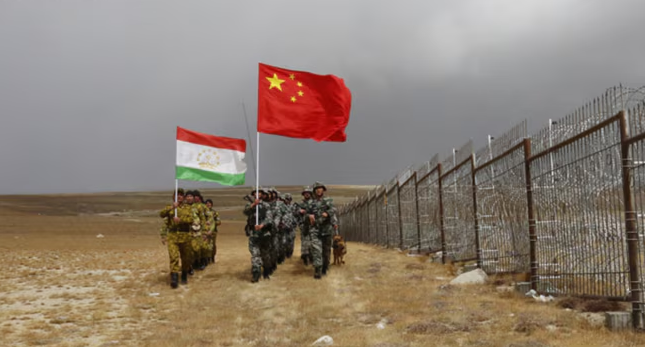
Terrorist and extremist attacks are increasingly becoming a serious threat to sustainable peace and regional security. Recent incident at Tajikistan-Afghanistan border show how cross-border terrorism has not only escalated violence but also undermined major geopolitical and economic interests, particularly those of China.

Contents
  • The author Maimona Saleem, is a senior researcher at the Centre for Development and Stability (CDS).
  • *The views and opinions expressed herein, and any references, are those of the author and do not necessarily reflect the editorial policy of the Centre for Development and Stability (CDS).

Since 2010, China has emerged as Tajikistan’s largest trading partner, primary foreign investor, and principal lender. Today, China holds more than half of Tajikistan’s foreign debt and has gained a strong economic footprint by building roads, modernizing telecommunications, and investing heavily in agriculture and mining. This economic presence, however, has been tested by rising insecurity along Tajikistan’s border with Afghanistan.
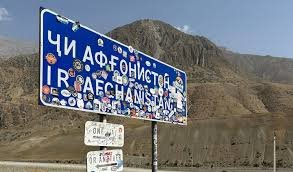
Tensions intensified after two attacks in late November killed five Chinese nationals working on road construction and gold mining projects near the Tajik–Afghan border. The first attack occurred on November 26 in Afghanistan’s Badakhshan Province. A drone was used to strike a Chinese mining camp in Tajikistan’s Khatlon Region. Three workers were killed and one wounded. This attack produced a serious concern and  prompted a swift condemnation from the Chinese embassy, which labeled the attack a “grave criminal act” and ordered Chinese citizens to evacuate border zones immediately.

A second cross-border attack followed on November 30 in the Gorno-Badakhshan Autonomous Region and left two more Chinese workers dead and several injured. In response, Tajik President Emomali Rahmon convened his national security team and directed state institutions to prevent the repetition of such incidents. Tajik authorities blamed Afghanistan for failing to control militants operating along the border, while the State Security Service urged Afghanistan’s leadership to apprehend those responsible.

However, Afghanistan’s Taliban authorities denied any involvement and  attributed the attacks to extremist elements seeking to create chaos, instability, and distrust among countries in the region. Taliban Foreign Minister Mawlawi Amir Khan Muttaqi attempted reassurance during a teleconference with Tajik officials and proposed a joint action against hostile elements.

From a geopolitical standpoint, these attacks have wider implications. Russia, through spokesman Dmitry Peskov, called for intensified engagement with the Taliban and reaffirmed Russia’s recognition of the group as Afghanistan’s legitimate government. This reflected the strategic competition and shifting alignments taking shape in Central Asia following the U.S. withdrawal from Afghanistan.
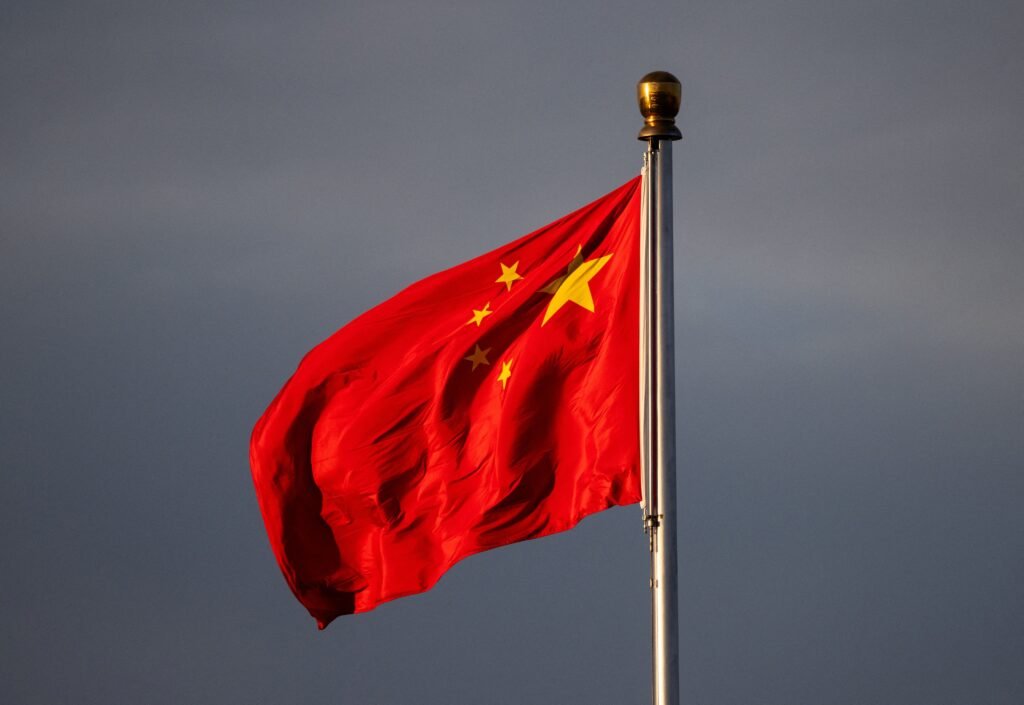
For China, the attacks are not isolated events but part of a larger security dilemma. China’s core regional interests revolve around preventing militant spillover into Xinjiang, securing investments tied to the Belt and Road Initiative (BRI). The mountainous province of Badakhshan that is Afghanistan’s only physical land bridge to China’s Xinjiang region has become a crucial point of concern. Chinese analysts warn that the area could evolve into a hub for various militant networks, including those with anti-China agendas.

These attacks demonstrate challenges for China’s economic engagement. The recent wave of violence along the Tajik–Afghan frontier is a complex and emerging security challenge because economic connectivity is colliding with growing militant activity. Without sustained regional cooperation, robust intelligence sharing, and proactive counterterrorism measures, the risk of further escalation remains high.

The author Maimona Saleem, is a senior researcher at the Centre for Development and Stability (CDS).
*The views and opinions expressed herein, and any references, are those of the author and do not necessarily reflect the editorial policy of the Centre for Development and Stability (CDS).
Subscribe to Our Newsletter
Subscribe to our newsletter to get our newest articles instantly!
[mc4wp_form]

Sign Up For Daily Newsletter

Be keep up! Get the latest breaking news delivered straight to your inbox.
By signing up, you agree to our Terms of Use and acknowledge the data practices in our Privacy Policy. You may unsubscribe at any time.
Share This Article
Email Copy Link Print
Previous Article The US Softness Towards Pakistan and Afghanistan The US Softness Towards Pakistan and Afghanistan
Next Article Pakistan Reiterates Support for China on ‘Zangnan’ as India–China Tensions Resurface

Recent Articles

Evolving History of PESS
December 11, 2025
China’s Firm Stand on Taiwan: Japan’s Reckless Words Threaten Asia’s Peace
December 11, 2025
Pakistan Reiterates Support for China on ‘Zangnan’ as India–China Tensions Resurface
December 9, 2025
Cross-Border Terrorism at Tajikistan- Afghanistan Border and China’s Emerging Security Dilemma
December 4, 2025
The US Softness Towards Pakistan and Afghanistan
December 4, 2025
Show More

Popular Articles

Evolving History of PESS
December 11, 2025
Budget 2024 of Pakistan: A Pathway to Economic Stability and Prosperity
June 23, 2025
Expanding Horizons: Pakistan and Azerbaijan Deepen Bilateral Ties with New Agreements
June 23, 2025
Success of Azam-e-Istekhkam Operation: A Prerequisite for Economic Uplift in Pakistan
June 23, 2025
Pakistan-China Recent Talks: A New Trajectory in the Strategic Partnership
June 23, 2025
Show More
CDS

CDS Events

About CDS

The Centre for Development Studies (CDS) is a non-governmental organization dedicated to youth engagement, national dialogue, and policy development.

Explore

  • Research Articles
  • Media Coverage
  • Gallery
  • About
  • Privacy Policy
  • Terms & Conditions

Recent Media Coverage

Sahafat Newspaper Quetta Calls Attention to CPEC Seminar by CDS in Khuzdar

Balochistan Newspaper Quetta Highlights CPEC Seminar by CDS in Khuzdar

CDS appearance at Vision Point

CDS appearance at SAMAA News

Stay updated

  • Facebook
  • Instagram
  • Youtube

© 2025 CDS. All rights reserved. 

Welcome Back!

Sign in to your account

Username or Email Address
Password

Lost your password?