


How Attacks on Chinese Citizens from Afghan Soil Expose a Strategic Failure and Why It Threatens Regional Stability
When the Taliban returned to power in August 2021 after the chaotic U.S. withdrawal, a new chapter began in Afghanistan’s troubled history. The takeover not only redrew the country’s internal map but also forced regional and global powers to re-evaluate their approach.
- How Attacks on Chinese Citizens from Afghan Soil Expose a Strategic Failure and Why It Threatens Regional Stability
- China’s Engagement: Ambition Meets Reality
- A String of Attacks on Chinese Nationals
- Why These Attacks Matter
- Who’s Behind These Attacks?
- 1. Radical Terrorist Groups
- 2. Taliban’s Internal Factions and Strategic Manipulation
- 3. Criminal and Smuggling Networks
- China’s Dilemma: Between Investment and Security
- The Regional Ripple Effect
- The Taliban’s Credibility Crisis
- Conclusion: A Dangerous Game with Regional Consequences
- The author, Anum Malik, is affiliated with the State News Agency and voluntarily contributes her research to the think tank, CDS.
- *The views and opinions expressed herein, and any references, are those of the author and do not necessarily reflect the editorial policy of the Centre for Development and Stability (CDS).
While Western governments hesitated, one country wasted no time in recalibrating its policy, China. Beijing quickly upgraded its diplomatic engagement with the Taliban to the ambassadorial level, welcomed Taliban representatives to Beijing, and even included Afghanistan in its list of countries eligible for tariff exemptions on certain goods.
For China, this move was more than symbolic. It reflected a carefully calculated strategy built around three fundamental goals:
- To secure access to Afghanistan’s untapped mineral wealth, particularly rare earth elements, copper, and lithium, resources essential for China’s technological and industrial ambitions.
- To neutralize the threat posed by the East Turkestan Islamic Movement (ETIM), a militant outfit seeking independence for Xinjiang’s Uyghur population and allegedly operating in parts of Afghanistan.
- To reduce Western influence in the region, especially the lingering presence of the United States through intelligence networks and its Central Asian partnerships.
For Beijing, the Taliban’s return was not a disaster but an opportunity, a chance to expand its footprint in Central and South Asia while keeping potential security threats in check.
But less than four years later, this strategy appears to be falling apart.
China’s Engagement: Ambition Meets Reality
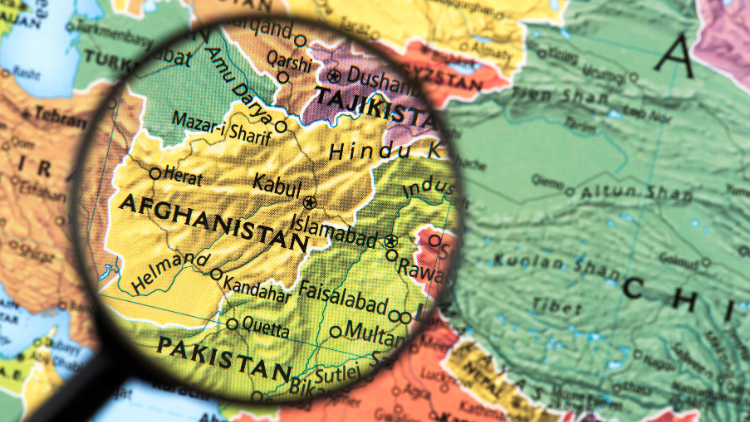
China invested diplomatic capital and economic incentives in the Taliban regime. Beijing publicly expressed hope that the Taliban would stabilize Afghanistan and prevent extremist groups from using Afghan soil to threaten others. In return, the Taliban welcomed Chinese investment in infrastructure and mining, projecting themselves as a responsible government seeking economic independence.
Soon, Chinese companies began arriving in Afghanistan. The most notable deal came in early 2023, when the Taliban signed a 25-year oil extraction contract with a Chinese company, CAPEIC (a subsidiary of China National Petroleum Corporation). The Taliban celebrated the agreement as a milestone for the country’s self-reliance, while Beijing viewed it as an entry point for future energy cooperation.
Chinese citizens, traders, engineers, and technical experts, started working across Afghanistan, particularly in mineral extraction sites in Badakhshan, Takhar, and Logar. For China, this was an experiment: could economic engagement stabilize a regime long associated with militancy?
Unfortunately, the experiment is failing.
A String of Attacks on Chinese Nationals
Despite the Taliban’s promises to ensure the safety of foreign workers, Chinese nationals have repeatedly become targets of violence, both inside Afghanistan and across the border into Tajikistan.
The pattern is alarming:
- December 2022: Gunmen stormed a hotel in Kabul frequented by Chinese nationals. ISIS-Khorasan (ISIS-K) claimed responsibility. Three people were killed and 18 injured, including several Chinese citizens.
- January 2025: A Chinese engineer was killed while working in a gold mine in Afghanistan’s Takhar province. Again, ISIS-K claimed responsibility.
- November 2025: Two separate attacks, one in Tajikistan’s Shamsuddin Shohin District and another near Maymi in Badakhshan, killed at least five Chinese nationals and injured several others. These attacks were launched from Afghan territory using drones and automatic weapons, according to Tajik authorities.
Beijing’s foreign ministry expressed serious concern and demanded a transparent investigation. The Chinese embassy in Dushanbe went a step further, advising all Chinese citizens to leave border areas near Afghanistan immediately.
The Taliban, however, responded with ambiguity. Their foreign ministry claimed that enemies were trying to create mistrust between China and Afghanistan. Yet, no clear steps were taken to arrest perpetrators or ensure such attacks would not recur.
The result is growing disillusionment in Beijing.
Why These Attacks Matter
To outsiders, a few isolated attacks might seem minor in a country long accustomed to instability. But for China, they cut deep because they directly threaten the pillars of its regional security doctrine.
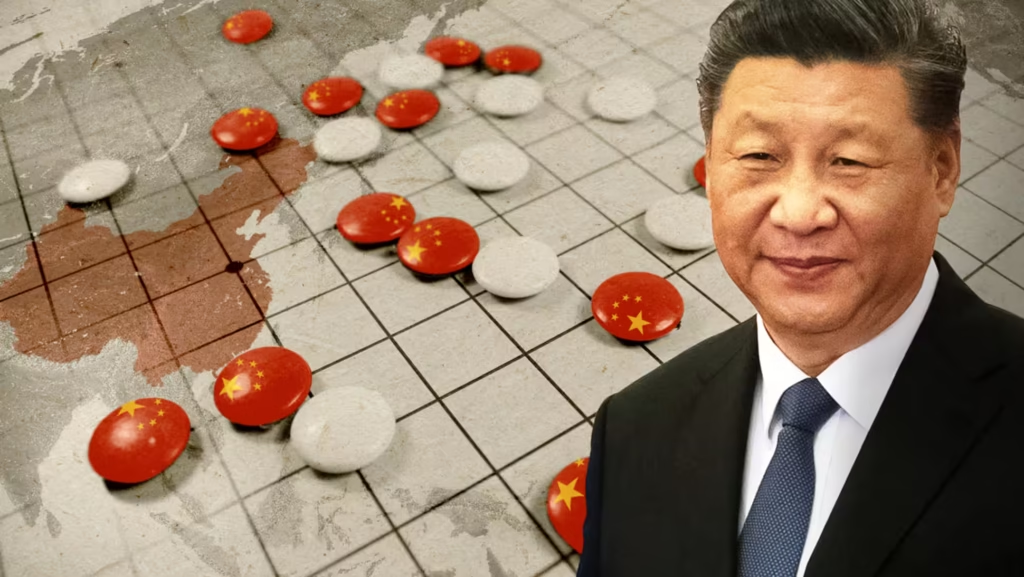
China’s Global Security Initiative (GSI), introduced by President Xi Jinping, emphasizes that security and development are inseparable. Under this concept, economic interests abroad are viewed as integral to China’s national security. Any threat to Chinese citizens or projects overseas is therefore considered a national security issue.
The recent attacks strike at this very core. They undermine Beijing’s trust in the Taliban and disrupt multi-billion-dollar regional projects, not only in Afghanistan but also in neighboring Tajikistan and Pakistan.
Moreover, the incidents have regional spillover potential. Tajikistan, already wary of Taliban rule, has strengthened its border forces. The Collective Security Treaty Organization (CSTO), led by Russia, has declared reinforcement of the Afghanistan-Tajikistan border as a strategic priority. China now finds itself indirectly caught in this tension, as its citizens and interests become targets of the very instability it hoped to contain through diplomacy.
Who’s Behind These Attacks?
The truth remains murky, but three plausible explanations exist, each with dangerous implications.
1. Radical Terrorist Groups
The most obvious suspects are groups like ISIS-K and the East Turkestan Islamic Movement (ETIM). Both have ideological reasons to target China.
ISIS-K views China as an enemy of Islam because of its policies in Xinjiang, while ETIM, composed mainly of Uyghur militants, has long operated in Afghanistan’s rugged northern terrain. The Taliban claim to have curtailed ETIM activities, but intelligence reports and local sources suggest otherwise.
ISIS-K has already targeted Chinese nationals before, including the 2022 Kabul hotel attack. Therefore, the group remains a leading suspect behind these latest assaults.
2. Taliban’s Internal Factions and Strategic Manipulation
A less discussed but equally dangerous possibility is that elements within the Taliban themselves are involved, either to extract concessions or to assert dominance in specific regions.
Historically, the Taliban have used controlled instability as leverage in diplomatic dealings. Creating limited insecurity or allowing attacks by unidentified groups helps them project indispensability, positioning themselves as both the problem and the solution.
Some analysts believe the Taliban may be using such tactics to pressure Tajikistan, which remains the only neighboring country that has not formally recognized the Taliban regime. Dushanbe continues to support the anti-Taliban National Resistance Front (NRF), led by Ahmad Masood. By allowing attacks near the Tajik border, the Taliban might be signaling that cooperation is cheaper than confrontation.
3. Criminal and Smuggling Networks
The third scenario involves competition among smugglers and illicit traders in northern Afghanistan. The Taliban have opened several gold and gemstone mines, often partnering with local commanders or businessmen. These operations overlap with narcotics routes used to transport heroin and methamphetamine into Central Asia.
As Tajikistan increases border surveillance, smuggling costs have risen sharply. Some armed groups may be creating targeted insecurity to disrupt border controls and reopen older, less monitored routes.
Regardless of the specific motive, one fact is undeniable: none of these activities could occur without the Taliban’s knowledge or tolerance. The group maintains checkpoints, militias, and intelligence networks across every major district.
China’s Dilemma: Between Investment and Security
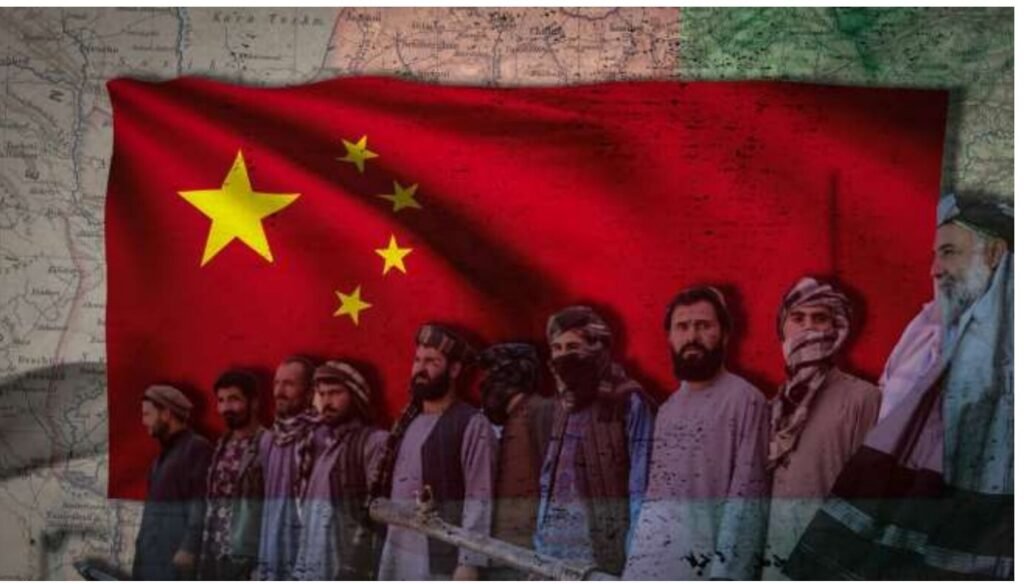
China now faces an uncomfortable reality. Its long-held strategy of economic diplomacy is first being tested by the harsh reality of Afghanistan’s instability.
While Beijing publicly maintains that it respects Afghanistan’s sovereignty, the recent incidents are forcing serious internal debate about whether the Taliban can ever be trusted as a reliable partner.
China’s state-controlled media have reacted with remarkable restraint. Outlets like Global Times and CGTN issued only brief statements quoting official sources, while major platforms such as People’s Daily and Xinhua remained silent. This silence is strategic, intended to prevent public outrage or nationalist backlash at home.
But behind the scenes, policy circles in Beijing are concerned. China cannot afford to appear weak, especially after promoting its Global Security Initiative as a framework for protecting overseas interests. Yet, open confrontation with the Taliban risks destabilizing Afghanistan further and creating a vacuum that extremist groups might exploit.
This balancing act, between defending national interests and avoiding deeper entanglement, is one of China’s toughest foreign policy tests in recent years.
The Regional Ripple Effect
The Taliban’s failure to ensure basic security doesn’t just hurt China; it threatens the entire region’s stability.
Pakistan’s Predicament
Pakistan has already suffered from the Taliban’s inability (or unwillingness) to rein in cross-border terrorism. Groups like the Tehreek-e-Taliban Pakistan (TTP) and the Balochistan Liberation Army (BLA) have increased attacks inside Pakistan, targeting Chinese workers and CPEC infrastructure. Islamabad repeatedly raised concerns with Kabul, but too little effect.
The same trend is now visible in Central Asia. What began as sporadic border incidents is evolving into a pattern of organized insecurity. If unchecked, it could jeopardize Chinese investments not just in Afghanistan, but across the region, from CPEC in Pakistan to Belt and Road projects in Tajikistan and Uzbekistan.
Tajikistan’s Response
Tajikistan has taken a cautious but firm stance. It condemned the attacks, increased military deployments along its southern border, and requested technical support from the CSTO. The Tajik government, led by President Emomali Rahmon, has always been skeptical of the Taliban and continues to host exiled Afghan leaders opposed to them.
The latest attacks have vindicated Dushanbe’s caution. Tajik authorities now view Taliban promises of border security as unreliable, and this distrust could complicate China’s broader regional connectivity goals, especially road projects linking western China to Central Asia through the Dushanbe–Kulma Corridor.
The Taliban’s Credibility Crisis
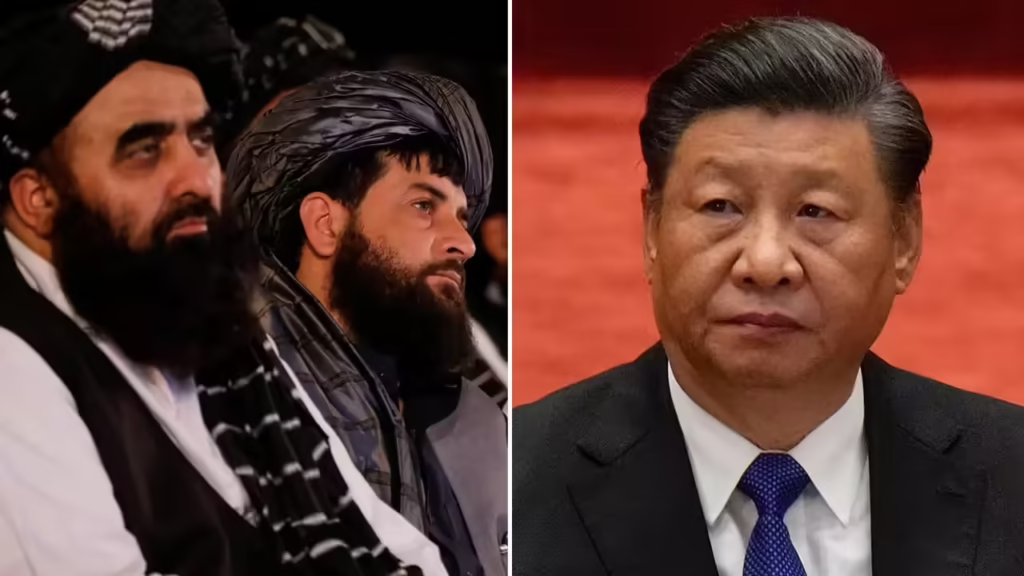
The Taliban’s repeated assurances of nationwide security are collapsing under the weight of facts. Four years into their rule, Afghanistan remains a patchwork of militias, armed groups, and criminal networks.
Even within the Taliban movement, divisions persist between pragmatic political leaders in Kabul and hardline commanders in the provinces. These internal splits make consistent governance nearly impossible.
China’s disappointment is now evident. The Taliban have:
- Failed to deliver on key economic agreements, including the suspension of the Chinese oil extraction project in northern Afghanistan.
- Engaged diplomatically with Western envoys, including high-level meetings with U.S. officials, while offering little transparency to regional partners.
- Failed to curb militant groups operating near borders, endangering foreign citizens and investments alike.
For Beijing, which prides itself on stability and predictability, dealing with the Taliban has become a diplomatic liability.
Conclusion: A Dangerous Game with Regional Consequences
The Taliban’s double game, promising peace while tolerating or manipulating insecurity, is not new. It has been part of their survival strategy for decades. But today, that strategy threatens not only Afghanistan’s future but also the security architecture of the entire region.
China, Pakistan, and Central Asian states now face a common challenge: how to deal with a regime that thrives on controlled chaos. The Taliban’s inability to control their borders, suppress extremist factions, or protect foreign nationals exposes a fundamental flaw in their governance model.
For Beijing, the recent attacks should serve as a wake-up call. The belief that economic incentives alone could stabilize Afghanistan has proven naive. Without political legitimacy, inclusiveness, and genuine counterterrorism efforts, no investment, however large, can buy peace.
If the Taliban continue down this path, China may be forced to rethink its engagement strategy entirely. That could mean reducing investments, increasing intelligence cooperation with Tajikistan and Pakistan, or even considering limited security deployments to protect its citizens, a step Beijing has long avoided.
The lesson for the region is clear that no country can afford to ignore Afghanistan’s instability. What happens on Afghan soil rarely stays within its borders.
Until a lawful, representative, and accountable political system emerges in Kabul, the promises of peace, progress, and prosperity will remain empty words, and Afghanistan will continue to export insecurity rather than stability.