
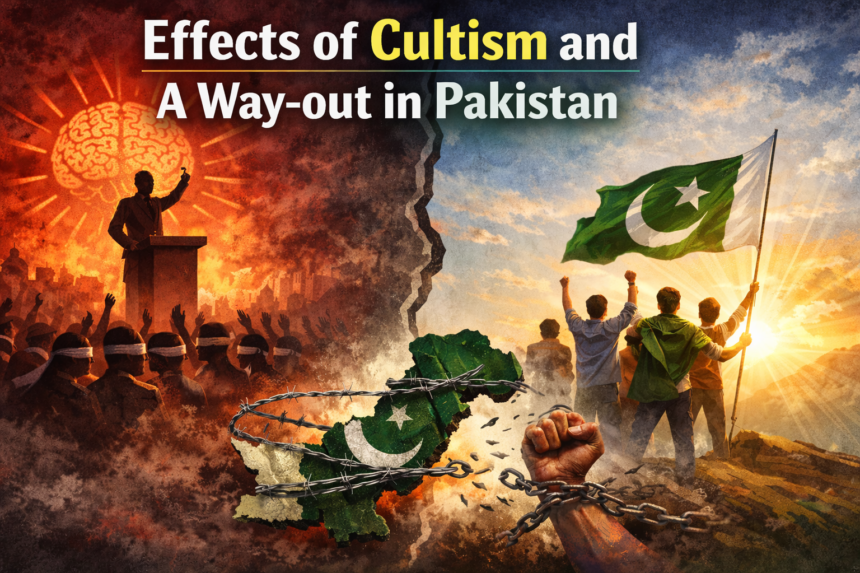

Visiting websites such as Veterans Own, Veterans Affairs, and Stand Up for Pakistan is little different from tuning into an Indian television talk show, where all participants shout in unison and hurl abuse at Pakistan. In fact, Indian channels are at least honest in their bias: every panelist glorifies India and shows zero tolerance for dissent. The tragedy is that we now find a similar mindset flourishing within Pakistan itself.
- How to Redress Cultish and Anti-Pakistan Behaviour
- 1. Reclaim the National Narrative (Information Domain)
- 2. Expose, Not Suppress (Strategic Transparency)
- 3. Invest in Cognitive Security (Education & Media Literacy)
- 4. Differentiate Dissent from Subversion (Legal & Ethical Clarity)
- 5. Psychological De-radicalisation & Rehabilitation
- 6. Strengthen Institutions Through Performance, Not Rhetoric
- 7. Engage the Silent Majority
- 8. Political Responsibility & Consensus
- Conclusion
- The writer is a retired Brig, war veteran who fought the epic battle of Hilli in former East Pakistan and recovered the body of Maj Akram Shaheed NH. He is a command & staff course and war course qualified, MsC war studies degree holder, he served as a defence attache’ in Egypt and Sudan, and also as the Dean of Corps of Military Attachés in Cairo. He is a defence, security, and geopolitical analyst, columnist, author of five books, ex-chairman TFP, Patron-in-chief CDS Think Tank, Director Meesakh Research Centre, Chief Election Commissioner Tehreek Jawanan Pakistan, and takes part in TV talk shows . He was appointed the Army’s spokesperson in 1992, and after retirement served as Honorary Colonel of the Battalion of the unit he commanded for eight years.
- *The views and opinions expressed herein, and any references, are those of the author and do not necessarily reflect the editorial policy of the Centre for Development and Stability (CDS).
Pakistan has produced a strange and disturbing breed that openly praises the country’s enemies, derides its own state institutions—particularly the armed forces and their leadership—and wears this behaviour as a badge of honour.

Nowhere else in the world does one witness such a self-destructive tendency, where a nation’s own army is deliberately vilified merely to curry favour with a political leader or to remain in the good books of a cult.
Anyone who dares to challenge their narrative or present the other side of the picture instantly becomes an object of outrage. Reason evaporates, tempers flare, and balance is lost.
I count myself among the few who consistently unsettle them. Many even argue that voices like mine should be silenced so as not to disturb their manufactured harmony and self-serving amusement.
In moments of rage, they compete with one another in mockery, abuse, and slander, inventing ever more derogatory labels. Their invectives are enthusiastically applauded by like-minded followers, reinforcing the illusion that they have defeated the “intruder” and won the contest. The more vicious the language and the louder the applause, the greater their sense of triumph.
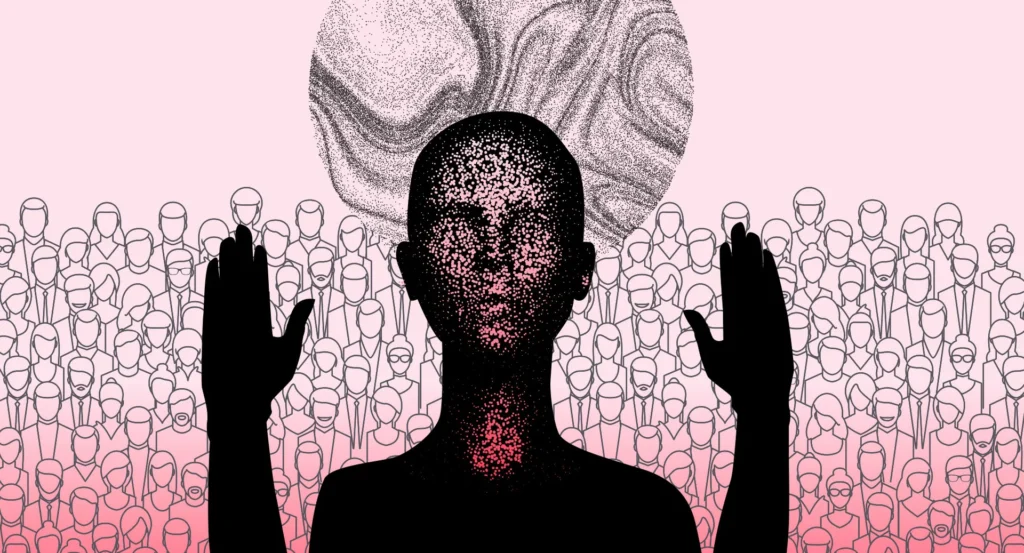
They are intolerant, irreconcilable, and beyond reason, for the cult mindset is deeply corrosive. It strips individuals of independent thought and gradually turns rational human beings into ideological zombies.
Whenever a post appears that does not align with their mental conditioning, they erupt in abuse and threats, as if their most vulnerable nerve has been touched or their sacred beliefs violated.
Their conduct resembles that of puppets jerking and shrieking wildly, entirely at the mercy of the unseen string-puller who dictates every move.
Rather than angering me, this childish and clownish behaviour amuses me. Yet I cannot help but feel sympathy for their frayed nerves and disturbed state of mind.
The mesmerised have become both deaf and blind. They can neither hear reason nor see reality. Their entire world revolves around the cult leader they worship; everyone else, in their eyes, is either an enemy or a nest of worms.
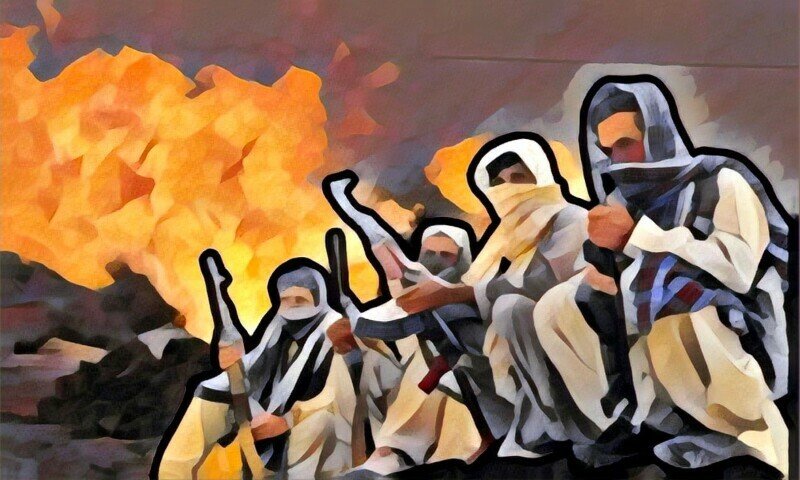
Ironically, positive developments for Pakistan do not please them—they distress them. For these naysayers, groups such as the TTP, BLA, PTM, BYC, anti-Pakistan elements, India, and even the Taliban regime appear more acceptable than their own state. Today, all of these forces find themselves in a tightening nutcracker, thanks to the professional and resolute performance of Pakistan’s armed forces.
As the tide turns against them and their favoured party finds itself trapped in a political blind alley with no exit in sight, frustration gives way to desperation. They resort to fake news, doctored videos, and fabricated narratives to undermine Pakistan’s achievements and to discredit the global recognition earned by Field Marshal Asim Munir—whom they irrationally despise.
This cult-driven malady is not curable through sermons or coercion. It requires prolonged rehabilitation, critical thinking, and deprogramming—otherwise, the damage it inflicts on society will continue to deepen
How to Redress Cultish and Anti-Pakistan Behaviour
This is not a law-and-order issue alone; it is psychological, informational, political, and societal. To redress anti-Pakistan behaviour, especially the cult-driven, ideologically rigid mindset, a multi-layered, long-term national approach is required. Below is a practical, non-coercive framework suited to Pakistan’s realities.
1. Reclaim the National Narrative (Information Domain)

- Anti-state behaviour thrives where the state narrative is reactive, fragmented, and defensive.
- Develop a cohesive national narrative anchored in constitutionalism, sovereignty, national security, and socio-economic progress.
- Move from damage control to agenda-setting.
- Highlight successes in counterterrorism, diplomacy, economic stabilisation, and military professionalism using facts, timelines, and data—not slogans.
- Use credible civilian voices, retired professionals, academics, journalists, youth influencers and fake news busters rather than uniformed spokesmen alone.
- Silence and ambiguity create space for hostile narratives.
2. Expose, Not Suppress (Strategic Transparency)
- Suppression creates martyrs; exposure creates clarity.
- Systematically expose foreign linkages, funding trails, and narrative coordination of hostile groups using documented evidence.
- Publicise confessions, legal proceedings, and verified intelligence findings in a sober, professional manner.
- Avoid emotional rebuttals; instead, let evidence speak.
- Truth calmly presented dismantles propaganda more effectively than bans.
3. Invest in Cognitive Security (Education & Media Literacy)

- Cultism flourishes where critical thinking is absent.
- Introduce media literacy and critical reasoning modules in schools, colleges, and universities.
Teach students how to:
- Identify fake news and manipulated videos.
- Understand psychological operations and narrative warfare.
- Distinguish dissent from subversion.
- Encourage debate grounded in facts, not hero-worship.
- A thinking mind is immune to cult indoctrination.
4. Differentiate Dissent from Subversion (Legal & Ethical Clarity)
- Not all criticism is treason—and not all speeches are innocent.
Clearly define:
- Legitimate dissent (policy criticism, accountability).
- Malicious propaganda (foreign-sponsored, violent, or subversive narratives).
- Strengthen legal frameworks to address information warfare, digital sabotage, and foreign-funded disinformation—with due process and transparency.
- Blurring this line strengthens extremists on both ends.
5. Psychological De-radicalisation & Rehabilitation
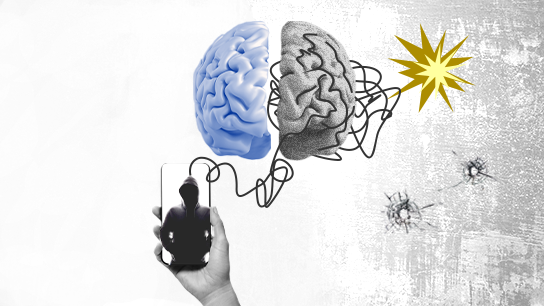
- Sermons and sticks do not work.
- Establish de-radicalisation and rehabilitation programs similar to those used successfully against militant extremism.
Make Use of:
- Psychologists, Sociologists, Former insiders who have disengaged, and
- Family-based counselling.
- Focus on identity reconstruction, not humiliation.
- Cult behaviour is a mental capture, not an intellectual disagreement.
6. Strengthen Institutions Through Performance, Not Rhetoric
- Institutions earn respect through competence and integrity.
- Ensure visible accountability, transparency, and professionalism in governance.
- Minimise political interference in state institutions.
- Let results, not counter-attacks, restore public trust.
- Strong performance neutralises propaganda faster than press releases.
7. Engage the Silent Majority
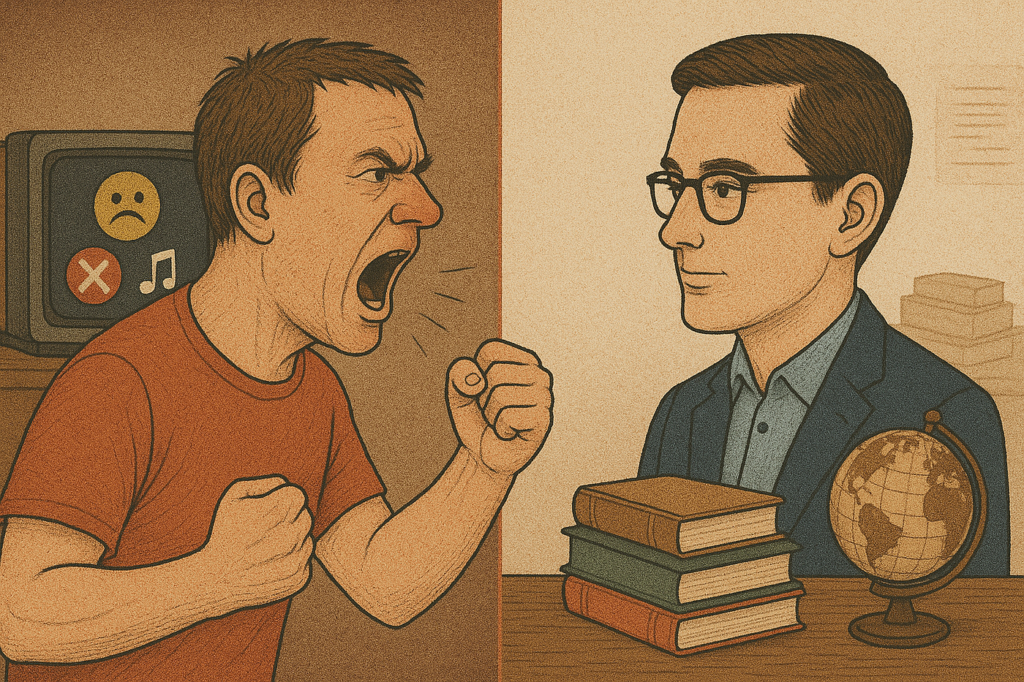
- The loudest voices are often the smallest minority.
Mobilise the silent, patriotic, rational majority through:
- Town halls, Think tanks, Universities and Professional forums.
- Provide them platforms to speak without fear or intimidation.
- When the majority speaks, extremists lose oxygen.
8. Political Responsibility & Consensus
- Political leaders must rise above short-term gains.
Develop a charter of national responsibility where political parties agree not to:
- Attack state institutions for political leverage; Echo foreign narratives; Glorify violent or separatist groups.
- Enforce internal party discipline for violations.
- Political opportunism is the oxygen of anti-state narratives.
Conclusion
Anti-Pakistan behaviour is not an overnight phenomenon; it is the product of prolonged narrative manipulation, Political opportunism, and Cognitive vulnerability.
It cannot be cured by:
- Censorship alone, Emotional counter-attacks and Force or intimidation.
It can be corrected through:
- Narrative clarity and Intellectual confidence.
- Institutional performance, Psychological rehabilitation and National consensus.