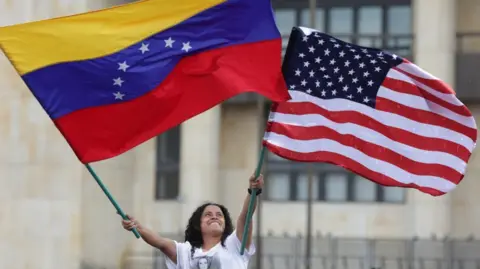

The world was taken by surprise by the swift and decisive U.S. military operation against Venezuela in the early hours of 3 January, commencing shortly after 2 a.m. The lights were reportedly cut off and the operation was conducted under the cover of darkness.
- Maduro’s Rule
- Maduro’s Regime in the U.S. Firing Line
- U.S. Military Buildup
- Venezuela’s Response
- Condemnations
- The Future of Venezuela
- America’s Interventionist History
- Trump’s Profile as a Peacemaker
- America’s Duplicity
- Implications for the USA
- Implications for the Global South, Russia, and China
- Policy Recommendations
- Strengthen Regional Collective Security
- International Legal Challenge
- Diversification of Strategic Partnerships
- Energy Security Realignment
- Counter–Hybrid Warfare Preparedness
- Civil-Military Fusion for National Stability
- Humanitarian Narrative Neutralisation
- Global South Solidarity
- Information and Narrative Warfare
- Long-Term Strategic Autonomy
- Conclusion
- The author is a war veteran of the Battle of Hilli, who recovered the body of Maj Akram Shaheed (NH). A Command & Staff and War Course qualified officer with an MSc in War Studies, he served as Defence Attaché in Egypt and Sudan, Dean of the Military Attachés Corps in Cairo, and Army Spokesperson (1992). Post-retirement, he served as Honorary Colonel of his former battalion. He is a defence, security, and geopolitical analyst, author of five books, Patron-in-Chief of CDS Think Tank, Director of Meesakh Research Centre, and a regular TV commentator.
- *The views and opinions expressed herein, and any references, are those of the author and do not necessarily reflect the editorial policy of the Centre for Development and Stability (CDS).
The capital city of Caracas and the states of Miranda, Aragua, and La Guaira were targeted. After destroying the main airport and key military installations, including the Ministry of Defence building, elite U.S. forces—along with elements of Delta Force—captured Venezuela’s president, Nicolás Maduro, and his wife, Cilia Flores, a lawmaker and influential power broker.
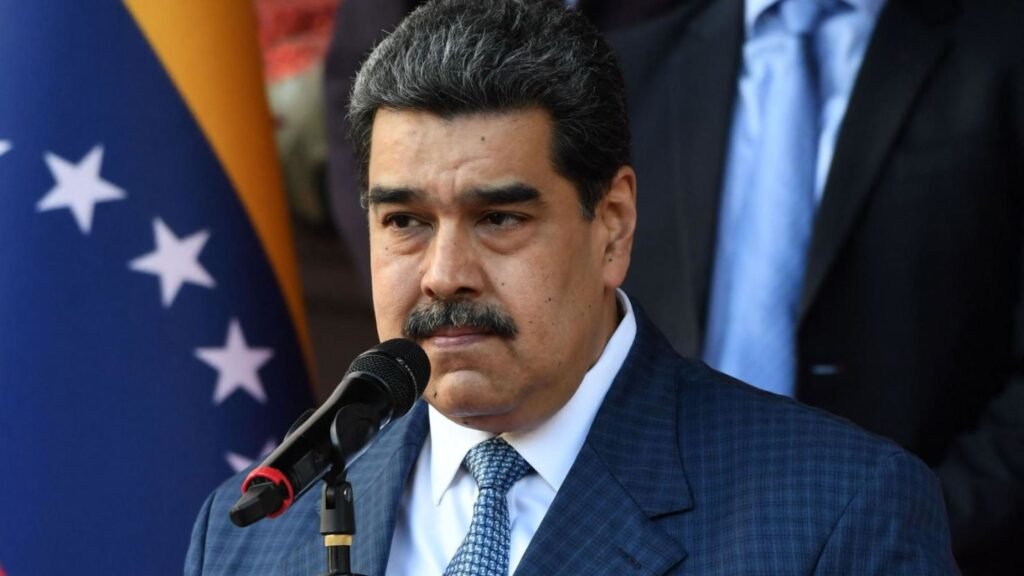
President Maduro was handcuffed and blindfolded. The couple was airlifted by helicopter to the USS Iwo Jima and subsequently transferred to New York. Both were indicted on narco-terrorism charges and are expected to stand trial in a New York court.
In a brief phone interview with The New York Times, a triumphant President Donald Trump celebrated the success of the mission. “A lot of good planning and a lot of great, great troops and great people,” he said. “It was a brilliant operation, actually.”
He added, “We will make the people of Venezuela rich, independent, and safe. We’re going to run the country until such time as we can have a safe, proper, and judicious transition.”
Trump hastened to give a green signal to American oil companies to tap Venezuela’s massive mineral and hydrocarbon resources worth generate profits, and help offset America’s staggering $38 trillion debt.
When asked whether he had sought congressional authorization for the operation or what lay ahead for Venezuela, Trump said he would address those matters later.
Maduro’s Rule
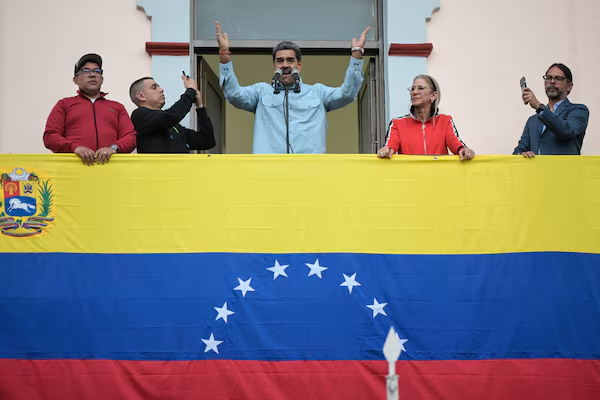
Venezuela, a country of around 30 million people, possesses the world’s largest proven oil reserves, yet it has been mired in a severe humanitarian crisis. Nicolás Maduro, who rose from being a bus driver to president in 2013, succeeded Hugo Chávez and ruled with an iron fist.
His draconian laws, harsh crackdowns, and alleged torture of dissidents and political opponents forced nearly seven million Venezuelans to flee the country.
Although elected three times, Maduro—like Chávez—was never accepted by Washington. In March 2020, he was indicted in the United States on charges of overseeing a violent drug-trafficking organization known as the Cartel de los Soles.
An avowed anti-imperialist, anti-American socialist, Maduro relied heavily on support from Cuba, China, and Russia. He consistently maintained that Washington’s real objective was to seize control of Venezuela’s vast oil reserves. He withstood repeated crises, including U.S. sanctions and an oil blockade.
However, his socialist economic model collapsed under mismanagement, corruption, and sustained external pressure, further aggravated by U.S. hostility.
His regime was not recognized by the United States and several European states. After his re-election in July 2024, the U.S., the EU, and several Latin American countries declared opposition leader Edmundo González as the rightful president.
Maduro’s Regime in the U.S. Firing Line
U.S. intelligence agencies assessed that many senior Venezuelan military officers were involved in drug trafficking with Maduro’s backing. For months, Trump issued threats, warnings, and accusations against Maduro, alleging large-scale narcotics smuggling.
U.S. officials labeled Maduro an illegitimate leader and accused him of controlling criminal groups linked to drug trafficking. He was also charged with rigging the July 2024 elections—an allegation his government denied.
In recent weeks, the United States reportedly intensified its campaign against tankers carrying Venezuelan crude, throwing the country’s oil industry into turmoil and jeopardizing its principal source of revenue.
The U.S. seized one sanctioned tanker en route to Asia and intercepted another vessel that was not under sanctions. The CIA had also allegedly embedded operatives inside Venezuela to monitor daily activities and track Maduro’s movements.
U.S. Military Buildup
In late August, the Pentagon reportedly amassed around 15,000 troops, an aircraft carrier, seven warships and 150 jet fighters in the Caribbean, according to figures released by U.S. Southern Command.
U.S. forces attacked several small boats that officials claimed were engaged in drug smuggling, resulting in at least 115 fatalities. Additionally, the CIA allegedly conducted a drone strike on a Venezuelan port facility last month, killing civilians.
The Trump administration dismissed criticism that the use of lethal force against small vessels amounted to illegal extrajudicial killings. Trump argued that such actions were lawful, claiming the U.S. was engaged in an armed conflict with drug cartels.
Flight-tracking data indicated that C‑17 cargo planes—primarily used for transporting troops and military equipment—conducted at least 16 flights to Puerto Rico from U.S. bases in the preceding month.
Venezuela’s Response
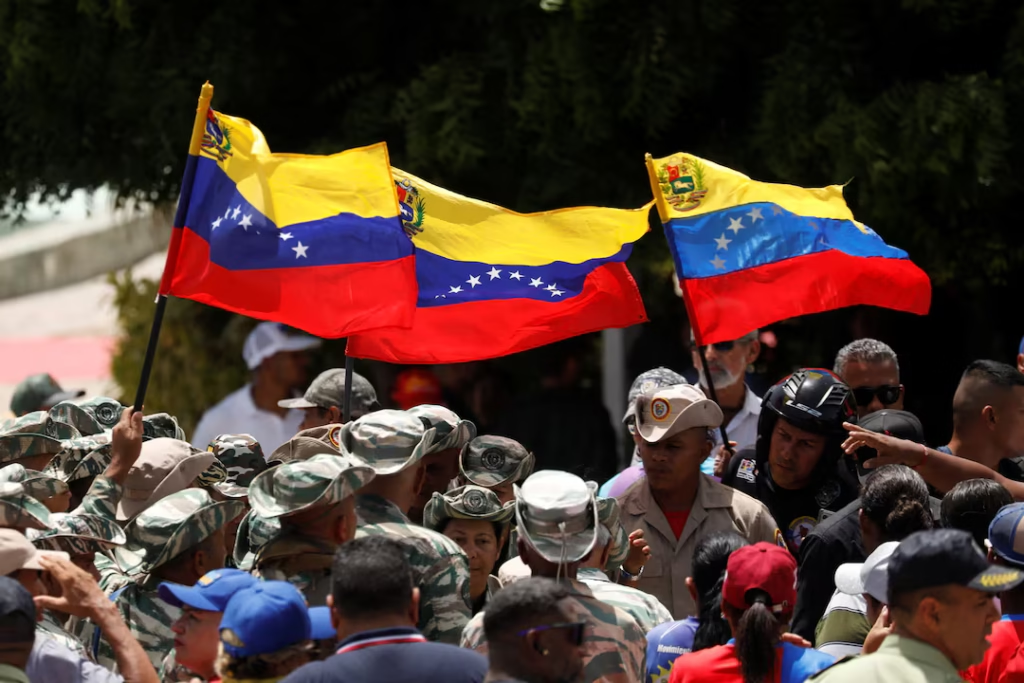
Caracas placed its land, air, naval, and missile forces on high alert. Officials repeatedly claimed that air-defense systems—reportedly supplied by Russia through Iran as an intermediary—would protect Venezuela from any attack.
Prior to the U.S. operation, Maduro had tightened his inner security circle and reportedly changed sleeping locations frequently to evade a targeted strike or special-forces raid.
Following the attacks, the Venezuelan government declared a state of emergency. However, despite prior preparations and rhetoric, the military establishment appeared paralyzed, offering no resistance. Not a single bullet was fired.
The streets of Caracas remained largely quiet, with little sign of protests or a popular uprising.
Condemnations
Venezuela “rejected, repudiated, and denounced” what it termed U.S. military aggression and called upon all social and political forces to mobilize against the “imperialist attack.”
Russia, China, Cuba, Colombia, Iran, and Bolivia condemned the operation. U.S. Democratic senators described the invasion as illegal. The UN Secretary-General expressed serious concern, while Spain offered to mediate.
There appeared little likelihood that major powers would move beyond verbal condemnation to directly challenge the occupying force.
The Future of Venezuela
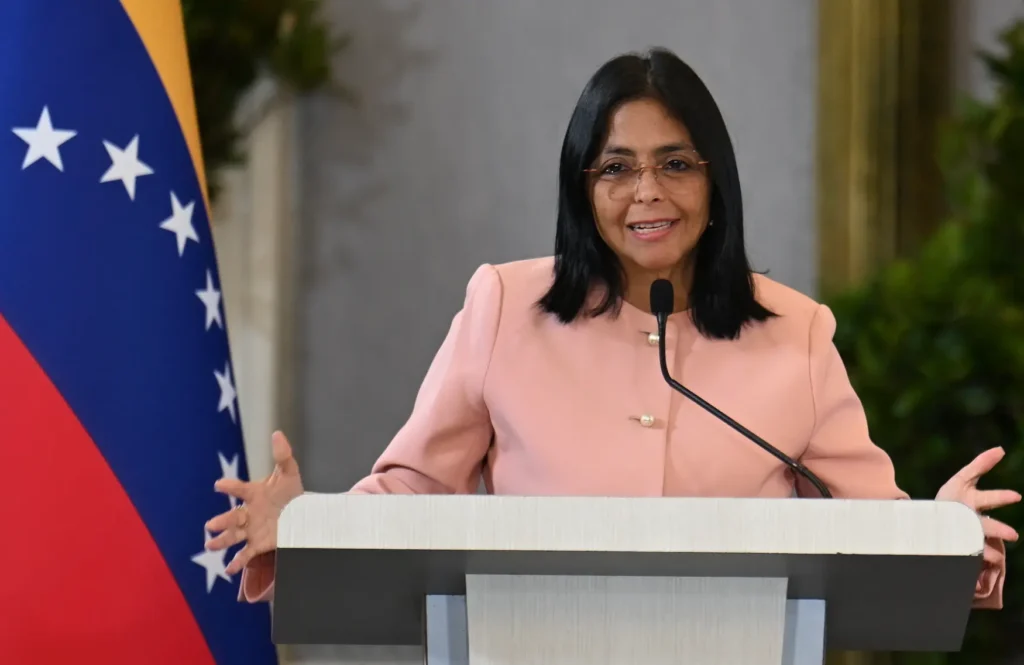
Vice President Delcy Rodríguez emerged as Washington’s preferred interim choice, rather than Nobel Peace Prize laureate María Corina Machado, whom Trump reportedly viewed as too conciliatory for the task. French President Emmanuel Macron, however, backed Edmundo González.
America’s Interventionist History
Following World War II and the emergence of the United States as a superpower, Washington declared the Western Hemisphere its exclusive sphere of influence, seeking to maintain control over Latin America.
Through intermittent interventions and regime-change operations, countries such as Chile, Cuba, Guatemala, and Nicaragua were destabilized or forcibly reshaped.
The Monroe Doctrine was invoked to keep Latin America free from external influence. Over time, however, China and Russia gained footholds in several left-leaning states.
In the last hundred years, the US carried out 40 interventions and most backfired.
In an effort to reinvigorate the Monroe Doctrine and reassert U.S. primacy in the Western Hemisphere, Trump unveiled a new National Security Strategy. Crackdowns on immigration, drug cartels, and tariff wars form interconnected elements of his “Make America Great Again” agenda.
The attack on Venezuela bears resemblance to the 2003 invasion of Iraq, followed by the Arab Spring, which redrew political boundaries across the Middle East.
Trump’s Profile as a Peacemaker
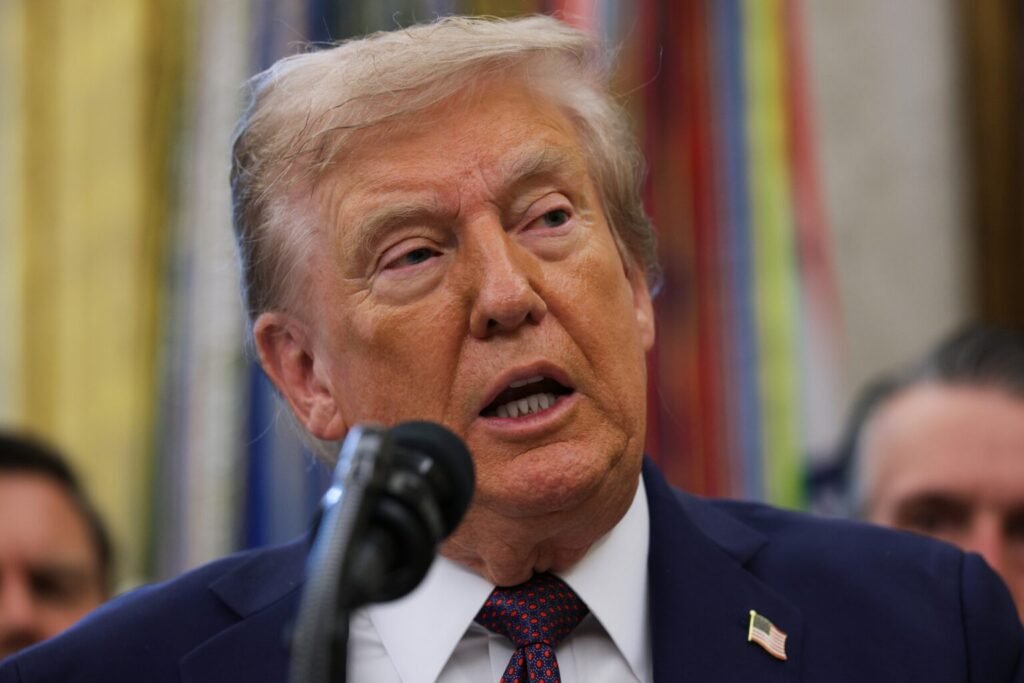
Although Maduro’s 15-year rule appears to have ended, the unprovoked intervention—carried out without congressional approval—has severely undermined Trump’s claims of being a peacemaker.
In this regard, he appears little different from his predecessors. His rhetoric about ending existing wars and preventing new ones now rings hollow.
Trump took the risk of the military venture in Venezuela in order to rejuvenate his popularity, which has sunk to the lowest ebb, well before the midterm elections.
The adventure had multiple objectives. To control oil and boost the US economy, to deprive China of the supply of oil bought in the yuan, and apply brakes on the de-dolarisation.
America’s Duplicity
Madura was removed from power, abducted and put on trial on the basis of his crime of indulgence in narco peddling.
Conversely, President Orlando Hernandez ruling Honduras from 2014 to 2022 was the biggest narcotics trafficker in South America. Yet he was spared by Washington due to his subservience to the US dictates.The US has been cozy with the military dictators.
Implications for the USA
If popular armed resistance emerges in Venezuela duly supported by China and Russia and some Latin American States, can the US afford to face a hostile front in its backyard and send troops to counter the insurgency and accept body bags?
Implications for the Global South, Russia, and China
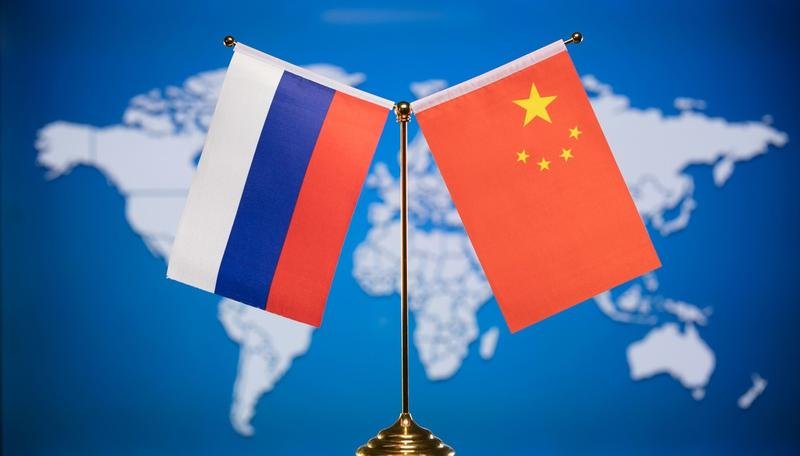
Implications for the Global South
The U.S. intervention in Venezuela has sent shockwaves across the Global South. For many developing nations, particularly those with weak economies, internal political divisions, or strategic natural resources, the operation reinforces the fear that sovereignty remains conditional when it collides with Western geopolitical and economic interests.
The message is stark: sanctions, diplomatic isolation, and covert pressure can swiftly give way to direct military action.
Countries in Africa, Latin America, and parts of Asia may now reassess their dependence on Western financial systems, trade routes, and security arrangements.
The intervention is likely to accelerate efforts by Global South states to diversify partnerships, seek strategic autonomy, and explore alternative financial mechanisms to hedge against coercive diplomacy.
At the same time, it may also compel some vulnerable states to adopt compliance-based foreign policies to avoid confrontation with Washington.
Implications for Russia
For Russia, the fall of Maduro represents a strategic setback in the Western Hemisphere. Venezuela had served as a symbolic and practical outpost of Russian influence in America’s traditional sphere of dominance.
Moscow’s inability to prevent regime change, despite vocal support and limited military cooperation, highlights the constraints of Russian power far from its immediate neighborhood, particularly while it remains heavily engaged in Ukraine.
The episode may push Russia to recalibrate its approach—favoring asymmetric tools such as intelligence cooperation, cyber capabilities, arms sales, and political influence operations rather than overt military commitments.
It also underscores the risks Moscow faces when relying on partnerships with regimes that lack internal legitimacy and economic resilience.
Implications for China
China emerges as the most attentive observer of the Venezuelan episode. Beijing has deep economic stakes in Venezuela, having invested billions of dollars in energy, infrastructure, and loans backed by oil.
The U.S. action exposes the vulnerability of China’s overseas investments to American military power and political coercion.
While China is unlikely to confront the United States militarily in Latin America, the incident will reinforce Beijing’s resolve to accelerate de-dollarization, strengthen alternative payment systems, and deepen strategic partnerships that reduce exposure to U.S. dominance.
Policy Recommendations

Strengthen Regional Collective Security
Latin American States should revive and empower regional mechanisms (CELAC, UNASUR-like frameworks) to present a united political front against external military interventions and prevent unilateral actions under the guise of “democracy promotion.”
International Legal Challenge
Venezuela and supportive states should immediately pursue cases in the UN General Assembly and International Court of Justice, highlighting violations of sovereignty, non-intervention principles, and the UN Charter to delegitimise occupation.
Diversification of Strategic Partnerships
States vulnerable to coercive diplomacy must accelerate military, economic, and technological diversification with non-Western powers (China, Russia, Iran, Global South blocs) to reduce dependence on US-controlled systems.
Energy Security Realignment
Oil-producing countries should explore alternative pricing, settlement mechanisms, and supply routes to shield energy assets from military or sanctions-based coercion, including regional energy consortia and non-dollar trade.
Counter–Hybrid Warfare Preparedness
Governments must enhance resilience against hybrid tactics—economic strangulation, information warfare, internal destabilisation, and proxy opposition movements—by strengthening cyber security, media literacy, and financial sovereignty.
Civil-Military Fusion for National Stability
Venezuela and similarly placed States should ensure tight coordination between civilian leadership and armed forces to prevent fragmentation, coups, or externally sponsored regime manipulation.
Humanitarian Narrative Neutralisation
Independent humanitarian corridors under UN or neutral supervision should be advocated to deny occupying forces the pretext of “humanitarian intervention” and expose politicisation of aid.
Global South Solidarity
Countries in Africa, Asia, and Latin America should treat the Venezuela case as a precedent-setting threat, coordinating diplomatic resistance to prevent normalisation of regime change through force.
Information and Narrative Warfare
A robust international media and diplomatic campaign is essential to counter Western narratives, document civilian impact, and expose economic motivations behind intervention, particularly control over natural resources.
Long-Term Strategic Autonomy
Medium and small powers must draw lessons to invest in self-reliance—food security, defence production, digital sovereignty, and strategic reserves—to reduce vulnerability to coercive interventions.
Conclusion
The occupation of Venezuela would mark another erosion of the post–World War II international order. A passive response would invite repetition elsewhere.
Coordinated resistance—legal, diplomatic, economic, and informational—is essential to preserve state sovereignty and global stability.