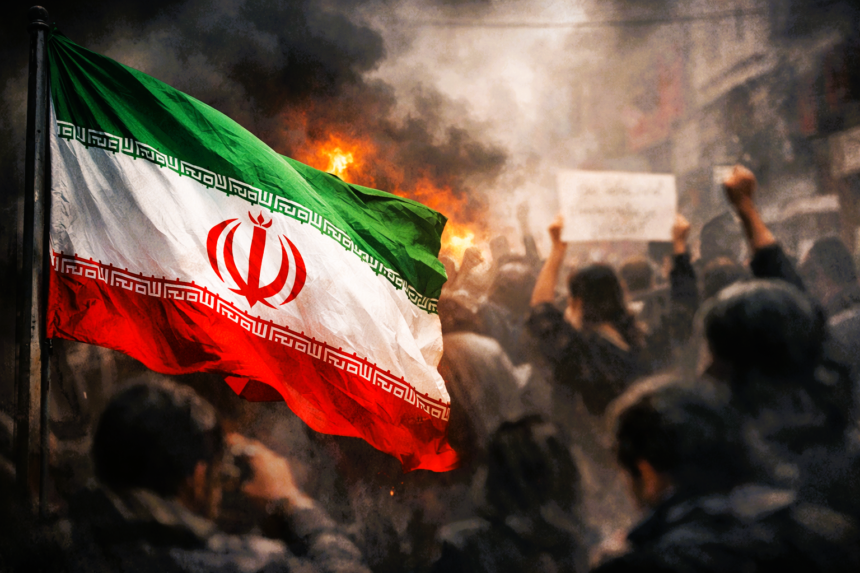

Iran has been gripped by widespread unrest since December 28, triggered by severe economic hardship and a collapsing currency under the weight of prolonged U.S. sanctions and domestic mismanagement. What began as protests over inflation, unemployment, and declining living standards has increasingly taken on a political character, with chants such as “Death to Khamenei” and “Long Live the Shah” reflecting growing anger against the theocratic system.
- Economic Roots of the Unrest
- Spread of Protests and State Response
- Trump’s Threats and Rising Regional Tensions
- Would Iran Be an Easy Target?
- Prospects of Regime Change
- Strategic Assessment
- Implications for Pakistan and the Region
- Conclusion
- Recommendations
- The author is a decorated war veteran who fought the historic Battle of Hilli in former East Pakistan and recovered the body of Maj Akram Shaheed (NH). A graduate of Command & Staff and War Courses with an MSc in War Studies, he served as Defence Attaché in Egypt and Sudan, later becoming Dean of the Corps of Military Attachés in Cairo. Formerly the Army’s spokesperson (1992) and Honorary Colonel of his battalion, he is now a renowned defence, security, and geopolitical analyst, author of five books, Patron-in-Chief of CDS Think Tank, Director of Meesakh Research Centre, and a regular participant in national TV talk shows.
- *The views and opinions expressed herein, and any references, are those of the author and do not necessarily reflect the editorial policy of the Centre for Development and Stability (CDS).
Economic Roots of the Unrest
Iran’s economy has been in steady decline for nearly eight years, particularly since the introduction of Washington’s “maximum pressure” campaign during President Donald Trump’s first term. Inflation has crossed 50 percent, the rial has lost most of its value, savings have been eroded by more than 90 percent in real terms, and the middle class is steadily shrinking. While U.S. sanctions have intensified the crisis, structural weaknesses, corruption, and economic mismanagement have played an equally damaging role.
Spread of Protests and State Response
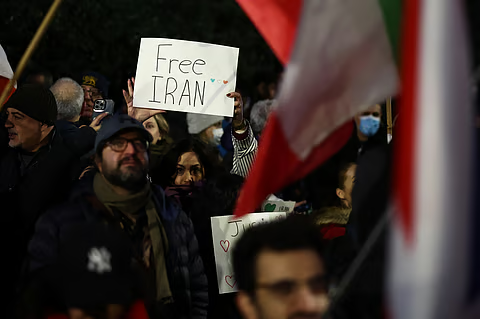
The protests spread to most provinces within two weeks—an unprecedented development. The government has sought to contain the unrest by differentiating between “legitimate protesters” and “rioters.” Security forces have shown relative restraint toward peaceful demonstrators, unlike the harsh response during the women-led protests of 2022–23, while acting decisively against armed rioters and acts of vandalism.
Supreme Leader Ayatollah Ali Khamenei and senior officials have acknowledged public grievances and announced limited relief measures, including food vouchers and planned reforms to the foreign-exchange subsidy system aimed at curbing corruption. These steps briefly reduced tensions, but protests soon resurged, suggesting that cosmetic measures are insufficient to address deep-rooted economic distress.
Tehran continues to accuse the United States and Israel of fomenting unrest. Clashes have resulted in casualties on both sides, including losses within the Islamic Revolutionary Guard Corps (IRGC). Thus far, police and paramilitary forces have borne the brunt of crowd control, but the regime faces a difficult calculus should unrest intensify further.
Trump’s Threats and Rising Regional Tensions
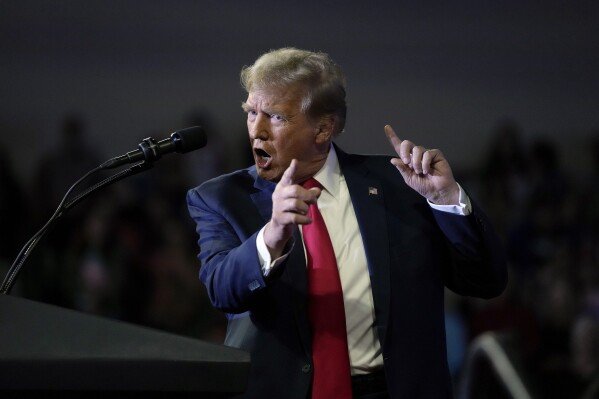
Soon after the protests began, President Donald Trump warned Iranian leaders against a violent crackdown, threatening U.S. intervention. On January 11, he reportedly issued a 48-hour ultimatum, prompting Tehran to signal its readiness to retaliate. These threats, combined with earlier warnings over Iran’s nuclear and missile programs, Israeli belligerence, and Iran’s defiance, have sharply raised tensions across the Middle East.
The situation has been further complicated by Washington’s recent military action in Venezuela on January 3, widely viewed as a violation of international law. President Trump’s subsequent rhetoric toward Greenland, Panama, Cuba, Mexico, and Iran has heightened fears that Tehran could be the next target.
Would Iran Be an Easy Target?
Iran is not Panama or Venezuela. Despite suffering damage in the June 2025 confrontation, Iran managed to penetrate Israel’s multilayered air defenses and inflict material and human losses using missiles and drones. Since then, Tehran has further strengthened its missile arsenal, air defenses, and counterintelligence apparatus, dismantling several alleged espionage networks.
Neither the CIA nor Mossad has succeeded in penetrating Iran’s senior military or IRGC leadership. Despite ideological divisions between conservatives and reformists, there is broad consensus on national security. Roughly 60 percent of Iranians favor economic reform without regime change, while only a minority—comprising liberals, socialists, and some neutrals—openly seek the overthrow of the system.
Iran is a large country with a battle-hardened military and significant strategic depth. External coercion or military strikes are unlikely to deter Tehran from pursuing its nuclear program, which it maintains is for peaceful purposes.
Prospects of Regime Change
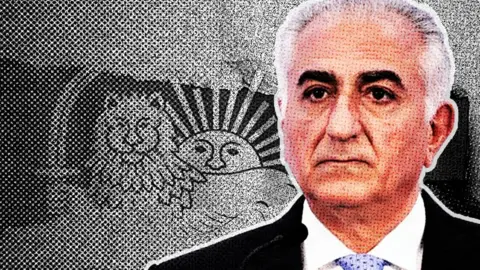
Speculation persists that Iran is edging toward regime change—an outcome openly desired by the United States and Israel. Reza Pahlavi, son of the former Shah, has appealed from Washington for foreign intervention. However, worsening internal security does not yet indicate regime collapse. Although casualties have mounted—nearly 200 protesters and several dozen security personnel killed, with thousands arrested—security forces remain cohesive.
The IRGC has declared preservation of the Islamic system a red line, warning of severe penalties for armed violence and sabotage. The regular army has also pledged to safeguard national interests and critical infrastructure. There is no evidence of fractures within the military—an essential prerequisite for successful regime change.
Strategic Assessment
The activation of U.S. air bases in the Gulf, deployment of special forces, aerial refueling assets in Doha, and increased U.S. air patrols over the Persian Gulf suggest preparations for possible escalation. Another U.S.–Israeli military intervention cannot be ruled out.
A ground invasion is improbable; neither Washington nor Tel Aviv can afford it. The more likely option would be extensive aerial strikes on Iranian military targets. Unlike Venezuela, Iran’s military leadership is neither compromised nor divided. Any such attack would be costly, particularly for Israel, and could provoke Iranian retaliation against U.S. bases in the region.
There is no rift between Iran’s government and its armed forces, nor between the president and the supreme leader. Even if imposed, a regime change led by foreign powers would not resolve Iran’s socio-economic problems; it would likely deepen instability and suffering.
Implications for Pakistan and the Region
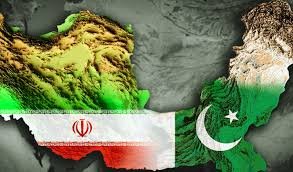
A war in Iran would have serious repercussions for Pakistan’s security and economic recovery, potentially emboldening destabilizing elements at home. It would also undermine the strategic interests of China, Russia, Central Asian states, and Saudi Arabia, with the Belt and Road Initiative and CPEC particularly vulnerable under a pro-American dispensation in Tehran.
Regime change in Iran would profoundly affect the future of Hezbollah, Hamas, and the Houthis. While Iran may receive moral, diplomatic, or limited material support from some partners, it would largely be compelled to fight alone—much as Pakistan has historically fought its own wars.
Conclusion
Iran is passing through a critical phase marked by economic distress, social discontent, and intense external pressure. While the protests reflect genuine public grievances, they do not yet amount to a revolutionary movement capable of dismantling the Islamic Republic.
The cohesion of Iran’s military, IRGC, and state institutions remains intact, and national security considerations continue to override internal political divisions. External military intervention or forced regime change would neither stabilize Iran nor resolve its economic problems; instead, it would plunge the country and the wider region into prolonged instability.
A U.S.–Israeli military adventure against Iran would be far more complex and costly than recent interventions elsewhere. Iran possesses credible deterrent capabilities and the will to retaliate, potentially triggering a wider regional conflagration. Such a conflict would have severe geopolitical and geoeconomic consequences, directly affecting Pakistan, China, Russia, the Gulf states, and Central Asia, while undermining regional connectivity initiatives and energy security.
Recommendations
Avoid Military Escalation: Regional and global powers should exercise restraint. Any military strike on Iran risks uncontrollable escalation and long-term instability across the Middle East and South Asia.
Economic Engagement and Sanctions Relief: Sustainable stability in Iran requires gradual sanctions relief linked to verifiable economic and diplomatic steps, enabling Tehran to undertake meaningful structural reforms and curb corruption.
Internal Reform over Regime Change: Iran’s leadership must prioritize economic restructuring, transparency, and social justice. External attempts at regime change are counterproductive and likely to exacerbate popular suffering.
Regional Dialogue Framework: A regional security and economic dialogue involving Iran, Gulf States, Pakistan, Turkey, China, and Russia should be encouraged to reduce mistrust, prevent conflict, and promote cooperative security.
Pakistan’s Strategic Posture: Pakistan should maintain a balanced and cautious policy—supporting Iran diplomatically, safeguarding its western and southern flanks, and insulating its economy from spillover effects of regional conflict.
Protect Regional Connectivity Projects: Stakeholders in BRI and CPEC must proactively plan for contingencies to shield critical infrastructure and trade routes from disruption.
Counter External Destabilization: Regional states should cooperate to prevent intelligence-driven subversion and proxy warfare that could inflame internal unrest in sovereign countries.
In sum, Iran’s crisis demands political wisdom, economic pragmatism, and regional cooperation rather than coercion and confrontation. Stability, not regime change, remains the only viable path toward peace and prosperity in an already volatile region.