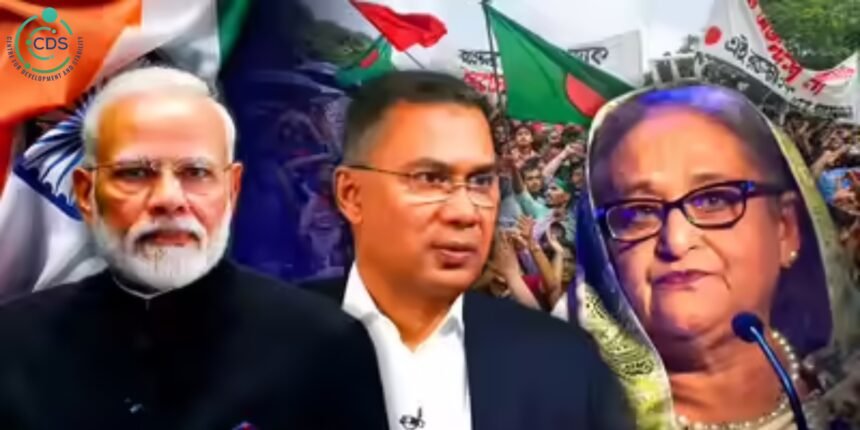

On December 25, 2025, Tarique Rahman, arrived Bangladesh after 17 years in exile. He lived in London since he fled Bangladesh in 2008 and called this exile a politically motivated persecution. He was greeted by massive crowds of delighted supporters waving Bangladesh National Party (BNP) flags, chanting slogans, and lining the streets from Hazrat Shahjalal International Airport to Dhaka. This whole scene reflected that Bangladesh was reclaiming its sovereignty after years of perceived external interference.
Tarique, son of former President Ziaur Rahman and three-time Prime Minister Khaleda Zia, had lived in London since 2008 amid politically motivated cases under military-backed and Awami League governments. He faced dozens of charges, ranged from corruption to conspiracy, many of which led to convictions in absentia.
Following Sheikh Hasina’s ouster in August 2024 amid student-led protests, Bangladesh’s courts acquitted him of all major allegations and cleared the path for his return. Unfortunately, just five days later, on December 30, 2025, his ailing mother Khaleda Zia passed away. That added deep personal grief to this historic moment. Rahman is being viewed as the prime ministerial candidate in February’s general election.
In his address to the cheering crowds, he began his speech with words, “Beloved Bangladesh,” and vowed to build an inclusive Bangladesh for all faiths of people. He stressed that with everyone’s cooperation, his vision for rebuilding a democratic country with a strong economic foundation can become reality.
He positioned the BNP as the frontrunner for the February 2026 elections, with himself as a prime candidate for prime minister. His return has energised the party, indicating a shift toward democratic renewal after prolonged authoritarianism.
This revival stood in stark contrast to India’s long-standing and controversial role in supporting Sheikh Hasina’s 15-year rule from 2009–2024. India regarded Hasina as a reliable ally for strategic interests to counter so called Islamist militancy, secure transit routes, and check China’s growing influence. As a result of India’s support bilateral trade flowed, infrastructure deals flourished, and Hasina cracked down on people who opposed India’s aggressive ambitions and influence in Bangladeshi.
However, this partnership undermined the democracy in Bangladesh. India did not care about the condition of democracy in Bangladesh whether there is corruption, denial of rights, or ongoing violations of human rights.
Moreover, India largely overlooked widespread electoral irregularities. The authoritarian regime of Sheikh Hasina from 2009 to 2024 distorted the shape of democracy. Her regime created a political environment known for extensive dissent suppression, judicial and electoral manipulation, and restricted press freedom, significantly damaged Bangladesh’s democracy.
India’s unwavering support enabled Hasina’s authoritarian drift and turned Bangladesh into a single party state where opposition voices were silenced through arrests, disappearances, and media control.
However, the 2024 uprising exposed what Bangladesh has been suffering from under the authoritarian regime. Mass protests against job quotas evolved into a nationwide revolt against dictatorship, many Bangladeshis blamed India’s “big brother” attitude for sustaining Hasina’s grip. Anti-India sentiment exploded, campaigns like “India Out” gained traction.
Hasina flew to India after her ouster, where she received refuge. But Bangladesh demanded extradition and ordered death sentence for crimes against humanity in the 2024 crackdown.
India’s decision to shelter Hasina has strained ties to breaking point. Dhaka has accused her of plotting from Indian soil to weaken the interim government and upcoming elections. Tarique’s return symbolizes Bangladesh’s push for an independent foreign policy under the BNP leadership. Tarique’s return offers hope for fair elections and restored sovereignty.
On political front, India staunchly supported Sheikh Hasina and believed she would protect India’s interests in Bangladesh. Over time, that support and close association made many Bangladeshis feel that Sheikh Hasina was too dependent on India. Public anger against her government and toward India raised. Therefore, instead of helping India, this strategy hurt India’s image in Bangladesh.
Tarique Rahman’s barefoot step on home soil is a reminder that true partnership respects independence not dominance. As Bangladesh heads toward February 2026 polls, the question remains, will Bangladesh learn from its costly alignment, or remain trapped in regional tensions?