
A New Threat Narrative after the Cold War
Following the disintegration of the Soviet Union in 1991 and the collapse of communism, the United States emerged as the sole global superpower. In the absence of a rival ideological challenger, a new threat narrative became necessary to sustain Western strategic dominance and justify continued geopolitical interventionism.
- A New Threat Narrative after the Cold War
- The “New World Order” Concept
- Impact of 9/11
- Islamophobia as a Strategic Instrument
- Categorisation of Muslim States
- Broader Strategic Objectives
- Media Warfare and Cultural Assault
- Changing Realities in the West
- Moral Perspective
- Emerging Muslim Defence Bloc in the Middle East
- The author is a decorated war veteran who fought the historic Battle of Hilli in former East Pakistan and recovered the body of Maj Akram Shaheed (NH). A graduate of Command & Staff and War Courses with an MSc in War Studies, he served as Defence Attaché in Egypt and Sudan, later becoming Dean of the Corps of Military Attachés in Cairo. Formerly the Army’s spokesperson (1992) and Honorary Colonel of his battalion, he is now a renowned defence, security, and geopolitical analyst, author of five books, Patron-in-Chief of CDS Think Tank, Director of Meesakh Research Centre, and a regular participant in national TV talk shows.
- *The views and opinions expressed herein, and any references, are those of the author and do not necessarily reflect the editorial policy of the Centre for Development and Stability (CDS).
Islam—particularly political and revivalist Islam—was gradually projected as a challenge to the Western capitalist and liberal order.
The “New World Order” Concept
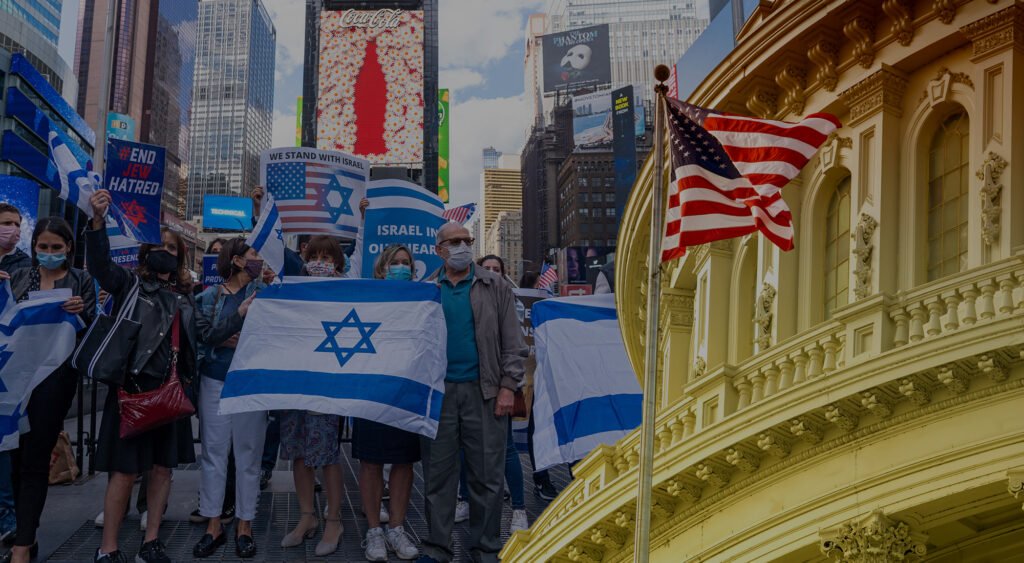
A so-called New World Order, promoted by influential Zionist lobbies and American neoconservative circles, envisioned unchallenged U.S. supremacy for the next century. Within this framework, “radical Islam” was deliberately positioned as the principal adversary, replacing communism as the new ideological enemy.
Impact of 9/11
The events of 9/11 became a defining inflection point. While the attacks undeniably reshaped global security thinking, they were used—rightly or wrongly—as the foundational justification for an orchestrated, Muslim-centric Global War on Terror (GWOT).
This campaign disproportionately targeted Muslim countries, aiming to weaken the political, military, and economic foundations of the 57 Muslim states. The consequences were catastrophic: invasions, regime change operations, state collapse, proxy wars, and prolonged economic strangulation—beginning with Afghanistan and Iraq and spreading across the Middle East and South Asia.
Islamophobia as a Strategic Instrument
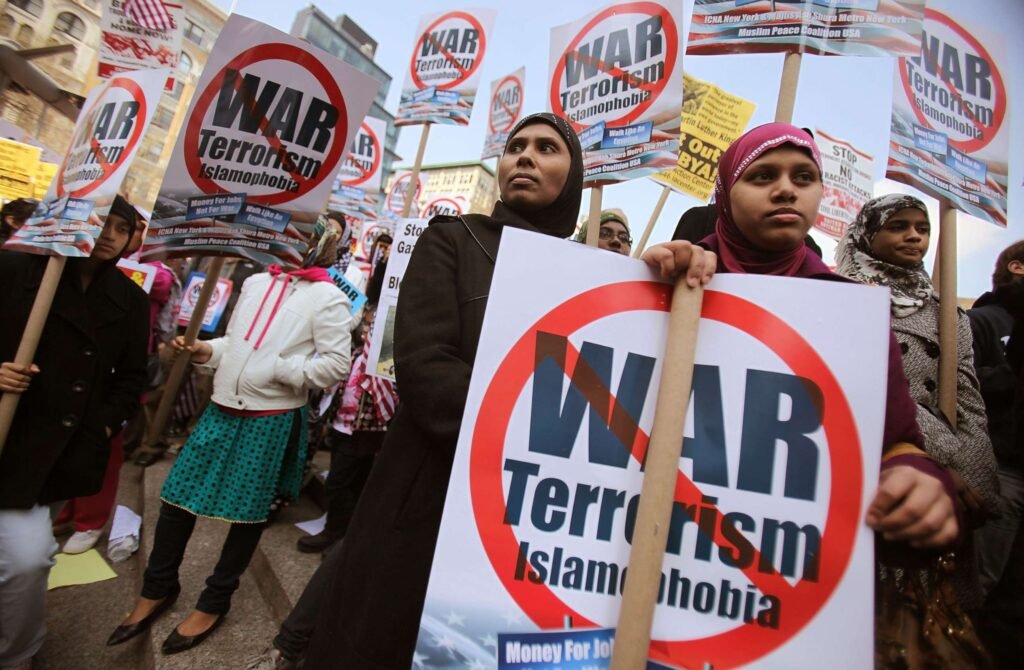
The post-9/11 era witnessed an unprecedented surge in Islamophobia. More than two billion Muslims were collectively stereotyped, dehumanised, and portrayed as potential extremists. Hate crimes, racial profiling, social exclusion, and xenophobia escalated sharply across Europe and North America. Islamophobia ceased to be a fringe prejudice and became institutionalised through policy frameworks, media narratives, and political discourse.
Categorisation of Muslim States
Even prior to 9/11, Muslim states—particularly in the Middle East—had been categorised as “moderate” or “radical” following the Arab-Israeli wars and the 1979 Iranian Revolution. This artificial binary later served as a convenient tool to justify selective destabilisation and regime change, beginning with Iraq and followed by Libya, Syria, and Yemen.
Broader Strategic Objectives
The overarching objective was to secularise and fragment Muslim societies by:
- Undermining Islam as a civilisational and political force
- Dividing Muslims into “moderates” and “fundamentalists”
- Branding legitimate resistance movements as terrorism
- Promoting Western liberalism as the only acceptable worldview
Media Warfare and Cultural Assault

Western electronic and print media played a decisive role in shaping public perceptions. Islam was routinely depicted as intolerant, violent, and incompatible with modernity. Deliberate provocations followed, including desecration of the Holy Qur’an, caricatures of the Holy Prophet Muhammad ﷺ in parts of Europe, and films mocking Islamic beliefs under the banner of free speech.
Simultaneously, Hindutva-driven extremism under the BJP-RSS regime institutionalised Islamophobia across South Asia, generating destabilising spillover effects in Pakistan and the wider region.
Ironically, hostile intelligence agencies also exploited Muslim proxies to inflame sectarianism and terrorism inside targeted Muslim states, deepening internal fractures and weakening societal cohesion.
Changing Realities in the West
Despite decades of systematic Islamophobia, demographic and political realities in the West are evolving. Several major Western cities now have Muslim mayors, including New York, London, Birmingham, Leeds, Sheffield, Oxford, Luton, Oldham, and Rochdale.
Mayor Mamdani of New York took his oath on the Holy Qur’an, while in Britain halal food has become standard in many public institutions. These developments—achieved by Muslim minorities—reflect Islam’s growing social integration and political legitimacy, despite persistent hostility and misrepresentation.
Moral Perspective
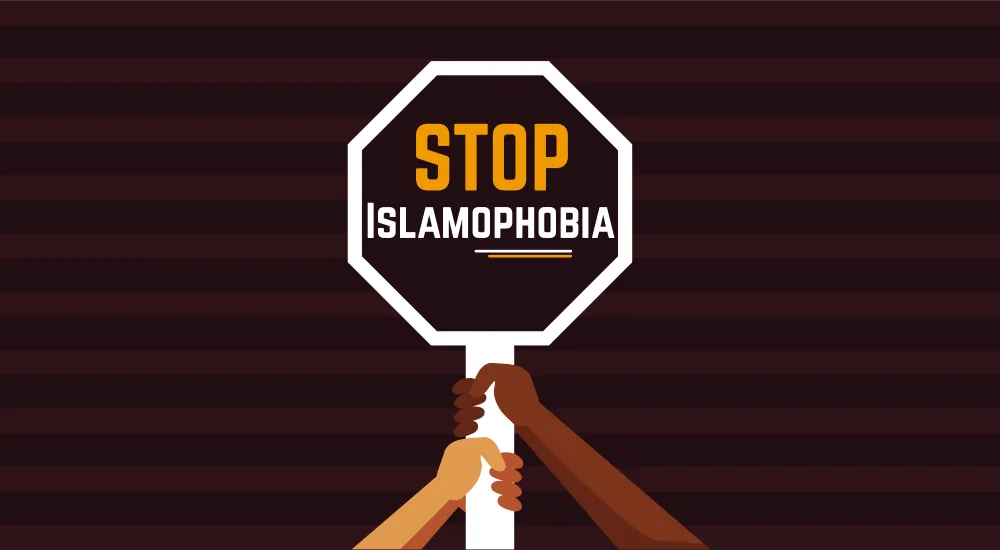
Islamophobia, although weaponised as a strategic tool to fragment and dominate the Muslim world, has failed in its primary objective. Islam has not weakened; it has expanded. Muslim identity has not diminished; it has reasserted itself with renewed confidence.
Attempts to suppress Islam through military force, propaganda, and cultural coercion have instead exposed the moral contradictions and selective application of human rights in Western policies. History consistently demonstrates that faith-based civilisations rooted in resilience and justice cannot be eradicated through coercion.
For Muslim societies—particularly Pakistan—the lesson is clear: unity, moral clarity, good governance, institutional strength, and intellectual confidence, rather than blind imitation or internal discord, are the foundations of sustainable revival.
Emerging Muslim Defence Bloc in the Middle East
The four-day war between India and Pakistan in May 2025 significantly elevated Pakistan’s regional standing, projecting it as a credible stabiliser and security provider. Concurrently, Arab and other Muslim States have accelerated defence cooperation and military partnerships.
Following the Israeli strike on Doha in September 2025, regional insecurity intensified among Gulf states. This led to the signing of a Strategic Mutual Defence Agreement (SMDA) between Saudi Arabia and Pakistan on September 17, 2025, in Riyadh.
The agreement stipulates that aggression against either state would be considered an attack on both, reinforcing collective deterrence, joint military planning, intelligence sharing, training, and capacity building. It formalises longstanding defence cooperation, including the training of thousands of Saudi military personnel by Pakistan over several decades.
Subsequent discussions have explored converting Saudi financial assistance into defence procurement arrangements and expanding military exchanges. If broadened, such a framework could substantially reshape regional power balances and enhance strategic autonomy for participating states.
The prospect of Qatar aligning with a defence architecture involving Pakistan, Saudi Arabia, Turkey, and potentially Egypt has gained renewed momentum following public advocacy by Sheikh Hamad bin Jassim bin Jaber Al Thani, former Prime Minister of Qatar. He highlighted the vulnerability of smaller Gulf states and emphasised the urgency of developing robust collective security mechanisms amid shifting Western alliance priorities.
Although further alignment remains speculative, the growing emphasis on self-reliant regional security frameworks signals a potential strategic realignment across the Middle East and South Asia.