

Upcoming Elections and a Sensitive Diplomatic Moment
With upcoming elections and shifting political cycles, Pakistan–Bangladesh relations are entering a delicate phase where timing, messaging, and optics matter as much as policy intent. Election periods in South Asia typically make governments more cautious in foreign affairs, especially when a relationship carries historical baggage and can easily become a domestic political talking point. In Bangladesh in particular, any move toward deeper engagement with Pakistan can be scrutinized through the emotional and political lens of 1971, meaning that even practical cooperation may be framed carefully as “technical,” “routine,” or “institutional” rather than strategic realignment.
- Upcoming Elections and a Sensitive Diplomatic Moment
- A Relationship Long Defined by History
- The Diplomatic Reset: From Occasional Contact to Structured Engagement
- A Quiet but Major Signal: Bangladesh’s Purpose-Built Embassy in Islamabad
- Defence Cooperation Becomes the New Centre of Gravity
- Fighter Maintenance: The Strategic Partnership That Doesn’t Make Headlines
- The JF-17 Question: A Platform That Creates a Long-Term Ecosystem
- Connectivity Restored: Direct Flights and Mobility as Confidence Builders
- Shared Economic Pressure: Why Pragmatism Is Winning
- Conclusion: Elections Shape the Pace, Strategy Shapes the Direction
This does not mean normalization will stop. More often, elections influence how normalization proceeds. Working-level engagement such as foreign office consultations, technical defence exchanges, visa facilitation measures, etc, can continue quietly because bureaucracies and institutions operate on continuity. What may slow down is the public-facing side: major announcements, high-profile visits, and defence procurement decisions that carry symbolic weight. In that sense, elections become relevant not as a brake on strategy, but as a factor shaping pace and presentation. A government confident of its political mandate can move faster; one facing domestic contestation tends to proceed cautiously, preferring incremental steps that are harder to politicize.
Against that political backdrop, the recent movement in Pakistan–Bangladesh ties looks less like sudden enthusiasm and more like a carefully managed recalibration, one that acknowledges domestic sensitivities while still pursuing pragmatic gains.
A Relationship Long Defined by History
To understand why the current shift is so notable, it is necessary to return to the historic baseline. Pakistan and Bangladesh share a relationship unlike most in the region: it is rooted in a painful rupture rather than a gradual evolution. The separation of East Pakistan in 1971 was traumatic and deeply contested, shaping national narratives for decades. For Bangladesh, independence is inseparable from memories of war, displacement, and suffering. For Pakistan, the loss of its eastern wing was a profound national shock that reshaped its political identity and strategic posture.
Although diplomatic relations were normalized in the mid-1970s, the relationship remained constrained by unresolved historical grievances and competing interpretations of closure. Dhaka periodically raised demands tied to apology, accountability, and financial claims. Islamabad maintained that outstanding matters had been addressed through earlier bilateral and multilateral arrangements. These divergent narratives limited trust and narrowed the scope of cooperation.
Over time, estrangement became routine. Trade remained modest and indirect. Defence ties were virtually absent. People-to-people contact declined. In Bangladesh, the political potency of 1971 ensured that engagement with Pakistan remained sensitive and easy to politicize. In Pakistan, Bangladesh was often viewed through a historical prism rather than treated as a priority partner in South Asian diplomacy.
The regional environment reinforced this distance. Bangladesh’s growing strategic and economic alignment with India after 2009 further narrowed space for deeper Pakistan engagement. For Islamabad, that alignment created the perception that Dhaka’s policy was anchored more in regional political equations than in independent strategic calculation. Yet history—however heavy—does not permanently freeze diplomacy. When the strategic environment changes, foreign policy begins to move.
The Diplomatic Reset: From Occasional Contact to Structured Engagement
The first visible sign of recalibration has been the return of structured diplomatic dialogue. After a 15-year gap, Pakistan and Bangladesh revived foreign secretary-level consultations. While such meetings can appear procedural, they are often the foundation of serious diplomacy. They establish continuity, create a framework for follow-up, and signal that engagement is no longer episodic.
Official briefings emphasized a constructive atmosphere and a forward-looking agenda covering trade, connectivity, security cooperation, and people-to-people exchanges. The tone itself was meaningful: it reflected an effort to avoid symbolic confrontation and instead build a relationship through practical deliverables. This is how normalization becomes durable, not through one dramatic event, but through repeated institutional interaction that gradually reduces mistrust.
A Quiet but Major Signal: Bangladesh’s Purpose-Built Embassy in Islamabad
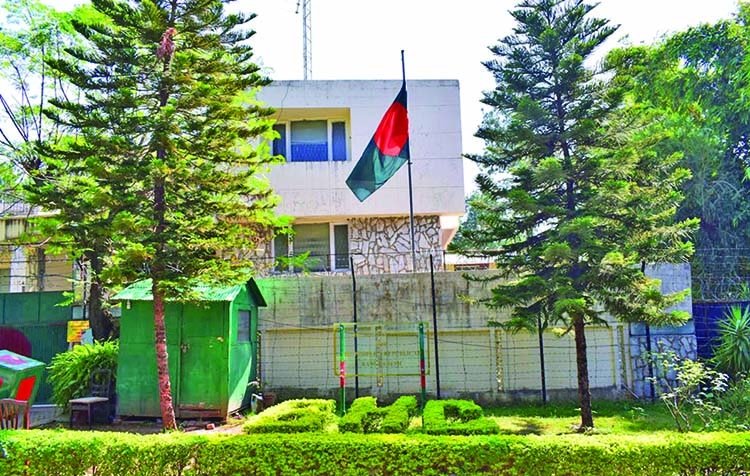
One of the most consequential developments is Bangladesh’s decision to establish a large, purpose-built embassy complex in Islamabad, more than fifty years after independence. In diplomatic terms, this is not a routine upgrade. Purpose-built embassies reflect long-term intent. They suggest a belief that the relationship will require expanded institutional presence, more frequent engagement, and sustained administrative capacity.
From Pakistan’s perspective, the embassy investment is widely seen as a milestone. It indicates that Dhaka is preparing for a relationship anchored in institutions rather than temporary political moods. It also suggests a shift away from diplomatic minimalism toward a more normalized posture, an important change given the historical context.
Defence Cooperation Becomes the New Centre of Gravity
The most substantive transformation in Pakistan–Bangladesh ties is emerging in defence. For decades, defence cooperation was politically unthinkable. Today, it is becoming the relationship’s most strategic pillar. Bangladesh’s request for Pakistan’s assistance in air defence systems and air surveillance capabilities signals a move toward capability-driven cooperation. Discussions on radar integration, airspace monitoring, and defensive modernization reflect operational needs shaped by a changing regional security environment.
What makes this cooperation sustainable is how it is being framed. It is not presented as aggressive alignment, but as technical modernization and capacity building. In modern military doctrine, air defence is as much about situational awareness and command-and-control integration as it is about interceptors. That framing allows both sides to deepen engagement while keeping political messaging disciplined.
Fighter Maintenance: The Strategic Partnership That Doesn’t Make Headlines
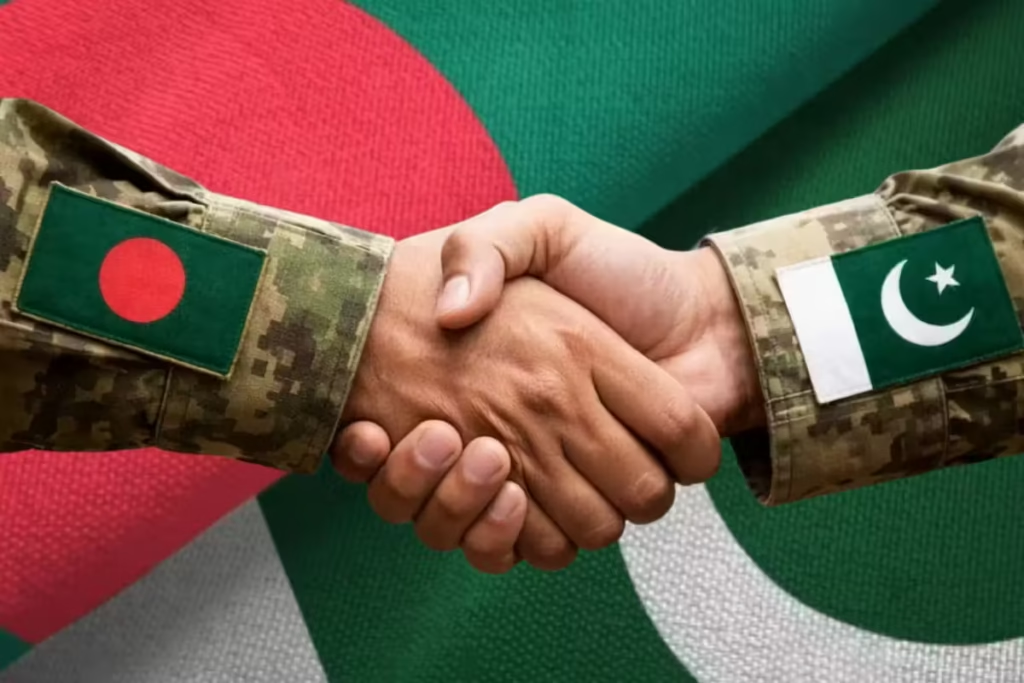
Equally significant is Bangladesh’s interest in fighter aircraft maintenance, repair, and overhaul cooperation. Defence professionals know that readiness depends less on how many aircraft are purchased and more on how many can be kept operational. Bangladesh operates a diverse fleet, and sustainment is a strategic priority. Pakistan’s experience maintaining mixed-origin fleets under constrained resources, indigenizing spares and extending service life makes it a relevant technical partner.
This form of cooperation also creates long-term institutional links. Maintenance partnerships require training pipelines, shared standards, and logistics coordination. They build relationships that endure beyond political cycles, which is precisely why they are strategically important even when they attract less public attention.
The JF-17 Question: A Platform That Creates a Long-Term Ecosystem
Bangladesh’s expressed interest in acquiring the JF-17 Thunder is arguably the most strategically consequential element of the evolving defence relationship. The aircraft’s appeal lies in affordability, adaptability, and manageable lifecycle costs—qualities that matter for air forces operating under fiscal constraints. Unlike prestige systems, the JF-17 is positioned as a practical platform with incremental upgrade potential.
For Pakistan, the JF-17 is more than a fighter jet. It is a defence diplomacy instrument that can strengthen bilateral ties and generate economic value through exports, training, and long-term sustainment arrangements. For Bangladesh, interest in the JF-17 also signals a broader strategy of supplier diversification—reducing dependence on a narrow set of partners and improving negotiating leverage.
Crucially, such acquisitions are not plug-and-play. They require training, infrastructure adjustments, and sustainment planning. That reality reinforces the strategic nature of the relationship: a fighter sale, if it materializes, would embed cooperation for years, not months.
Connectivity Restored: Direct Flights and Mobility as Confidence Builders
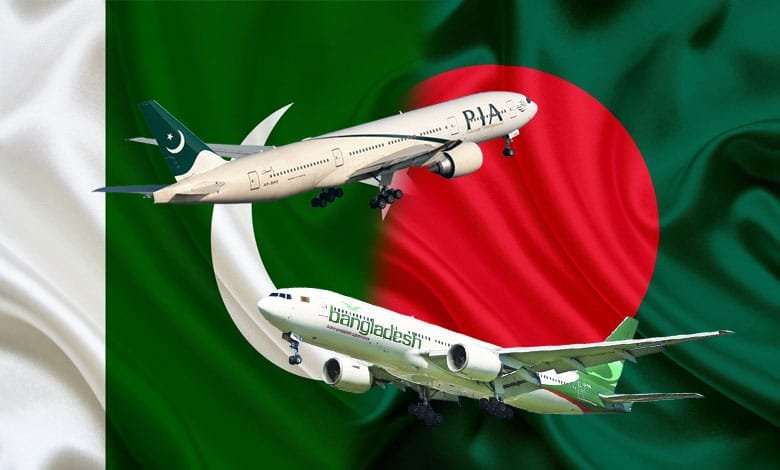
Normalization is also visible through practical connectivity measures, including the resumption of direct flights after a long suspension and visa-free entry for diplomatic and official passport holders. These steps matter because they turn political intent into operational reality. Defence delegations, technical teams, and business travelers can move more easily, enabling sustained engagement rather than symbolic visits.
Over time, connectivity reduces distance, psychological as well as logistical, and supports the gradual normalization of working relationships.
Shared Economic Pressure: Why Pragmatism Is Winning
Both Pakistan and Bangladesh face fiscal constraints, including IMF-linked pressures that shape policy choices across sectors, including defence. This economic reality encourages pragmatic cooperation focused on maintenance, training, and cost-effective modernization rather than expensive, prestige acquisitions. It also explains why defence diplomacy is attractive: it can deliver capability outcomes while remaining politically and fiscally manageable.
At the same time, for normalization to become structurally resilient, the relationship must deepen economically. Defence engagement can open doors, but long-term stability requires trade facilitation, business linkages, and sector-specific cooperation.
Conclusion: Elections Shape the Pace, Strategy Shapes the Direction
Pakistan–Bangladesh relations are no longer frozen in the shadow of 1971. History remains powerful, but it no longer monopolizes the agenda. Defence cooperation, diplomatic investment, restored connectivity, and shared economic realism are creating a forward-looking relationship based on practical interests and strategic autonomy.
Upcoming elections will influence the pace and public messaging of this transition. They may encourage quieter engagement and careful framing rather than bold announcements. But the underlying logic driving normalization – capability needs, institutional diplomacy, and regional recalibration – appears durable. In a region where gradual moves often matter most, the evolving Pakistan–Bangladesh partnership may prove more consequential than its understated tone suggests.