
Pakistan’s Frailties
Until the first decade of May 2025, the national atmosphere was weighed down by uncertainty and apprehension. The negative effects of elite capture, political polarization and political instability fanned by PTI after its ouster from power, made the economy frail.
- Pakistan’s Frailties
- The Four-day War
- Change of Fortunes
- Diplomatic Revival and Global Recalibration
- Restored Confidence at Home
- Strategic Realignment
- Pakistan – A Net Stabiliser
- A Gift—and A Test
- The Economic Imperative: Breaking Free from Debt
- Corruption and Justice: The Moral Battleground
- The Citizen at the Center of Renewal
- Looking Ahead to 2026
- Diplomatic Revival and Global Recalibration
- A Gift—and A Test
- The Economic Imperative: Breaking Free from Debt
- Corruption and Justice: The Moral Battleground
- The Citizen at the Center of Renewal
- Conclusion
- The author is a decorated war veteran who fought the historic Battle of Hilli in former East Pakistan and recovered the body of Maj Akram Shaheed (NH). A graduate of Command & Staff and War Courses with an MSc in War Studies, he served as Defence Attaché in Egypt and Sudan, later becoming Dean of the Corps of Military Attachés in Cairo. Formerly the Army’s spokesperson (1992) and Honorary Colonel of his battalion, he is now a renowned defence, security, and geopolitical analyst, author of five books, Patron-in-Chief of CDS Think Tank, Director of Meesakh Research Centre, and a regular participant in national TV talk shows.
- *The views and opinions expressed herein, and any references, are those of the author and do not necessarily reflect the editorial policy of the Centre for Development and Stability (CDS).
The parliamentary, judicial and constitutional crises, widening gulf between the rich and poor accentuated social inequities and added to the miseries of the people.
Dried up of foreign direct investments, burgeoning debts and ever increasing fiscal deficit and circular debt pushed the economy to the ebb of default.
A persistent sense of insecurity and uncertainty prevailed due to rising extremism and terrorism, record breaking inflation, price spiral, unemployment and well over 40% people living under poverty level.
These fragilities coupled with weak governance and waning of institutional confidence kept the country on a slippery slope.
The Four-day War
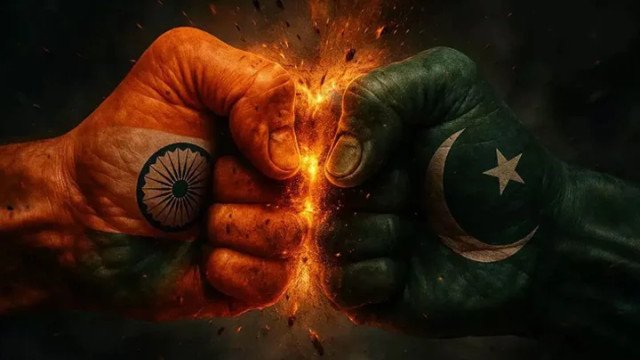
Then history intervened abruptly. India, acting in accordance with a long-standing pattern of arrogance and miscalculation, committed a folly that proved transformational.
Driven by its desire to bully and browbeat Pakistan into submission, and emboldened by the assumption that a Pakistan mired in multiple internal crises would be unable to respond effectively, the Indian military carried out unprovoked airstrikes on the night of 6 May, targeting mosques, Madrassas, and civilian sites under the pretext that these were terrorist hideouts.
What followed defied many expectations. In those critical hours, the involvement of Allah was evident in the timing, clarity, and outcome of events.
Pakistan’s response was swift, measured, and resolute, and within moments the strategic landscape was altered. The world watched as restraint combined with preparedness produced an outcome that changed perceptions overnight.
The days following 9 May marked a decisive watershed. Pakistan emerged as a country redefined—not merely in military or strategic terms, but in confidence and standing.
Globally, the narrative shifted. Diplomatically, Islamabad became a focal point of renewed engagement.
The conflict helped Pakistan in identifying its most sincere friends. China, Turkiye and Azerbaijan passed the litmus test.
Change of Fortunes
The four-day war with India proved to be a defining year for Pakistan , in which destiny, resolve, and divine grace converged with unmistakable force. It fundamentally altered the nation’s trajectory. The days following May 10 marked a decisive watershed.
The events following May 10 demonstrated what faith, unity, and preparedness can achieve. The events fundamentally altered the nation’s trajectory.
From mid-May to the closing months of 2025, a steady stream of heads of state, heads of government, senior ministers, national security advisers, economic envoys, and defense officials visited Pakistan to reaffirm ties, explore cooperation, and signal confidence in the country’s stability and relevance.
These visits were not symbolic courtesies alone. They reflected a recalibration of global attitudes. Strategic dialogues were revived, defence cooperation expanded, and economic partnerships revisited with seriousness.
Investment-focused delegations discussed energy, infrastructure, minerals, and technology. Parliamentary and diplomatic exchanges gained momentum, while regional and extra-regional actors alike acknowledged Pakistan’s renewed role as a stabilising and responsible State.
Islamabad, once perceived as defensive and reactive, was now engaging from a position of assurance and dignity.
Pakistan emerged as a country redefined—not merely in military or strategic terms, but in confidence and international standing. The global narrative shifted. Diplomatically, Islamabad became a focal point of renewed engagement.
Diplomatic Revival and Global Recalibration
These engagements were not symbolic courtesies. Strategic dialogues were revived, defense cooperation expanded, and economic partnerships revisited with seriousness.
Investment-focused delegations discussed energy, infrastructure, minerals, and technology. Parliamentary and diplomatic exchanges gained momentum.
Regional and extra-regional actors alike acknowledged Pakistan’s renewed role as a stabilizing and responsible state—engaging no longer from defensiveness, but from assurance and dignity.
Pakistan was among the eight Muslim States invited by President Donald Trump to approve his 20-Point Peace Plan for Gaza, and to become a member of the newly created ‘Board of Peace’ for Gaza.
Restored Confidence at Home
Internally, this diplomatic resurgence reinforced national morale. The psychological burden of isolation and underestimation began to lift. Institutions rediscovered coherence.
Pakistan’s posturing took a turn from a soft State to a hard State. The citizens sensed that Pakistan had regained a voice that commanded attention rather than sympathy.
The country was no longer viewed solely through a prism of perpetual crisis, but as a state capable of decisive action and mature diplomacy.
Effective military diplomacy has resulted in the conclusion of multiple defence agreements with several Muslim countries, with additional arrangements in advanced stages of negotiation. JF- 17 jets co-produced by China and Pakistan, Pakistan-built Mushak trainers and drones are in great demand.
Strategic Realignment
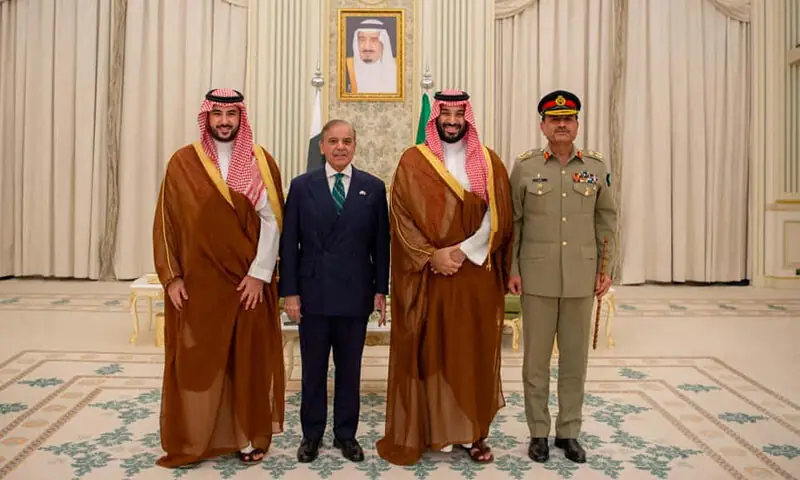
The most significant achievement has been the Pakistan–Saudi Arabia Strategic Defence Pact, which is now attracting interest from Türkiye and Egypt to join as partner states.
This strategic realignment toward Pakistan is driven by three principal factors:
First is the demonstrated operational competence of the Pakistan Armed Forces during the confrontation with India, coupled with the rising international standing of Field Marshal Asim Munir. He has become a favourite of President Donald Trump.
Second is the growing loss of confidence among GCC States in the reliability of the American security umbrella, which was severely undermined when Israeli aircraft struck Doha in September, exposing the limitations of Western security guarantees.
And the third is the Israeli ambition of creating ‘Greater Israel’, which is no longer a fantasy but a reality.
Pakistan – A Net Stabiliser
Pakistan is now recognised as a middle power, and seen as a net security stabiliser in South Asia and Middle East, with its outreach extending to Central Asia, Far East and North Africa.
The performance of security forces combating foreign sponsored terrorist groups in Khyber Pakhtunkhwa and Baluchistan is laudable.Pakistan is seen as the last bulwark standing against terrorism.
A Gift—and A Test
History teaches that such turning points are both gifts and tests.
Nations that mistake renewal for rest often squander opportunity. Endurance belongs to those who convert confidence into reform and momentum into responsibility.
There is legitimate hope and optimism that this transformation will not fade. Yet divine favor also brings trials—tests of sincerity, sacrifice, and commitment to collective good.
The Economic Imperative: Breaking Free from Debt
Foremost among Pakistan’s challenges is escaping the suffocating swamp of debt.
Economic dependence distorts priorities and constrains sovereignty. True independence cannot coexist with endless borrowing.
Fiscal discipline, productive growth, and equitable contribution must replace short-term fixes and cosmetic adjustments.
Corruption and Justice: The Moral Battleground
Equally destructive is corruption—a silent infestation eating away at the foundations of the state. Its damage extends beyond finances; it corrodes trust, mocks merit, and alienates citizens.
Justice must stand as the cornerstone of renewal—justice blind to wealth, influence, and status. A society governed by selective accountability cannot remain stable. Only equal application of law can turn unity into reality.
The Citizen at the Center of Renewal
Beyond institutions lies a deeper task: shaping the citizen.
Tolerance, forbearance, respect for law, and recognition of human dignity must be deliberately cultivated. Rights cannot exist without duties, and freedom cannot survive without responsibility.
In the wake of grave security threats, the government has taken the right decision to toughen media laws and to deal with the agents provocateurs and anti-Pakistan elements sternly.
Looking Ahead to 2026

The year ahead will determine whether this promise matures into permanence. The nation stands at a rare juncture of promise.
The events following May 9 demonstrated what faith, unity, and preparedness can achieve.
The year ahead will determine whether this promise matures into permanence.
The year demands reflection not as a passage of time, but as a moment of national reckoning.
If gratitude is expressed through reform, strength guided by justice, and faith reflected in ethical conduct, then the coming year may mark not merely continuity—but the consolidation of a national rebirth, by the grace of Allah and the steadfast will of the people.
Diplomatic Revival and Global Recalibration
The country is no longer viewed solely through a prism of perpetual crisis, but as a state capable of decisive action and mature diplomacy.
A Gift—and A Test
History reminds us, however, that such turning points are both gifts and tests. They demand perseverance and moral clarity.
Nations that mistake moments of renewal for moments of rest often forfeit their gains.
Those who endure are the ones who convert confidence into reform and opportunity into responsibility.
There is legitimate hope that this transformation will not fade. Yet divine favor also brings trials—tests of sincerity, sacrifice, and commitment to collective good.
The Economic Imperative: Breaking Free from Debt

Foremost among Pakistan’s challenges is escaping the suffocating swamp of debt.
Economic dependence distorts priorities and constrains sovereignty. True independence cannot coexist with endless borrowing.
Fiscal discipline, productive growth, and equitable contribution must replace short-term fixes and cosmetic adjustments.
Corruption and Justice: The Moral Battleground
Equally destructive is corruption—a silent infestation eating away at the foundations of the state. Its damage extends beyond finances; it corrodes trust, mocks merit, and alienates citizens.
Justice must stand as the cornerstone of renewal—justice blind to wealth, influence, and status.
A society governed by selective accountability cannot remain stable. Only equal application of law can turn unity into reality.
The Citizen at the Center of Renewal
Beyond institutions lies a deeper task: shaping the citizen.
Tolerance, forbearance, respect for law, and recognition of human dignity must be deliberately cultivated.
Rights cannot exist without duties, and freedom cannot survive without responsibility.
Conclusion
2025 was a defining Year for Pakistan. It was not shaped by routine political cycles or ceremonial milestones, but by events that fundamentally altered the nation’s trajectory.
If gratitude is expressed through reform, strength guided by justice, and faith reflected in ethical conduct, then the year 2026 may mark not merely continuity—but the consolidation of a national rebirth, by the grace of Allah and the steadfast will of the people.