
Over the past few days, a storm has been raging from social media to the provincial assembly, claiming that a secret military operation is underway in the Tirah Valley of Khyber Pakhtunkhwa, allegedly forcing thousands of families to flee their homes in fear.
- Tirah Evacuation: Governance Failure Disguised as Politics
- Media Confirmation
- A Human Moment
- Mal Intentions
- The author is a decorated war veteran who fought the historic Battle of Hilli in former East Pakistan and recovered the body of Maj Akram Shaheed (NH). A graduate of Command & Staff and War Courses with an MSc in War Studies, he served as Defence Attaché in Egypt and Sudan, later becoming Dean of the Corps of Military Attachés in Cairo. Formerly the Army’s spokesperson (1992) and Honorary Colonel of his battalion, he is now a renowned defence, security, and geopolitical analyst, author of five books, Patron-in-Chief of CDS Think Tank, Director of Meesakh Research Centre, and a regular participant in national TV talk shows.
- *The views and opinions expressed herein, and any references, are those of the author and do not necessarily reflect the editorial policy of the Centre for Development and Stability (CDS).
However, Federal Defence Minister Khawaja Asif, in an emergency briefing in Islamabad, completely overturned this narrative. He categorically stated that there is no question of any operation; seasonal migration takes place every year with the onset of snowfall.
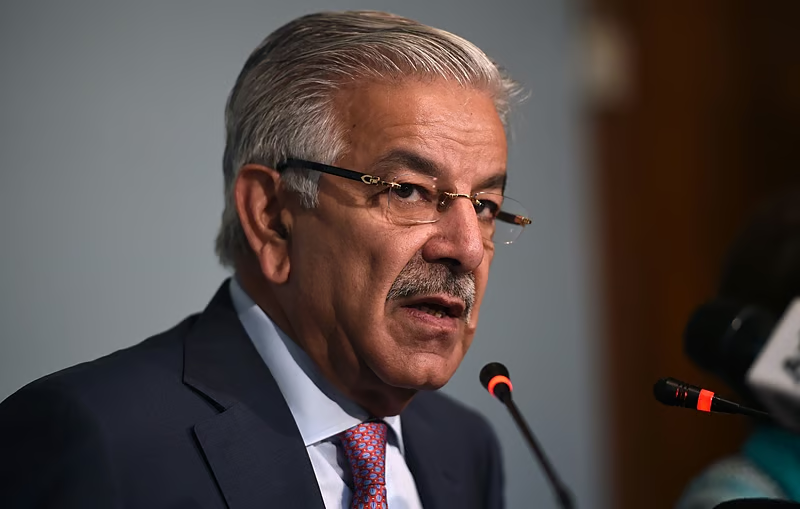
According to Khawaja Asif, large-scale conventional military operations in Tirah ended years ago. At present, only limited intelligence-based operations (IBOs) are conducted to ensure the safety of the civilian population. This position has also been corroborated by Express News and other sources, which confirm that no fresh military action is currently underway.
The Defence Minister’s second disclosure dramatically altered the entire context of the controversy.
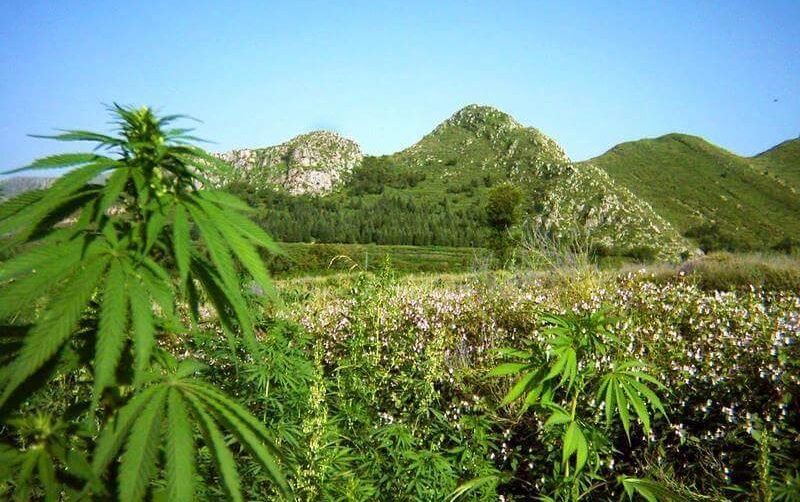
He revealed that cannabis (“bhang”) is being cultivated on approximately 12,000 acres in Tirah, generating a minimum income of Rs 3.5 million per acre. A simple calculation makes the magnitude clear:
12,000 acres × Rs 3.5 million = Rs 42 billion annually (Rs 4,200 crore).
This is the real “green gold” over which local groups, smugglers, and certain political elements are fiercely competing for control.
The provincial government has allocated Rs 4 billion for families reportedly displaced from the area. However, federal representative Ikhtiar Wali has alleged that there is a strong possibility that these funds may be diverted towards political “street movements” and factional maneuvering. This raises several critical questions:
Where are the detailed fund utilization plans?
Who will conduct a special audit?
If migration is seasonal, why is a permanent relief budget allocated every year?
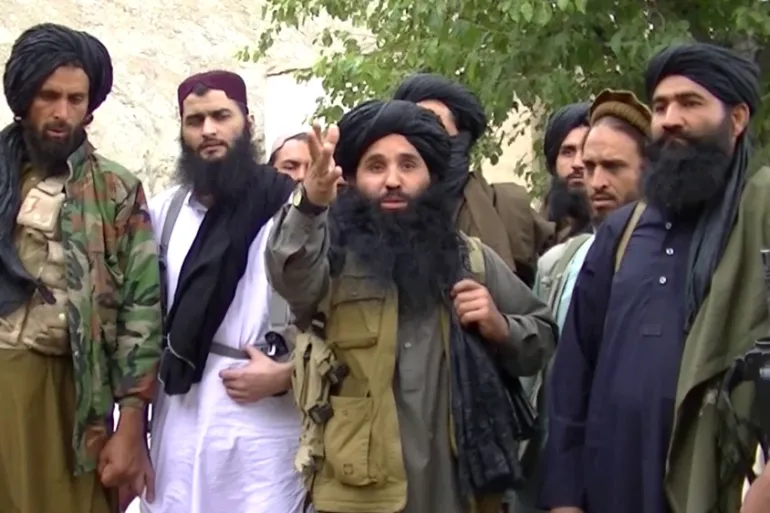
The federal briefing further disclosed that approximately 500 banned TTP militants, along with their families, are currently present in the valley. The provincial government and local jirgas reportedly maintain an unwritten “non-aggression” understanding with them, ostensibly to prevent conflict from escalating — but in reality to safeguard “economic interests,” namely the cannabis crop.
Tirah lies at an altitude of about 7,000 feet above sea level. During heavy snowfall, access to food supplies, fuel, and medical facilities virtually drops to zero. Local tribes routinely migrate to lower valleys from December to March each year. Surprisingly, this routine seasonal movement is now being portrayed as a structured “humanitarian crisis,” seemingly to enable the provincial government to exert pressure on the federal centre.
Ironically, the official notification under which this migration is taking place was itself issued by the provincial cabinet, and the same government is now demanding its withdrawal — a classic case of self-created confusion, self-inflicted damage, and self-generated uproar.
The Tirah episode once again demonstrates how narrative warfare often distorts ground realities. There is neither any new military operation nor tanks rolling over displaced populations. The real battle is over control of the Rs 42 billion “cannabis economy” and the Rs 4 billion relief fund. Unless transparent audits and internationally compliant counter-narcotics frameworks are enforced, today’s “green gold” could easily turn into tomorrow’s bloodshed.
Tirah Evacuation: Governance Failure Disguised as Politics
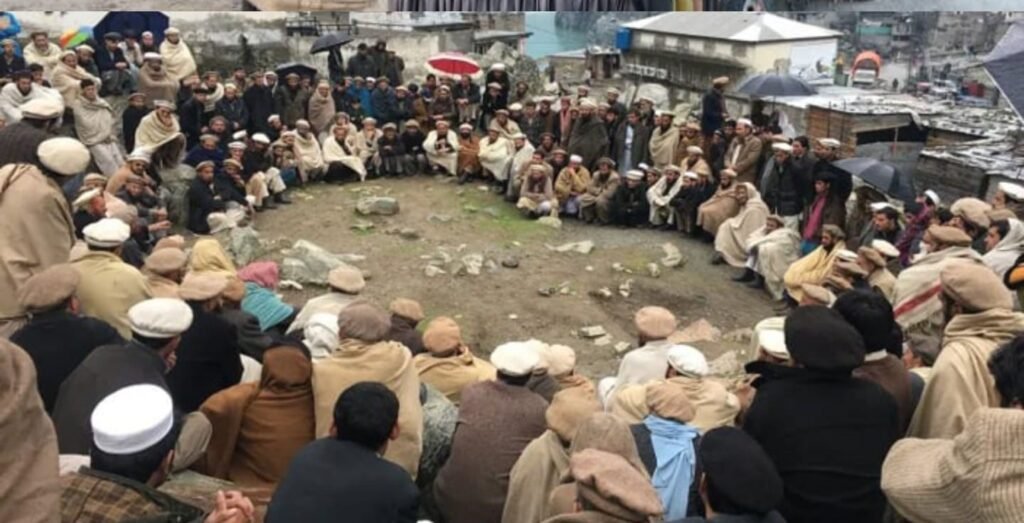
The core issue is not who approved the voluntary temporary evacuation of Tirah; the real question is why the provincial government has failed to ensure the care, safety, and protection of the temporarily displaced population.
According to the British Gazette of 1889, even in that era Afridi tribes routinely migrated during winter from Bagh Maidan and the Tirah region to warmer low-lying areas. For more than a century, tribal communities from the former FATA border regions have continued this seasonal migration every year.
If this migration is a long-established annual phenomenon, why have adequate institutional arrangements never been put in place? Why did the provincial government fail to make timely preparations, and why is it now politicizing the issue to conceal its administrative incompetence?
The real responsibility for the hardships faced by the people of Tirah lies squarely with the provincial government and with those elements that do not wish to see peace, development, and stability in Khyber Pakhtunkhwa.
Nearly eight months ago, a consensus was reached among the Khyber Pakhtunkhwa government, security institutions, tribal elders, and all stakeholders that prior to launching targeted counter-terror operations in Tirah, civilians would be temporarily evacuated to ensure their safety.
It is important to note that for the past week, the Pakistan Army has practically been the only institution providing on-ground support to the displaced population, while the provincial government and district administration remain largely absent.
Seasonal movement from Bagh Maidan and the surrounding mountainous areas during winter is routine. Yet, as in previous years, the provincial government neither made advance preparations nor ensured adequate facilitation for the people.
Despite the approval of a Rs. 4 billion allocation, no functional registration points were established, weather contingencies were ignored, and no meaningful investment was made in road rehabilitation, route clearance, rescue preparedness, or restoration planning.
This situation reflects clear administrative negligence, weak governance, and a deliberate evasion of responsibility, with attempts underway to unfairly shift the burden onto state institutions.
The provincial administration deliberately deployed a very limited number of registration counters and staff at Tirah’s entry and exit points, resulting in chaos and prolonged queues. These avoidable bottlenecks were later amplified to create distressing visuals and manufacture a politically driven narrative.
In reality, attention is being deliberately diverted from the true causes of the crisis to mask governance failures and deflect accountability, with unjustified blame being directed toward the military.
Administrative incompetence is being concealed behind emotional rhetoric, while the suffering of citizens is being exploited for political leverage in order to obscure the provincial government’s own lapses and flawed decision-making.
Media Confirmation

Commenting on the Tirah Valley situation, senior TV anchor Aasma Shirazi stated:
On our program yesterday, Shafi Jan, spokesperson for the Chief Minister of KP, confirmed that the provincial government had approved a Rs. 4 billion relief fund and had formally issued a notification for voluntary displacement.
If jirgas had already been convened and approvals granted in October and December, how can it now be claimed that people were forcibly displaced?
This issue warrants investigation at both federal and provincial levels, especially since many families are still living under open skies.
A Human Moment
A simple yet powerful exchange between a local resident and the army soldier on duty in Tirah Valley recently gained attention on social media.
The resident remarked:
“We slept peacefully in our vehicles because we knew the soldiers were present.”
The soldier replied:
“This army belongs to you. We wear this uniform for you, and your protection is our responsibility.”
This exchange captures the trust of the people and underscores where practical responsibility is actually being fulfilled
Mal Intentions
The timing and tone of this manufactured controversy strongly suggests deliberate political intent. The PTI-led Khyber Pakhtunkhwa government appears determined to deflect its own governance failures by shifting blame onto the Pakistan Army and deliberately attempting to malign its image.
This campaign is unfolding at a sensitive moment when the party is preparing to launch a street agitation on 8 February, seeking to mobilize public sentiment through confrontation and institutional polarization.
By creating artificial outrage and projecting administrative lapses as security failures, the provincial leadership is attempting to generate political oxygen for its protest movement, weaken public confidence in state institutions, and distract attention from its own incompetence, mismanagement, and inability to deliver basic governance.
Such tactics are not only irresponsible but also dangerously undermine national cohesion at a time when unity and stability are critically needed.