

Social media platforms are rife with negativity about Pakistan, its government, and the army. Critics claim that after Imran Khan’s incarceration, Pakistan—which they describe as “shining” under his rule—has entered an era of darkness and decline. They allege that the army is propping up an illegal government of “thugs” bent on looting national wealth.
- Lessons from History
- Pakistan’s Political Realities
- The PTI Collapse
- A Path Forward
- The author Brigadier (Retd.) Asif Haroon Raja, is a war veteran, defence and political analyst, international columnist, author of five books, and ex-Chairman of the Thinkers Forum Pakistan. He is currently Director of the Measac Research Centre, Patron-in-Chief of the CDS Think Tank, and Administrator of Fact Check. He frequently appears on TV talk shows and delivers lectures on strategic affairs.
- *The views and opinions expressed herein, and any references, are those of the author and do not necessarily reflect the editorial policy of the Centre for Development and Stability (CDS).
Such views demand a reality check, both from history and the present.
Lessons from History
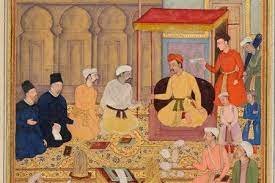
The subcontinent has been ruled by sultans, kings, and later by the British. Were they paragons of justice and honesty, dedicated to public welfare? Hardly. Corruption, exploitation, and moral decay were rampant. Vast fortunes were plundered while the masses languished in poverty. A French writer’s account of India in 1846 illustrates just how deeply corruption and vice were entrenched.
Even during the Pakistan Movement, the conduct of Congress, Hindu Mahasabha, the Muslim League, and various religious leaders was far from flawless. A significant number of Indian Muslims even opposed Quaid-e-Azam and the idea of Pakistan.
Today, is any country—including India—free of corruption? Far from it. Under Modi, India has sunk into fascism, state terrorism, and brutal suppression of minorities and Kashmiris. Its media is muzzled, and dissent is crushed. Yet, curiously, some in Pakistan glorify India to demean their own homeland.
Pakistan’s Political Realities
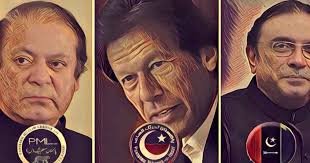
Those whom critics label as “crooks” have been repeatedly elected by the people. No party is innocent: politicians frequently switch loyalties in pursuit of wealth and power. PTI itself is filled with defectors from PML-N, PPP, and other parties. Opportunists and ambitious lawyers have now hijacked it.
Has Pakistan ever held a truly free and fair election? None. No party, including PTI, made genuine efforts to reform the electoral system or strengthen state institutions. Why then the outcry?
Every ruling party has persecuted opponents. PTI too targeted the Sharif and Zardari families with vengeance, but failed to prove a single allegation in court. Meanwhile, corruption and misgovernance scaled new heights under PTI. Not a single major promise was fulfilled.
The gravest damage, however, was not economic but institutional. For the first time, the army—long a unifying force—was vilified from within by veterans, families, and serving officers swayed by PTI’s cult-like propaganda. Hatred and suspicion were deliberately planted against the very institution safeguarding Pakistan.
The PTI Collapse
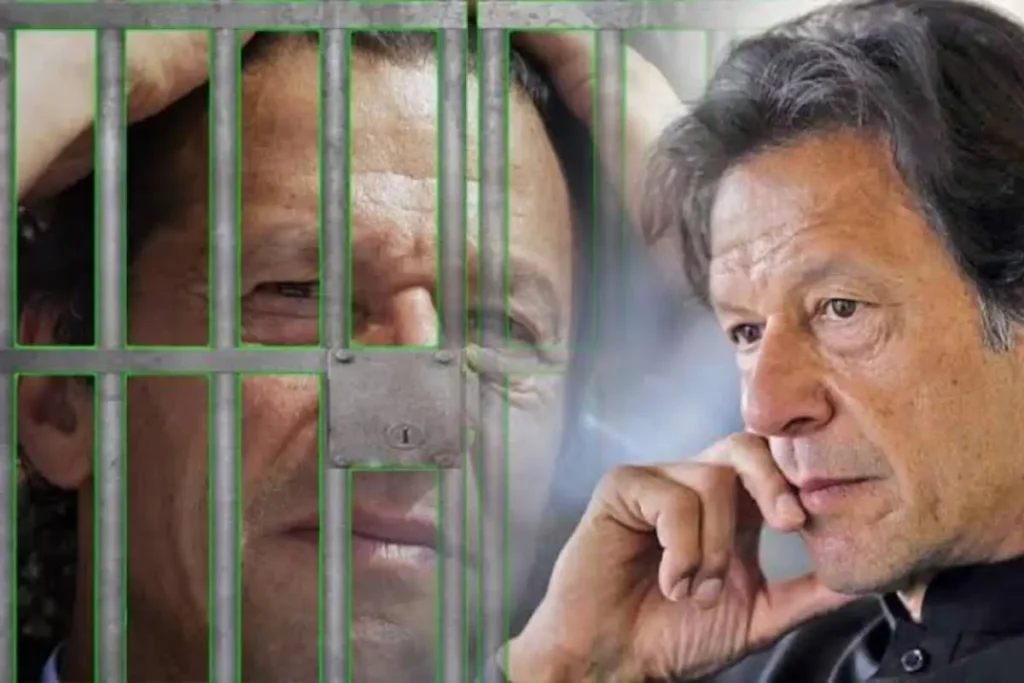
Imran Khan is a convicted man serving 14 years in jail, with further charges pending, including the May 9 arson that sought to destabilize the state and target the army chief. His intransigence—refusing to negotiate with the government while publicly abusing the military leadership—has sunk PTI.
The party is fractured and rudderless, surviving only on social media narratives and fake news. At best, it may re-emerge under new leadership, but the current chapter is closed.
A Path Forward
Despite challenges, the present government—with strong backing from the army—has stabilized the economy and improved Pakistan’s global image. These gains have been acknowledged internationally. Phase II of CPEC, once operationalized, can indeed be a game-changer for Pakistan’s destiny.
Instead of fueling despair, Pakistanis must stay positive, support the system to deliver, and contribute to national progress. Criticism is valid, but blind pessimism only serves the enemy’s cause.
The choice is ours: either act as villains spreading hopelessness, or as patriots who strengthen the nation’s resolve to sail through turbulent waters towards stability and prosperity.