

Afghanistan has been wrecked by three superpowers in different eras, yet none could conquer it.
- The author Brigadier (Retd.) Asif Haroon Raja, is a war veteran, defence and political analyst, international columnist, author of five books, and ex-Chairman of the Thinkers Forum Pakistan. He is currently Director of the Measac Research Centre, Patron-in-Chief of the CDS Think Tank, and Administrator of Fact Check. He frequently appears on TV talk shows and delivers lectures on strategic affairs.
- *The views and opinions expressed herein, and any references, are those of the author and do not necessarily reflect the editorial policy of the Centre for Development and Stability (CDS).
The British Empire was humbled and forced to retreat. The Soviet Union disintegrated and was reduced to the Russian Federation after its Afghan misadventure. The United States, the last to invade, has also begun to decline, and its brief unipolar dominance has already given way to multipolarity.
The American Onslaught

Of the three invaders, the USA was the most destructive. It occupied Afghanistan in 2001 on concocted charges, claiming to hunt down Osama bin Laden and eliminate terrorism. Under this pretext, it bombed relentlessly, destroying communication networks, water channels, infrastructure, homes, political structures, and Afghan tribal culture.
Lethal weapons—daisy cutters, uranium bomblets, cruise missiles, drones, and B-52 bombers—were unleashed mercilessly. During the infamous Tora Bora bombardment, not even reptiles survived.
The U.S. installed a puppet regime, rewrote the Afghan constitution, and incarcerated thousands in Bagram prison and at Guantanamo Bay.
Major cities were turned into military fortresses, while vast no-go areas were created where Afghans were denied entry. Afghanistan was fractured on ethnic and sectarian lines; Pashtuns were deliberately pitched against Tajiks, Uzbeks, and Hazaras.
Villages and towns in the countryside were subjected to night raids and drone attacks; thousands of innocent civilians were kidnapped, tortured, or killed.
Instead of reconstructing Afghanistan and winning the people through development, the U.S., NATO, and the Western-trained Afghan National Security Forces (ANSF) resorted to the cruelest forms of state terrorism—all in the name of eliminating extremism, spreading democracy, and “liberating” women.
Regional Designs and Double Games
The U.S. made Israel and India its strategic partners to implement its broader geostrategic agenda in the region.
Pakistan was cynically used as a frontline ally, while simultaneously being accused, sanctioned, and destabilized.
Oil-rich Arab Gulf States were coerced to normalize ties with Israel and abandon the Palestinian cause.
For two decades, these oppressive policies continued. Yet, in August 2021, the U.S. and NATO forces were forced into a humiliating withdrawal.
None of their stated objectives—counterterrorism, democracy, women’s emancipation—were achieved.
Instead, terrorism spread globally, sectarianism deepened, and anti-Western sentiment reached its peak.
Afghanistan after the U.S. Exit
After being ousted, Washington now pressures the Taliban regime, which is grappling with food shortages, humanitarian crises, and economic collapse, to form an “inclusive” government palatable to the West.
The Taliban are pressed to dilute their religious laws, grant women Western-style freedoms, and curb terrorism—ironically, the very scourge that grew under the U.S. occupation.
China–America Contestation
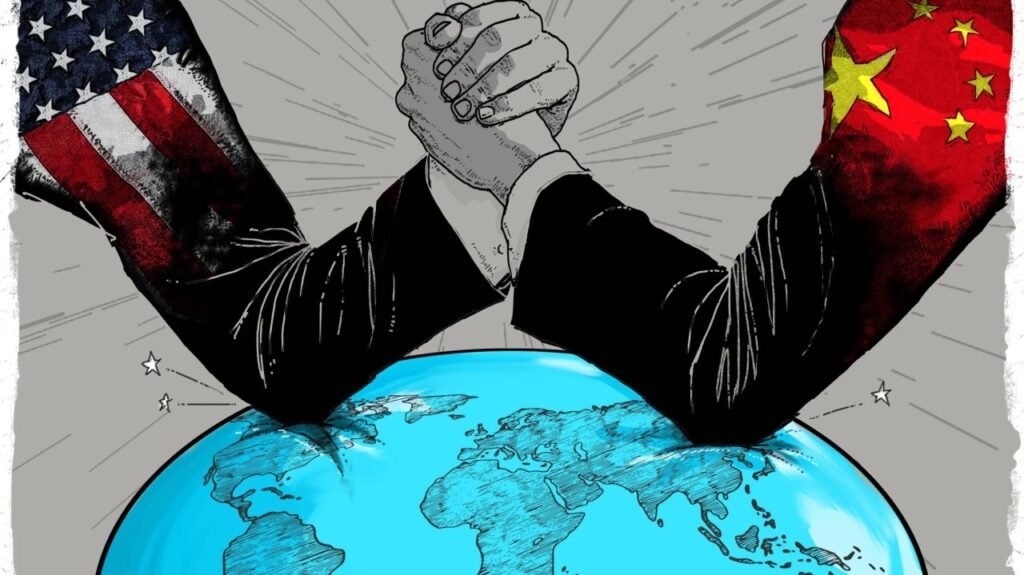
The Afghan debacle exposed the limits of U.S. power and created space for other powers to assert themselves.
China, learning lessons from America’s failures, has adopted a non-interventionist, development-oriented approach. It has offered Afghanistan integration into the Belt and Road Initiative (BRI) through the China–Pakistan Economic Corridor (CPEC).
Unlike the U.S., Beijing promises investment, connectivity, and reconstruction rather than bombs and coercion.
The contrast between Washington and Beijing could not be starker:
America brings wars, sanctions, regime change, and chaos.
China offers trade, infrastructure, connectivity, and mutual growth.
This rivalry defines the new global order. The U.S., wary of China’s economic rise and Russia’s resurgence, is building alliances like QUAD and AUKUS to encircle Beijing, while also trying to keep Afghanistan unstable to deny China and Russia a secure backyard.
The Emerging World Order
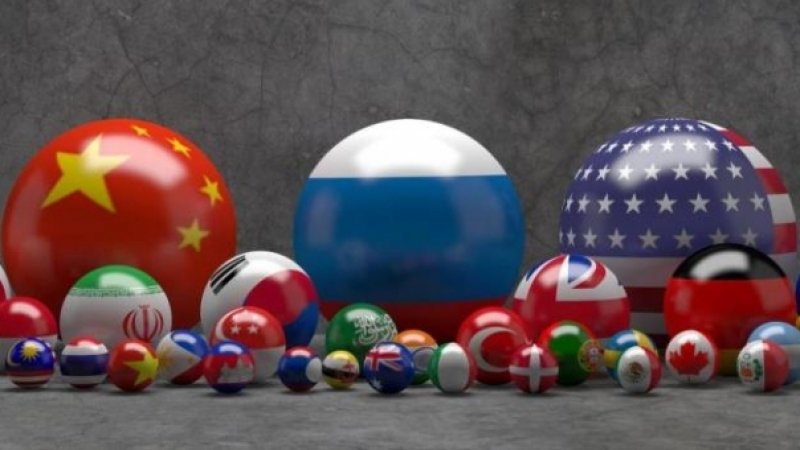
The failure in Afghanistan symbolized the end of American unilateralism.
Today, multipolarity is a reality. Russia, China, Iran, Turkey, and others are asserting independent policies.
The Shanghai Cooperation Organisation (SCO), BRICS+, and the Global South are emerging as counterweights to U.S. hegemony.
Afghanistan, though battered, remains strategically vital. Its stability and integration with the Eurasian landmass can tilt the balance in China’s favor, while its instability suits American interests to bleed regional rivals.
Conclusion
The 20-year U.S. occupation of Afghanistan not only devastated a proud nation, but also accelerated America’s decline.
China, by contrast, rises without firing a shot, offering development where the U.S. offered destruction.
The contest between the two giants—warfare versus development, coercion versus cooperation—will shape the destiny of Asia and the future of the world order.