

Climate change is no longer a distant worry for Pakistan. It’s a harsh, everyday reality affecting millions. Though this country contributes less than 1 percent of global greenhouse gas emissions, we rank among the world’s most vulnerable nations. Climate change has triggered mounting floods, droughts, heatwaves, glacier melt, and economic disruptions across the country.
- The author Anum Malik, is affiliated with the State News Agency and contributes her research to the think tank, CDS.
- *The views and opinions expressed herein, and any references, are those of the author and do not necessarily reflect the editorial policy of the Centre for Development and Stability (CDS).
Pakistan has seen relentless monsoon rains this year. Since June, more than 800 people have died in rain-induced disasters. In Punjab, our agricultural heartland, the rivers Sutlej, Chenab, and Ravi swelled to record-breaking levels, resulting in the worst flooding in history and affecting approximately 2 million people. Thousands of villages and farms were submerged, more than 760,000 people evacuated, and at least 33 lives lost in just a few days.
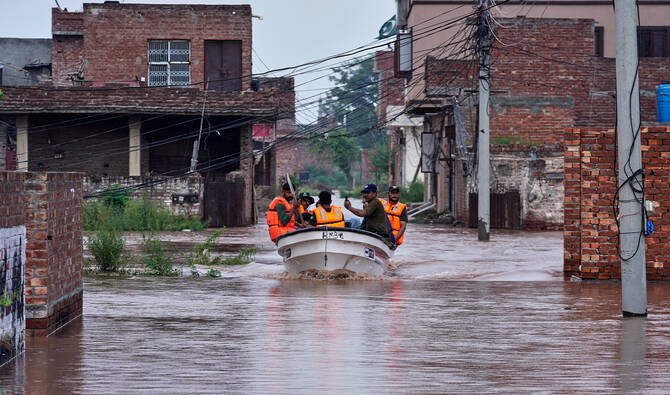
Southern Sindh is also on high alert. Authorities have evacuated over 100,000 residents in low-lying areas due to imminent flood risks downstream.
Even our northern mountain regions, once summer havens, are now disaster zones. Flash floods, sparked by cloudbursts and accelerated glacier melt, have washed away roads, homes, and tourists. In mid-August, catastrophic flash floods and landslides in Khyber Pakhtunkhwa killed over 320 people and left dozens missing.
These events aren’t random; scientists link them to climate change. The World Weather Attribution group found that human-caused warming made this year’s monsoon rains 10-15 percent heavier. The notable rise in flooding events, fivefold over the past 40 years, has caused over $36 billion in damage and affected more than 100 million people in Pakistan.
Our glaciers are retreating fast. In July, northern temperatures soared to 48.5 °C, far higher than ever before at that altitude, causing glaciers to melt rapidly, triggering glacial lake bursts and deadly floods in Gilgit-Baltistan.
Meanwhile, droughts have also become frequent and severe. Between September 2024 to January 2025, rainfall was 40 percent below normal nationwide worst in Sindh, Punjab, and Balochistan, pushing large areas into drought.
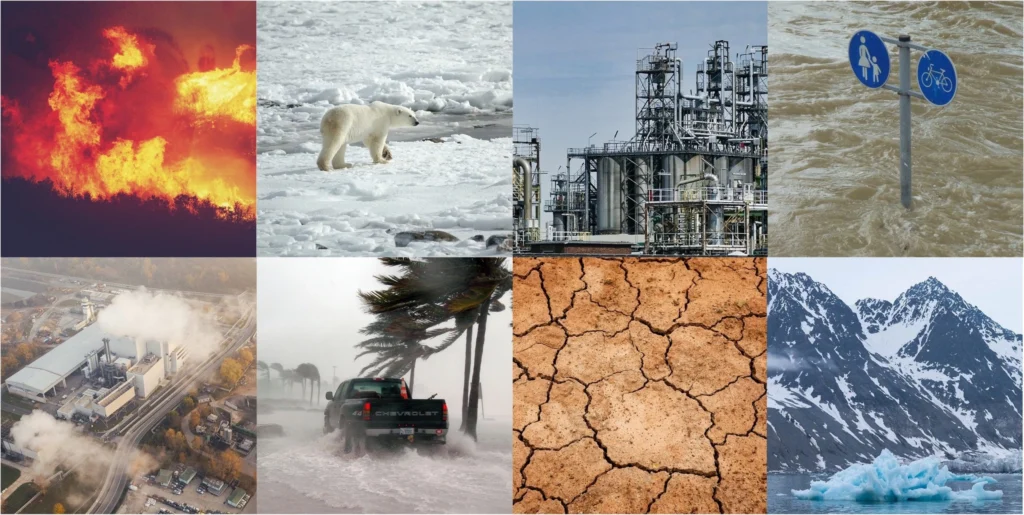
This shifting pattern of one disaster after another, flood and drought, heatwave and landslide, is destabilizing lives, especially in rural communities that rely on barani (rain-fed) farming. Crop failures in Potohar and Tharparkar, city-wide floods in places like Lahore, and overwhelmed drainage in urban areas show how fragile our infrastructure has become.
The economic toll is immense. The 2022 floods cost us $30 billion and affected 33 million people. Now the World Bank is offering a 10-year, $20 billion framework to support development, clean energy, and climate resilience in Pakistan.
In November 2024, at the United Nations Climate Conference held in Baku, Pakistan introduced its National Climate Finance Strategy. This plan aims to bring both local and international funding to support projects that make the country stronger against climate change, with a focus on fairness and transparency. Pakistan also took part in important discussions on climate justice and finance, highlighting that countries like ours need real support and action, not just promises.
Under our updated Nationally Determined Contributions (NDCs), Pakistan aims to cut greenhouse gas emissions by up to 60 percent by 2030, with 15 percent unconditional and 35 percent conditional on international support. We’re also targeting more than 60 percent renewable energy in our energy mix by 2030.

However, climate justice advocates argue that pledges alone are not enough. As one leader put it, the issue isn’t just a funding gap, it’s a “moral gap” too.
To keep us on track, here’s what needs urgent attention:
- Invest in resilient infrastructure—reinforce river embankments, improve drainage in cities, and build early warning systems for floods, heat, and landslides.
- Support rural communities—promote climate-smart agriculture, drought-resistant cropping, and better water management for arid regions.
- Accelerate green energy adoption—boost solar, wind, and other renewable projects under our clean-energy target.
- Expand climate finance access—simplify funding routes, engage private investors, and ensure transparency in spending.
- Raise public awareness—educate communities on risks, promote adaptation, and empower grassroots action.
Pakistan stands at a crossroads. The floods, glacial melt, and droughts of 2025 vividly show how climate change is already upending lives and livelihoods. The groundwork is laid, from the 29th Conference of the Parties to the United Nations Framework Convention on Climate Change (COP29) commitments to national strategies, but turning pledges into action will require unity across government, business, NGOs, and citizens. Only then can we turn climate vulnerabilities into resilience and hope for a safer, greener Pakistan.