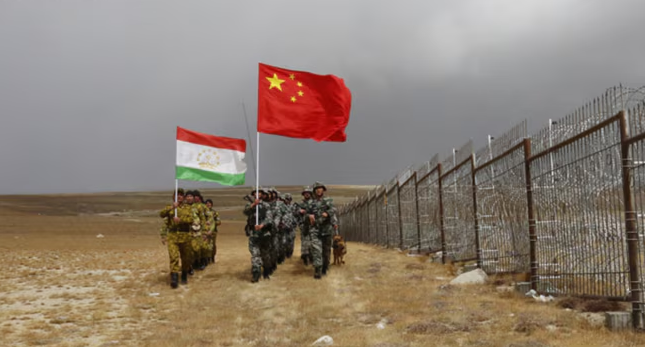

Terrorist and extremist attacks are increasingly becoming a serious threat to sustainable peace and regional security. Recent incident at Tajikistan-Afghanistan border show how cross-border terrorism has not only escalated violence but also undermined major geopolitical and economic interests, particularly those of China.
Since 2010, China has emerged as Tajikistan’s largest trading partner, primary foreign investor, and principal lender. Today, China holds more than half of Tajikistan’s foreign debt and has gained a strong economic footprint by building roads, modernizing telecommunications, and investing heavily in agriculture and mining. This economic presence, however, has been tested by rising insecurity along Tajikistan’s border with Afghanistan.

Tensions intensified after two attacks in late November killed five Chinese nationals working on road construction and gold mining projects near the Tajik–Afghan border. The first attack occurred on November 26 in Afghanistan’s Badakhshan Province. A drone was used to strike a Chinese mining camp in Tajikistan’s Khatlon Region. Three workers were killed and one wounded. This attack produced a serious concern and prompted a swift condemnation from the Chinese embassy, which labeled the attack a “grave criminal act” and ordered Chinese citizens to evacuate border zones immediately.
A second cross-border attack followed on November 30 in the Gorno-Badakhshan Autonomous Region and left two more Chinese workers dead and several injured. In response, Tajik President Emomali Rahmon convened his national security team and directed state institutions to prevent the repetition of such incidents. Tajik authorities blamed Afghanistan for failing to control militants operating along the border, while the State Security Service urged Afghanistan’s leadership to apprehend those responsible.

However, Afghanistan’s Taliban authorities denied any involvement and attributed the attacks to extremist elements seeking to create chaos, instability, and distrust among countries in the region. Taliban Foreign Minister Mawlawi Amir Khan Muttaqi attempted reassurance during a teleconference with Tajik officials and proposed a joint action against hostile elements.
From a geopolitical standpoint, these attacks have wider implications. Russia, through spokesman Dmitry Peskov, called for intensified engagement with the Taliban and reaffirmed Russia’s recognition of the group as Afghanistan’s legitimate government. This reflected the strategic competition and shifting alignments taking shape in Central Asia following the U.S. withdrawal from Afghanistan.

For China, the attacks are not isolated events but part of a larger security dilemma. China’s core regional interests revolve around preventing militant spillover into Xinjiang, securing investments tied to the Belt and Road Initiative (BRI). The mountainous province of Badakhshan that is Afghanistan’s only physical land bridge to China’s Xinjiang region has become a crucial point of concern. Chinese analysts warn that the area could evolve into a hub for various militant networks, including those with anti-China agendas.
These attacks demonstrate challenges for China’s economic engagement. The recent wave of violence along the Tajik–Afghan frontier is a complex and emerging security challenge because economic connectivity is colliding with growing militant activity. Without sustained regional cooperation, robust intelligence sharing, and proactive counterterrorism measures, the risk of further escalation remains high.