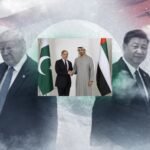

A motivated group of critics and habitual Pakistan-bashers is currently attempting to undermine the improving relationship between Pakistan and the United States. Their narrative portrays President Donald Trump as dicey, unpredictable, and a double dealer—someone allegedly hoodwinking Pakistan’s civil and military leadership by showering praise on Islamabad while casting aspersions on India’s Prime Minister Narendra Modi.
- Conclusion
- Recommendations
- The writer is a retired Brig, war veteran who fought the epic battle of Hilli in former East Pakistan and recovered the body of Maj Akram Shaheed NH. He is command & staff course and war course qualified, MsC war studies degree holder, he served as defence attache’ in Egypt and Sudan and also as the Dean of Corps of Military Attachés in Cairo. He is a defence, security and political analyst, columnist, author of five books, ex-chairman TFP, Patron-in-chief CDS Think Tank, Director Meesakh Research Centre, Chief Election Commissioner Tehreek Jawanan Pakistan, and takes part in TV talk shows . He was appointed the Army’s spokesperson in 1992, and after retirement served as Honorary Colonel of the Battalion of the unit he commanded for eight years.
- *The views and opinions expressed herein, and any references, are those of the author and do not necessarily reflect the editorial policy of the Centre for Development and Stability (CDS).
Some go further to conjecture that Washington’s renewed warmth towards Islamabad is a calculated move to drive a wedge between Pakistan and China by luring Pakistan into an American honeycombed trap. Such arguments, however, conveniently ignore historical realities, strategic compulsions, and ground truths.
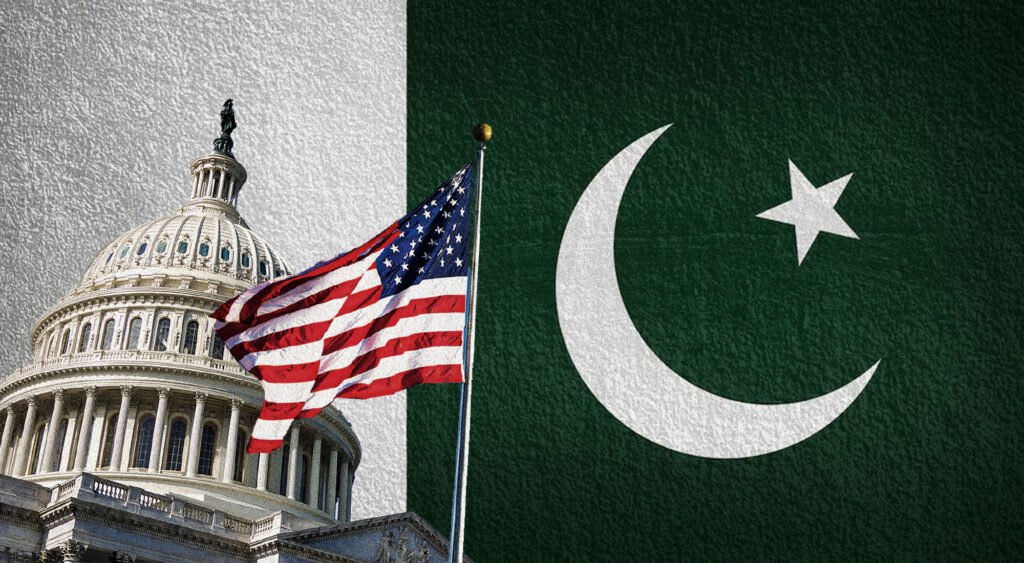
Historically, Pakistan has indeed been repeatedly betrayed and let down by the United States, and bilateral relations have largely remained transactional. Pakistan’s policymakers and strategic community are acutely conscious of this reality and harbor no illusions.
On the other hand, China has proven to be a time-tested, steadfast, and sincere friend. It stood by Pakistan through thick and thin, never played a double game, and extended unwavering support in strengthening Pakistan’s economic base, nuclear and missile programs, defense capabilities, and diplomatic stance on Kashmir.
Pakistan, in turn, has reciprocated this trust since the time China was internationally isolated and seeking openings in the Third World. The China-Pakistan Economic Corridor (CPEC) has further cemented this bond, elevating bilateral ties into a comprehensive strategic partnership. The successful four-day war with India has further enhanced Pakistan’s standing in Beijing’s eyes, bringing the two countries even closer.
It is therefore imprudent—and intellectually dishonest—to suggest that Pakistan would jeopardize its iron brotherhood with China in pursuit of closer ties with the United States. The recent warming of Pak–US relations has not caused any concern in Beijing, which has explicitly conveyed its comfort with this engagement. It bears remembering that China itself maintains extensive diplomatic and trade relations with the United States.
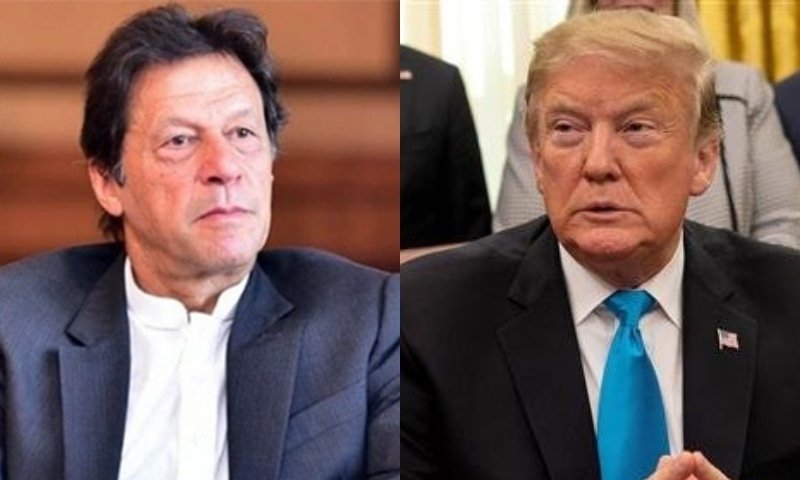
Ironically, those accusing the current leadership of being “fooled” by Washington overlook the fact that it was Imran Khan who was misled by President Trump in 2019 with promises of mediation on Kashmir. Acting on this assurance, he remained conspicuously restrained after India’s illegal annexation of occupied Jammu and Kashmir on August 5, 2019. He was again disillusioned when he naively expected Trump to intervene for his release from prison—an expectation publicly admitted as misplaced even by his sons on live television. This misplaced hope also explains why a segment of PTI supporters in the United States rallied behind Donald Trump in anticipation of a political miracle.
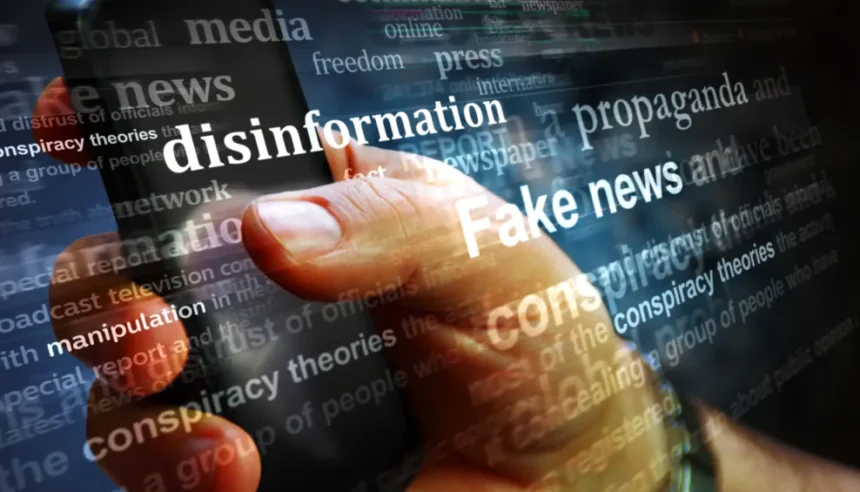
Spinning fake news, doctored videos, and manufactured narratives cannot obscure facts or alter reality. Repetition of falsehoods does not convert lies into truth. While misinformation and disinformation can temporarily influence impressionable minds—particularly the youth and disgruntled elements—they fail to deceive principled, patriotic, and discerning Pakistanis.
One only needs to observe the misconduct of absconding Pakistani journalists and politically brainwashed expatriates who spew venom against Pakistan, its government, the Pakistan Army, and its leadership, thereby maligning their own motherland.
A particularly shameful episode occurred in Bradford, where a charged mob chanted inflammatory anti-Pakistan slogans, hurled abuses, and issued death threats against the Chief of Defence Staff, Field Marshal Asim Munir. This disgraceful spectacle followed the assault on absconding foul-mouthed Shehzad Akbar. Similar paid sloganeering by PTI activists in London and Washington has regrettably become routine.
To be clear, I have no dog in this race except as a Muslim and a patriotic Pakistani. I harbor no allegiance to any political party and have no personal axe to grind. As a defense analyst, author, and columnist, I remain closely engaged with evolving global, regional, and national geopolitics and their implications for Pakistan’s security. I have consistently written about external and internal threats, as well as the scourge of terrorism.
I have profound disdain for serving and retired officers who cast aspersions on the Army and its leadership, particularly at a time when the institution has performed exceptionally well and earned national and international respect. Denigrating one’s own mother institution merely to curry favor with a politician represents the lowest form of moral bankruptcy.
I deeply admire the current leadership for steering Pakistan from the brink of collapse towards stability and resurgence. I salute them for taking the country from zero to hero. Why, then, should any patriot sympathize with elements that are relentlessly undermining Pakistan, maligning its armed forces, and damaging vital national interests?
These internal saboteurs pose a greater threat to Pakistan’s security than external enemies. It is deeply painful to witness emboldening hostile forces such as the TTP, BLA, TLP, PTM, BYC, sub-nationalists, extremists, India, and the Afghan Taliban regime—which has aligned itself with India against Pakistan.
Insinuations, character assassination, abusive language, and derogatory rhetoric have become trademarks of PTI’s cult politics. Rowdyism, vandalism, and attempts to derail development projects are perversely celebrated by its followers. They paint Pakistan as a failed state, propagate doomsday scenarios, and project internationally that Pakistan lacks democracy, rule of law, constitutionalism, freedom of speech, and human rights—all to discredit the state and its institutions.
For them, the only savior is the jailed Imran Khan, who stands convicted by courts of law after corruption and malpractice cases were duly proven. Multiple sentences have been awarded following the due legal process.
A handful of delusional leaders and frenzied followers refuse to acknowledge that Pakistan is effectively in a state of war. Foreign-sponsored terrorism poses an existential threat and is being confronted resolutely. The economy, once on the brink of collapse, is being stabilized through concerted efforts by the government and tharmed forces.
Conclusion
Pakistan today stands at a critical juncture where unity, discipline, and strategic clarity are indispensable. The state is facing hybrid warfare, disinformation campaigns, and externally backed terrorism simultaneously. In such circumstances, political vandalism, institutional defamation, and treasonous propaganda under the guise of freedom of speech are intolerable. National survival demands cohesion, responsibility, and patriotism—not cult worship, anarchy, and reckless adventurism.
Recommendations
National Unity First: Political differences must be subordinated to national security imperatives during this period of multifaceted threat.
Counter Disinformation Aggressively: The state must strengthen legal, diplomatic, and media mechanisms to counter fake news, hostile narratives, and digital propaganda.
Accountability Without Fear or Favor: Those inciting violence, spreading hatred, or undermining state institutions—whether at home or abroad—must be held accountable under the law.
Protect Strategic Partnerships: Pakistan must continue balanced engagement with global powers without compromising its strategic partnership with China.
Reinforce Civil–Military Harmony: Sustained coordination between political leadership and the armed forces is essential to defeat terrorism and stabilize the economy.
Promote Responsible Political Discourse: Political parties and media must be compelled to operate within constitutional, legal, and ethical boundaries.