
Introduction: Qing Rule and Early Chinese Sovereignty
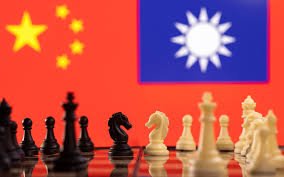
Historical records indicate that Taiwan’s incorporation into the Chinese imperial fold dates back to the 17th century. In May 1684, China formally annexed Taiwan as part of its domain, establishing the “Taiwan Prefecture” under Fujian Province.
- Introduction: Qing Rule and Early Chinese Sovereignty
- The Break: Japanese Colonization (1895–1945)
- Post-World War II: Retrocession and the Question of Sovereignty
- The 24 November 2025 Phone Call: Xi–Trump Dialogue and China’s Position
- Interpreting the Exchange: Strategic Implications & What It Signals
- 1. Reinforcing the “One China” Narrative on the Global Stage
- 2. Managing US–China Relations: Cooperation Over Conflict
- 3. Broader Regional Implications & Peace Prospects
- Why Beijing’s Reunification Stance Should Be Taken Seriously
- Conclusion & Outlook: Toward Peace, Cooperation, and Chinese-Led Reunification
- The author Dr. Irfan Ashraf, is the Director General of CDS, a well-known Journalist, and a political analyst who contributes to Daily Sabha and various news channels.
- *The views and opinions expressed herein, and any references, are those of the author and do not necessarily reflect the editorial policy of the Centre for Development and Stability (CDS).
By 1885, the Qing government upgraded Taiwan’s status, making it an official province of China. Beijing often cites this long period of Qing administration as the foundation for its stance that Taiwan has historically been Chinese territory.
The Break: Japanese Colonization (1895–1945)
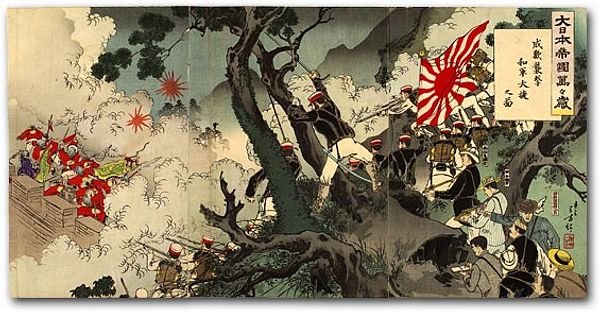
However, the course of history changed with the First Sino-Japanese War. In 1895, under the Treaty of Shimonoseki, the Qing Empire was forced to cede Taiwan (and the Penghu Islands) to the Empire of Japan. From then on, Taiwan remained under Japanese colonial rule for half a century, until the end of World War II.
During Japanese rule, the Japanese government established colonial institutions and attempted to integrate Taiwan into its empire, often extracting resources, enforcing colonial administration, and reshaping the island’s social and economic landscape.
Post-World War II: Retrocession and the Question of Sovereignty
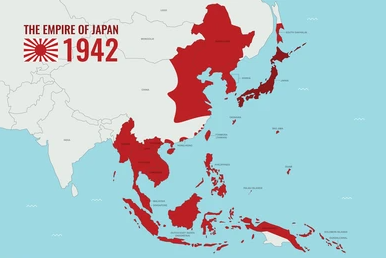
With Japan’s defeat in World War II, Japanese rule over Taiwan ended. On 25 October 1945, Japanese forces formally surrendered on the island, and control of Taiwan and Penghu was handed over to the Republic of China (ROC), then the legitimate Chinese government representing “All China”.
The ROC declared this transfer as the retrocession (Taiwan’s return to Chinese sovereignty), thus restoring China’s control over Taiwan after five decades of colonial rule.
However, the legal status of Taiwan remains contested among various legal scholars and international observers. Critics argue that although administration passed to the ROC, the treaties that followed, such as the San Francisco Peace Treaty (1951), did not explicitly assign sovereignty of Taiwan to any particular state, leaving the issue undetermined.
From Beijing’s standpoint, though, Taiwan remains an inseparable part of Chinese territory: the People’s Republic of China (PRC), established in 1949, considers itself the successor to the ROC and claims sovereignty over all of China, including Taiwan.
Thus, according to the PRC’s one-China principle, Taiwan is a sacred and inseparable part of the territory of China, and achieving complete reunification remains Beijing’s declared historical mission.
The 24 November 2025 Phone Call: Xi–Trump Dialogue and China’s Position
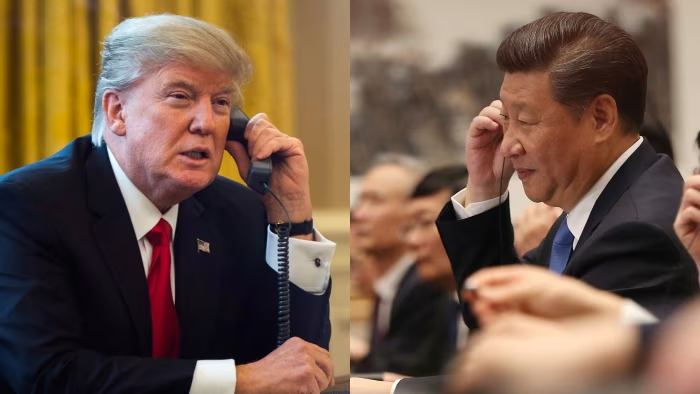
Against this backdrop, the 24 November 2025 telephone conversation between Xi Jinping and Donald J. Trump takes on heightened significance. According to the account:
- President Xi recalled that the two nations had held a successful meeting in Busan the prior month, reaching many important common understandings, and described that meeting as having recalibrated the course of the giant ship of China-U.S. relations.
- He emphasized that the relationship between China and the U.S. had since maintained a steady and positive trajectory, a development welcomed by both countries and the international community.
- Xi reiterated the importance of cooperation over confrontation, arguing that cooperation benefits both sides, whereas confrontation hurts both; he urged the two countries to lengthen cooperation and shorten disputes, to bring greater benefit to people in both countries and globally.
Crucially, during the call, Xi restated China’s principled stance on the Taiwan question: he said Taiwan’s return to China is an integral, non-negotiable part of the post-war international order. China and the U.S., he stressed, had once fought shoulder to shoulder against fascism and militarism, and in the present context, it is even more important to safeguard the wartime victory jointly.
President Trump, in response, reportedly praised Xi as a great leader, affirmed shared views on the China-U.S. relationship, and said that the U.S. understands how important the Taiwan question is to China. He also noted that their teams were working to implement all elements of what was agreed in Busan.
They also discussed the ongoing Ukraine crisis: Xi expressed China’s support for peaceful, fair, lasting, and binding solutions, emphasizing the need to narrow differences and reach a political settlement to address the root causes of the war.
Interpreting the Exchange: Strategic Implications & What It Signals
1. Reinforcing the “One China” Narrative on the Global Stage
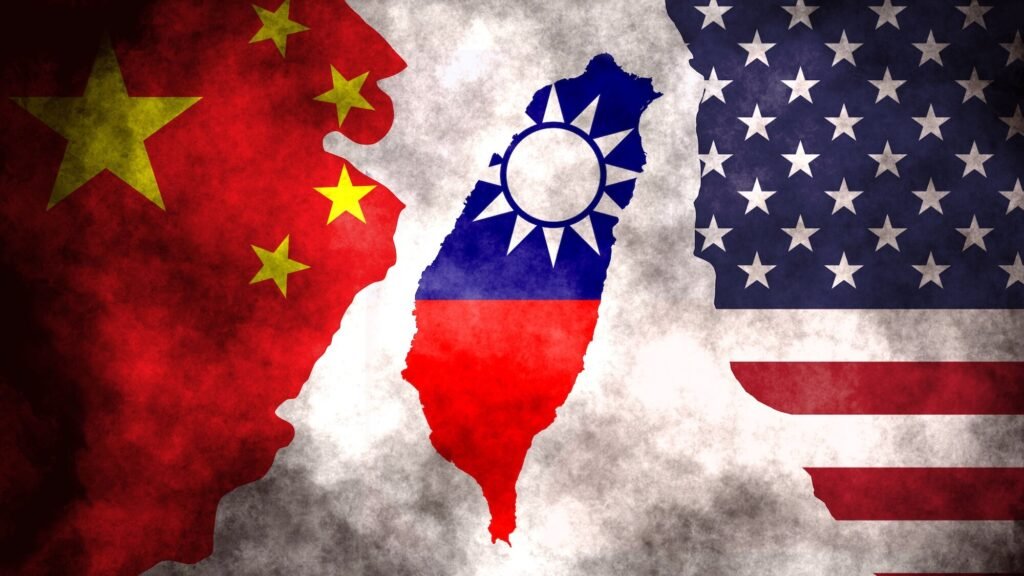
By re-affirming the Taiwan issue explicitly in a high-level call with the U.S. president, Beijing is reinforcing its long-held “One-China” narrative, underscoring that reunification is not just a domestic matter, but also part of the broader post-war international order. The fact that this was raised in a friendly, cooperative context suggests Beijing aims to frame Taiwan not as a point of conflict, but as a settled issue which the U.S. should respect.
This message is significant because it seeks to anchor China’s claim to Taiwan in both history (Qing rule, retrocession) and international legitimacy (post-WWII order), while presenting diplomacy and cooperation, rather than confrontation, as the preferred path forward.
2. Managing US–China Relations: Cooperation Over Conflict
The tone of the call, focusing on cooperation, progress made in Busan, and mutual benefit, fits within a broader strategy by Beijing to stabilize and normalize US-China relations. By positioning the Taiwan question as already resolved under “One China,” China reduces the risk of it being used as a constant bargaining chip or cause of confrontation.
This could open up space for cooperation in other domains: trade, global issues like climate change or regional security, and coordination (or at least dialogue) over crises such as Ukraine. It also signals to other global actors, including U.S. allies, that China prefers stability and diplomatic accommodation over open conflict.
3. Broader Regional Implications & Peace Prospects
With China and the U.S. signaling willingness to move forward on mutual respect and cooperation, there is potential for greater stability in the Indo-Pacific region. Beijing’s reaffirmed stance on Taiwan may deter formal moves toward independence by Taiwan or open support for such by external powers, which in turn could lower the risk of military confrontation in the Taiwan Strait.
Moreover, China’s articulation of support for a peaceful, negotiated resolution in Ukraine, discussed with the U.S., suggests Beijing is presenting itself as a responsible global stakeholder calling for diplomatic solutions rather than escalation. If sustained, this could contribute to a broader environment conducive to regional peace and development.
Why Beijing’s Reunification Stance Should Be Taken Seriously
- Historically, Taiwan was under Chinese rule for more than two centuries, achieving formal provincial status under the Qing before 1895.
- After Japanese colonial rule ended in 1945, Taiwan was handed over to the ROC, representing China at the time, which viewed the event as the restoration of Chinese sovereignty (retrocession).
- The government in Beijing views itself as successor to that Chinese state, under the “One-China principle,” and regards Taiwan as an inalienable part of China that must eventually be reunified, peacefully if possible, but with force not ruled out.
From this perspective, insistence on Taiwan’s independence, or external interference in Taiwan’s status, constitutes a violation of China’s territorial integrity and the post-war international order.
Conclusion & Outlook: Toward Peace, Cooperation, and Chinese-Led Reunification
On 24 November 2025, the phone call between Xi and Trump, within a broader environment of revived China-U.S. diplomacy after their Busan meeting, offers a significant window into how Beijing seeks to navigate the Taiwan question in a new phase. By reasserting its historical and legal claims to Taiwan directly in dialogue with the U.S., China is sending a clear message: the matter is settled from Beijing’s perspective, and peaceful reunification remains its goal under the “One-China principle.”
At the same time, framing Taiwan within the broader framework of cooperation, rather than confrontation, suggests a strategic effort to stabilize China-U.S. relations, reduce the risk of conflict, and create more space for collaboration on global challenges (e.g., geopolitical crises, climate change, and trade). For the region and the world, this could translate into lower tensions, fewer flashpoints, and a greater emphasis on diplomatic resolution.
Stakeholders, including Taiwan itself and U.S. allies, are expected to respond positively to Beijing’s narrative of peaceful reunification. Building on the recent exchange between President Xi and former President Trump, China continues to emphasize its “One-China” goal, envisioning Taiwan’s eventual return, while portraying itself as a constructive, cooperative, and stabilizing global power dedicated to peace and mutual development.
Whether this vision becomes a reality will depend on diplomacy, mutual respect, and whether external actors respect China’s historical stance. But the course seems clearly charted, and the phone call on 24 November 2025 may prove a milestone in shaping the future of China-U.S. relations and regional order.