

By Asif Haroon Raja
The ongoing war has entered an extremely dangerous phase. A review of the events of the past 16 hours shows that Israel has crossed all limits, and the United States, despite repeatedly talking about negotiations, is standing firmly alongside it. In Tehran, a university and a hospital were reportedly destroyed. Two power plants in Iran were targeted, while in Isfahan, two steel mills were destroyed.
A particularly alarming development is that, despite Russia’s warning, Israel reportedly bombed Iran’s nuclear power plant in Bushehr twice. This facility contains uranium, raising serious concerns about potential radiation leakage. Russia has urgently evacuated around 150 of its workers and scientists from the site. Since the plant is located on the coast, any radiation leak could contaminate seawater for kilometers, killing marine life and triggering a major crisis in Arab States that rely on desalinated seawater for drinking.
This could lead to a severe water shortage. How Russia will respond remains to be seen, but it appears Israel is attempting to push the region toward a nuclear confrontation. Israeli and U.S. air forces carried out overnight strikes on hundreds of targets across Iran, including Tehran and several other cities.
Iran stated that Israel targeted civilian populations during the night and vowed swift retaliation. It warned that Israel’s power plants, electricity infrastructure, and factories would now be targeted, and that U.S. companies across Gulf countries would also be struck by missile attacks. Following these attacks, Iran launched a highly dangerous counterstrike with missiles on Tel Aviv last night, reportedly using cluster munitions, resulting in widespread destruction.
Iran carried out missile strikes on a Kuwaiti port, destroying six U.S. naval vessels—three of which reportedly sank, while the others caught fire. Additionally, Iran reportedly launched missile attacks on major beachfront hotels in Dubai, where U.S. troops were said to be staying. These strikes allegedly caused hundreds of American casualties, both killed and wounded.
Iran also targeted the Prince Sultan Air Base in Saudi Arabia with heavy missile attacks, destroying around five refueling aircraft and hitting three oil tanker ships, setting them ablaze.
With IRGC leadership disrupted, central control has weakened. Local commanders are now acting independently. This creates a “leaderless escalation risk”.Meanwhile, the President of Ukraine visited Arab States and signed agreements with Gulf countries for the acquisition of military equipment. The oil-rich Arab States have become wary of high-cost Western arms and technology, and are veering towards cheaper markets in Ukraine, China, Russia, and Pakistan.
Further Military Build-up by the US
After suffering the disablement of two naval fleets, the United States is reportedly deploying a third fleet, led by the USS George H.W. Bush, to the conflict zone. The United States has warned Iran that if negotiations fail, it will launch devastating attacks to destroy Iran and take control of the Strait of Hormuz and Kharg Island.In the same breath, Trump stated that the US is self-sufficient in oil and that the closure of Hormuz doesn’t affect the US. He asked Europe, Japan and South Korea to reopen it or to procure oil from the USA. In contrast, the British Prime Minister has reportedly rejected Trump’s request, stating clearly that the UK will not send its troops to die in this war, adding that the U.S. has already lost the war in Iran.
Disinterest of NATO
Likewise, NATO has expressed its inability to help in reopening the Strait of Hormuz arguing that war was initiated by the USA without consulting them. Several European States are against the war and want an early end to it. A rupture in the US – NATO partnership is on the cards, and the emergence of a new NATO, financed and governed by the European Nations is likely.
Hormuz: A Selectively Administered Choke Point
Iran told the U.N. and the IMO on 24 March that “non-hostile vessels” could transit if they coordinated with Iranian authorities and paid a fee of 2 million dollars in yuan. Since then, Iran agreed to allow 20 more Pakistani-flagged ships through the Strait, and Chinese container ships, Indian LPG tankers, and a Greek-operated tanker carrying Saudi crude for India have all managed to pass through in recent days. Tehran is behaving as though the real issue is on what terms, for whom, and under whose authority traffic resumes through the Hormuz.
Emerging Maritime Order
The war is now also a contest over the governance of the emerging maritime order. Brent crude rose above $116 on Monday and is headed for its biggest monthly rise on record, while three-month Brent remains above $100 a barrel. The IMF says the conflict has produced the largest disruption to the global oil market in history, citing IEA estimates that 25%–30% of global oil and 20% of LNG normally pass through the Strait.
G7 finance leaders stand ready to take all necessary measures to stabilize energy markets. The IEA’s members have already agreed to release a record 400 million barrels from strategic stockpiles. Saudi Arabia’s East-West pipeline is now pumping at its full 7 million barrels per day capacity, with Yanbu exports around 5 million barrels per day and significant oil products also moving through the Red Sea route.
Riyadh is less dependent upon Hormuz than before. But this does not make the Strait irrelevant. Saudi Arabia can reroute more of its own crude, but the wider Gulf system remains badly exposed, and the IMF/IEA numbers show why the global shock is still so large.
Resurrection of Hezbollah
Hezbollah in Lebanon today is weaker but more desperate. Loss of leadership and supply routes via Syria has reduced its strategic depth. Israeli pressure and strikes have degraded its command structure. Yet it still retains a “formidable arsenal” and has already entered the war to avoid being targeted next. Hezbollah has destroyed dozens of Israeli tanks, inflicting significant casualties on Israeli forces, while also launching missile and drone attacks that reportedly caused heavy losses.
Iraqi Shia Militias
Iraqi militias like Kataib Hezbollah remain operational and active inside Iraq. This indicates they are not defeated forces.
Strategic Outlook of Insurrectional Forces
The so-called “resurrection” of Hezbollah and Iraqi Shias is not a full proxy mobilisation and coordinated comeback, but a fragmented reactivation under pressure. Iran’s “Axis of Resistance” is reconstituting itself in a more dangerous, decentralized form. That makes the region more unstable, less predictable, and harder to control—even for Iran itself.
Entry of the Houthis into the War
With the entry of Yemen’s Houthis into the conflict and their threat to choke the Bab al-Mandab Strait—the vital artery linking the Suez Canal to the Indian Ocean—the strategic calculus of the region is undergoing a significant shift. They have fired missiles toward Israel. A peripheral theatre has now become a fulcrum of global trade and energy security.
The possible entry—or deeper involvement—of the Houthis into the widening conflict is not a marginal development; it is potentially a game-changer with asymmetric impact far beyond Yemen. The Houthis have already demonstrated their ability to punch above their weight through missile and drone warfare, as well as maritime disruption.
If they formally escalate in coordination with Iran, the conflict will no longer remain confined to conventional state actors; it will evolve into a multi-front hybrid war stretching from the Levant to the Red Sea.
In such a scenario, the center of gravity may subtly shift. Rather than the United States or Israel acting as the principal drivers of escalation or de-escalation, the Gulf States themselves could emerge as pivotal actors.
Possessing both geographic proximity and immediate economic vulnerability, they have far greater stakes in restoring stability in the Red Sea corridor.
Strategically, three major consequences are likely:
1. Red Sea and Global Trade Disruption
The Houthis’ capacity to target shipping lanes in the Red Sea—particularly near the Bab el-Mandeb choke point—poses a serious threat to global commerce. Any sustained disruption would affect energy flows and supply chains linking Europe and Asia. This gives the Houthis disproportionate leverage over global economic stability, something even major powers would find difficult to neutralize quickly.
2. Expansion of the War Theatre
Their involvement would effectively open a southern front against Israel and its allies. Combined with pressure from Gaza, Lebanon, Iraq, and potentially Syria, Israel could find itself encircled by a network of non-state and state-aligned actors. This would stretch its military resources and complicate strategic calculations for United States forces deployed in the region.
3. Strengthening Iran’s Indirect Deterrence
For Tehran, the Houthis represent a key component of its “forward defense” doctrine. Their active participation allows Iran to escalate pressure without confrontation, thereby avoiding full-scale war while still imposing costs on its adversaries. This layered deterrence makes any military response by Washington or Tel Aviv more complex and risky.
Implications for the Gulf and Wider Region
The Gulf States, particularly Saudi Arabia and the UAE, would be placed in a highly precarious position. Having already faced Houthi strikes in recent years, they would be wary of re-entering a confrontation. The specter of sustained maritime disruption, coupled with the risk of direct strikes on critical infrastructure, may render a purely defensive posture untenable.
It could compel the Gulf States to reassess their current restraint and move toward a more proactive security posture.
Although their preference would likely be de-escalation, their security dependence on Washington could pull them into a broader conflict dynamic. This, in turn, places added pressure on Iran. Tehran’s strategy of leveraging indirect pressure—through allied non-state actors—to force Donald Trump into negotiations may face new constraints if the Gulf States collectively decide to counter-escalate or impose regional costs.
However, such a shift carries inherent risks. Any Gulf-led escalation could transform the conflict from a controlled, multi-front pressure campaign into a broader regional confrontation with unpredictable consequences. The delicate balance between deterrence and full-scale war would become increasingly difficult to maintain.
A War of Attrition, Not Decisive Victory
If the Houthis join in full force, the conflict will further drift toward a prolonged war of attrition. Quick victories will become unlikely. Instead, the region may witness sustained low- to medium-intensity conflict across multiple fronts, draining resources and eroding political will on all sides.
Futuristic Assessment
If the Houthis escalate decisively, it could accelerate the decline of conventional state-centric warfare and highlight the growing power of non-state actors in shaping global conflicts. It would also underline a critical shift: strategic depth is no longer defined solely by geography, but by networks of aligned forces across regions.
In essence, the Houthis entering the war would not just widen the battlefield—it would redefine the nature of the conflict itself, turning it into a dispersed, unpredictable, and economically disruptive confrontation with global repercussions.
Where Does Pakistan Stand?
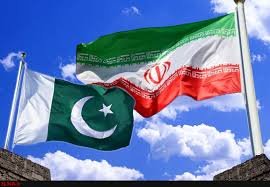
For Pakistan, this development reinforces the urgency of diplomatic engagement. Islamabad’s balanced relations with Iran, Turkiye, the Gulf States, the USA, and even China and Russia position it as a potential interlocutor.
However, any escalation involving the clash between the Gulf States and Iran will narrow the space for neutrality and increase pressure on Pakistan to carefully calibrate its stance. Loss of credibility of American security umbrella in the Middle East has given rise to the idea of creating an Islamic NATO comprising Pakistan, Turkiye, Saudi Arabia, Egypt, Malaysia and Indonesia.
Pakistan Next Target
Following the attacks on Iran by the US-Israeli forces, is being widely speculated that Pakistan could be the next target. Such concerns should not be dismissed outright. They reflect a broader national sentiment that geopolitical pressures around Pakistan are intensifying.
It is evident that if certain global powers view Iran’s technological advancements with hostility, Pakistan’s strategic capabilities — including its nuclear deterrent and advanced defense competencies — would be even more consequential in their calculations. Pakistan’s demonstrated ability to maintain credible deterrence, counter sophisticated aerial platforms, and safeguard its cyber domain makes it a pivotal actor in the regional balance of power.
However, public confidence is reinforced when Pakistan’s leadership unequivocally communicates its resolve. Statements from the highest military leadership affirming that any attempt to destabilize Pakistan would invite overwhelming consequences signal that the State is neither unaware nor unprepared.
Such messaging is part of deterrence signaling — a calculated effort to dissuade miscalculations.
Similarly, strong declarations from the military’s media wing projecting readiness to respond to threats from any direction serve to strengthen internal cohesion and external deterrence.
Strategic clarity reduces ambiguity and prevents adversaries from entertaining dangerous assumptions.
Pakistan’s Alignments
Pakistan’s evolving regional alignments also reflect foresight. Its synchronized posture with Azerbaijan and Türkiye, along with its strategic partnership with Saudi Arabia, indicates an awareness of emerging geopolitical blocs and shifting power equations. These partnerships enhance diplomatic depth, economic resilience, and collective security options in an increasingly multipolar world.
Pakistan’s Internal Fragilities
That said, history teaches us that states are often weakened not merely through external assault but through internal fragmentation. Hybrid warfare, information operations, ethnic polarization, sectarian manipulation, and engineered political chaos are more cost-effective tools for adversaries than conventional military confrontation.
The real battle, therefore, may be internal stability rather than external invasion.
National unity, institutional cohesion, and public restraint are thus critical. Any action that fuels internal discord inadvertently serves hostile agendas.
Vigilance and War Preparedness
Pakistan’s strategic planners are acutely aware of these multidimensional threats. The country’s deterrence architecture is designed not merely for battlefield response but for strategic survival. Any direct aggression would carry unacceptable costs for the aggressor.
Ultimately, Pakistan’s strength lies not only in its military capability but in the collective will of its people.
The enduring belief among its 250 million citizens is that Pakistan is not a marginal state in the international system — it is a consequential one. Stability in South Asia and beyond is intrinsically linked to Pakistan’s sovereignty and resilience. The nation must remain vigilant against attempts to inflame ethnic nationalism, exploit religious sentiment, or weaponize political grievances.
Brigadier (Retd) Asif Haroon Raja is Patron-in-Chief of CDS Think Tank and regularly appears on national and international media platforms.