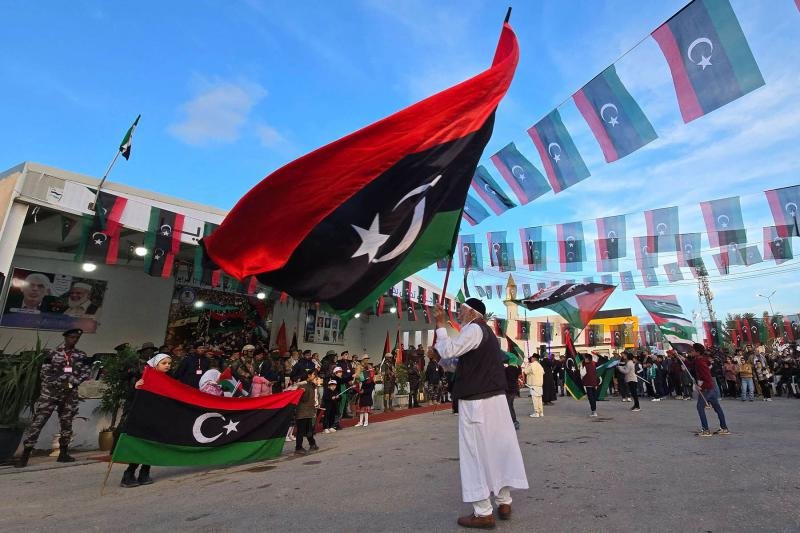

Libya was once among the most prosperous and socially secure states in Africa and the Arab world under the rule of Muammar Qaddafi. Buoyed by vast hydrocarbon wealth, the state provided free education, healthcare, housing subsidies, and one of the highest per capita incomes on the continent.
- Conclusion
- Policy Recommendations
- Restoration of Libyan Sovereignty
- Inclusive National Reconciliation
- Unified Security Architecture
- Equitable Management of Oil Resources
- Regional Non-Interference Pact
- Rejection of Regime-Change Doctrines
- Pragmatic Engagement by Pakistan
- The writer is a retired Brig, war veteran who fought the epic battle of Hilli in former East Pakistan and recovered the body of Maj Akram Shaheed NH. He is command & staff course and war course qualified, MsC war studies degree holder, he served as defence attache’ in Egypt and Sudan and also as the Dean of Corps of Military Attachés in Cairo. He is a defence, security and geopolitical analyst, columnist, author of five books, ex-chairman TFP, Patron-in-chief CDS Think Tank, Director Meesakh Research Centre, Chief Election Commissioner Tehreek Jawanan Pakistan, and takes part in TV talk shows . He was appointed the Army’s spokesperson in 1992, and after retirement served as Honorary Colonel of the Battalion of the unit he commanded for eight years.
- *The views and opinions expressed herein, and any references, are those of the author and do not necessarily reflect the editorial policy of the Centre for Development and Stability (CDS).
However, Libya became one of the principal casualties of the so-called Arab Spring—a movement that, in practice, was heavily manipulated and exploited by Western intelligence agencies, particularly the CIA, with Israeli intelligence playing a covert role.
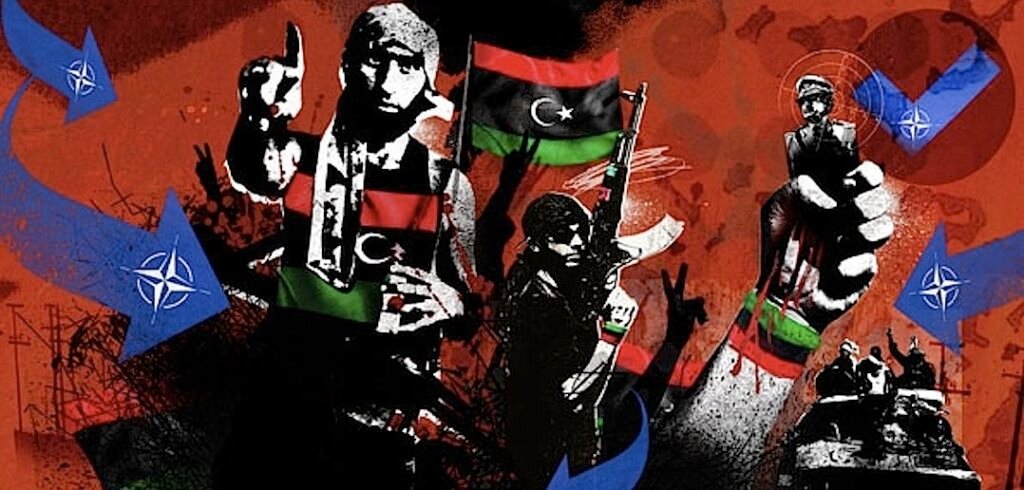
The uprising by dissidents in February–March 2011, followed by NATO’s military intervention under the pretext of “Responsibility to Protect,” decisively tilted the balance against the Libyan state. By July 2011, Qaddafi’s regime had collapsed, and in October he was brutally lynched—an act that symbolised not liberation, but the descent of Libya into chaos. With the destruction of central authority, power ceased to reside in a single sovereign centre, plunging the country into a prolonged civil war.
For nearly a decade and a half, Libya has remained trapped in a labyrinth of political disarray, military fragmentation, and relentless external interference. Instead of stability, the post-Qaddafi era produced rival governments, competing militias, and foreign patrons pulling strings behind the scenes.
Parallel structures of authority emerged in the east and west—like twin shadows cast by a broken sun—each claiming legitimacy, yet neither able to reunify the country.
Eastern Libya, centred around Benghazi, is dominated by Field Marshal Khalifa Haftar and his Libyan National Army (LNA). This region controls nearly 80 percent of Libya’s oil fields, making it the backbone of Africa’s largest oil-producing state. Haftar enjoys strong backing from Egypt and Saudi Arabia, while Pakistan has recently emerged as a new entrant in this geopolitical equation.
Western Libya, with Tripoli as its capital, is governed by Prime Minister Abdul Hamid Dbeibah under the internationally recognised Government of National Unity (GNU). This region controls roughly 20 percent of Libya’s oil resources and has traditionally enjoyed the support of the UAE.
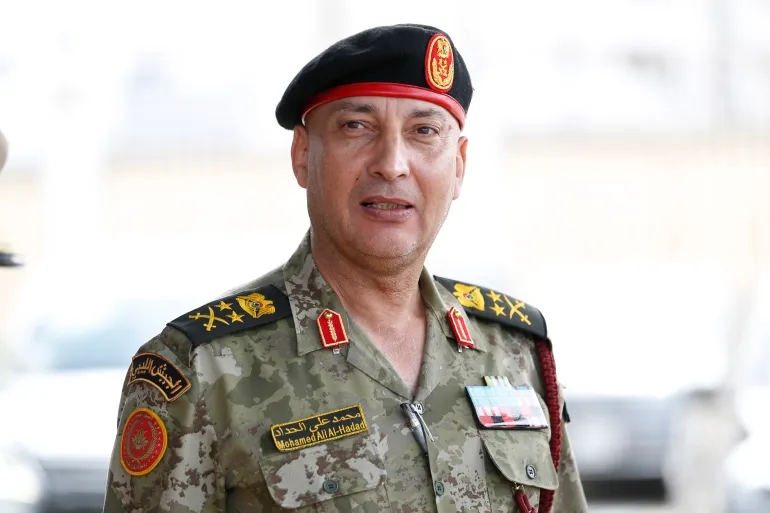
Recently, a tragic air crash claimed the lives of the GNU’s Chief of General Staff, General Muhammad Ali Ahmad al-Haddad, along with several senior commanders, as they were returning from an official visit to Ankara. This disaster has shaken the already fragile military and political edifice of western Libya.
Türkiye and Qatar have pursued a more nuanced approach, maintaining working relations with both sides while seeking to preserve their strategic influence, particularly in western Libya.
Against this volatile and fractured backdrop, the recent air crash—when viewed alongside the evolving Saudi-Pakistan defence alignment—assumes extraordinary significance.
It underscores how Libya remains not merely a failed state, but an active geopolitical chessboard, where external powers continue to shape outcomes, exploit fault lines, and prevent the re-emergence of a strong, sovereign Libyan state.
Conclusion
Libya’s tragic trajectory stands as a stark indictment of externally driven regime-change projects masquerading as popular revolutions. The overthrow of Muammar Qaddafi did not usher in democracy or stability; instead, it dismantled a functioning state and replaced it with a fractured polity, militarised factions, and perpetual foreign interference.
What was once a unified, sovereign welfare state has been reduced to a contested geopolitical arena where oil wealth fuels rivalry rather than national development.
The persistence of dual power centres, competing armed forces, and foreign patrons has ensured that Libya remains trapped in a state of controlled instability. Each external actor pursues narrow strategic and economic interests—energy security, military basing, regional influence—while the Libyan people continue to pay the price in insecurity, economic paralysis, and political uncertainty.
Recent developments, including the fatal air crash involving senior military leadership and evolving regional defence alignments, further underscore the fragility of Libya’s political-military equilibrium.
Unless Libya is allowed to reconstruct a strong central authority free from external manipulation, the country will remain a cautionary tale of how state destruction, once initiated, becomes exceedingly difficult to reverse.
Policy Recommendations
Restoration of Libyan Sovereignty
All foreign military involvement, mercenaries, and intelligence operatives must be phased out under a verifiable international framework. Libya’s future cannot be determined by proxy forces or external patrons operating behind rival factions.
Inclusive National Reconciliation
A genuinely Libyan-led dialogue—free from Western tutelage—should be initiated to bridge the east–west divide. This process must include tribal leaders, civil society, technocrats, and former state functionaries to rebuild a shared national identity.
Unified Security Architecture
The parallel armed structures must be dismantled and integrated into a single national military and police force. Without monopoly over the use of force by the state, elections and governance reforms will remain cosmetic and unsustainable.
Equitable Management of Oil Resources
Libya’s oil wealth should be administered through a transparent, unified national mechanism, with revenues equitably distributed across regions. Control of oil must shift from factional leverage to national development.
Regional Non-Interference Pact
Neighbouring and regional states should commit to a non-interference agreement, supervised by neutral international guarantors. Libya’s stability is inseparable from regional security in North Africa and the Mediterranean.
Rejection of Regime-Change Doctrines
For the broader international community—particularly the Global South—Libya should serve as a lesson against endorsing externally engineered political upheavals. Sovereignty, not selective interventionism, remains the cornerstone of durable stability.
Pragmatic Engagement by Pakistan
Pakistan must pursue a balanced, non-partisan approach rooted in diplomatic engagement, capacity-building, and conflict de-escalation rather than alignment with any one faction. Strategic caution is essential to avoid entanglement in Libya’s internal fault lines.