
Introduction
A range of misperceptions continue to circulate regarding the circumstances that led to the separation of Pakistan’s eastern wing in 1971. These myths are routinely exploited by anti‑Pakistan elements to malign the country’s civil and military leadership and to legitimise a distorted historical narrative.
- Introduction
- Manufacturing of Myths
- Historical Context at the Creation of Pakistan
- Indian Subversion and Strategic Design
- Administrative and Social Frictions
- Political Mismanagement under Yahya Khan
- Descent into Violence and Military Action
- War, Defeat, and Aftermath
- Bangladesh’s Changing Outlook
- Persisting Misperceptions in Pakistan
- Hasina Wajid’s Rise and Fall
- Pakistan’s Resilience and Future Prospects
- Policy Lessons and Strategic Takeaways
- Narrative Warfare Is as Decisive as Military Power
- Political Inclusivity Must Precede Electoral Processes
- Decentralisation Should Strengthen, Not Fragment, the State
- Early Detection of External Subversion Is Critical
- Civil–Military Synchronization Is Non‑Negotiable
- Use of Force Without Political Strategy Leads to Strategic Defeat
- Protection of Minorities and Loyalists Is a Strategic Imperative
- Leadership Quality Determines National Survival
- Avoid Mythologising Individuals and Demonising Institutions
- The Way Forward
- The writer is a retired Brig, war veteran who fought the epic battle of Hilli in former East Pakistan and recovered the body of Maj Akram Shaheed NH, he is command & staff course and war course qualified, MsC war studies degree holder, he served as defence attache’ in Egypt and Sudan and also as the Dean of Corps of Military Attachés in Cairo. He is a defence, security and political analyst, columnist, author of five books, ex-chairman TFP, Patron-in-chief CDS Think Tank, Director Meesakh Research Centre, Chief Election Commissioner Tehreek Jawanan Pakistan, and takes part in TV talk shows .
- *The views and opinions expressed herein, and any references, are those of the author and do not necessarily reflect the editorial policy of the Centre for Development and Stability (CDS).
Manufacturing of Myths
Following the fall of Dhaka in December 1971 and the creation of Bangladesh, India—having already launched a sustained propaganda campaign against Pakistan—produced hundreds of books within a short span to authenticate narratives it had carefully constructed. The objective was twofold: to demonise the Pakistan Army and to portray India as a saviour and liberator.
Among the most frequently repeated myths are the claims that East Pakistan was treated as a colony of West Pakistan; that West Pakistan prospered at the expense of the eastern wing; that Bengalis were treated as second‑class citizens and denied their basic rights; and that dissent was crushed solely through brute force.
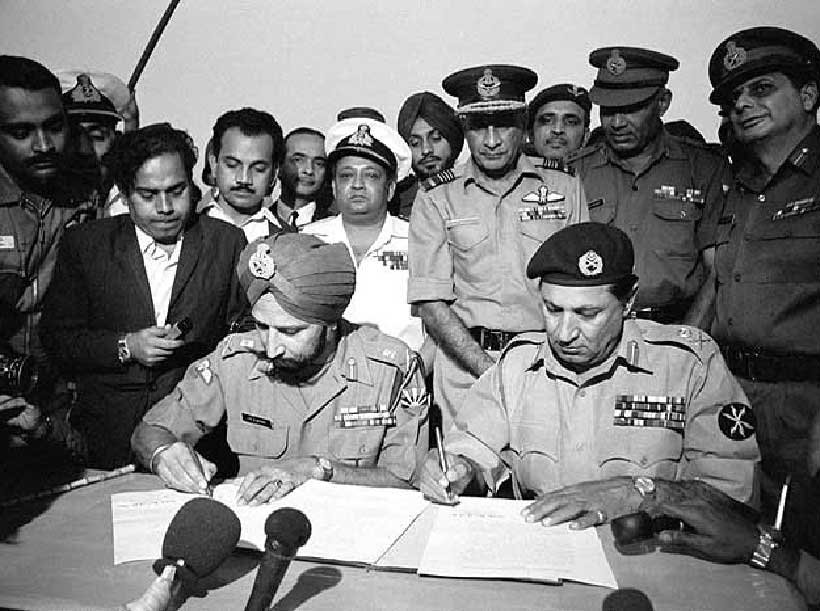
Pakistan’s modest military presence in East Pakistan was portrayed as a force of monsters responsible for killing three million Bengalis and raping hundreds of thousands of women. Another widely propagated falsehood was that 93,000 Pakistani soldiers surrendered to India.
The relentless repetition of these claims obscured historical realities, leading much of the world to accept the adversarial version as established truth. There is therefore a compelling need to revisit the events of 1971 in their correct historical and strategic context, grounded in verifiable facts.
Historical Context at the Creation of Pakistan
At the time of Partition in August 1947, East Bengal was among the poorest regions of undivided India. It had been systematically exploited by the British colonial administration and dominated economically and culturally by Hindu elites. The Muslim nobility had been reduced to near serfdom, while education, trade, and administration remained largely in non‑Muslim hands.
Bengalis played a leading role in the Pakistan Movement precisely because they had suffered the most under British rule and Hindu dominance. After Partition, the absence of Calcutta—the commercial and cultural hub—left East Pakistan economically fragile, used primarily as a source of raw materials such as jute. Large swathes of West Pakistan, including interior Sindh, Balochistan, South Punjab, FATA, and parts of Khyber Pakhtunkhwa, were also underdeveloped, though Punjab enjoyed relatively better educational and economic indicators.
Indian Subversion and Strategic Design
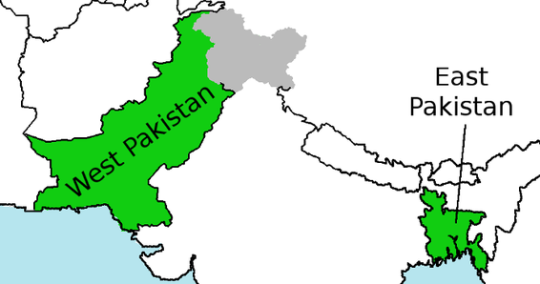
From the earliest years of Pakistan’s existence, India sought to undo the new state and selected East Pakistan as the primary target to disprove the Two‑Nation Theory. Its geographical separation by over a thousand miles, encirclement by Indian territory, economic fragility, and exposure to cultural influence made it particularly vulnerable to subversion.
Despite having Bengali prime ministers and a president in the first decade, East Pakistan witnessed limited progress. Significant development occurred during President Ayub Khan’s tenure, and absent the 1965 war and subsequent US sanctions, disparities between the two wings could have been further reduced.
Administrative and Social Frictions
It is also true that many West Pakistani civil and military officers serving in East Pakistan—predominantly Urdu‑speaking and Punjabi—displayed an inherited sense of superiority rooted in colonial attitudes. This elitist mindset, however, was not unique to East Pakistan and reflected a broader malaise of elite capture across the country.
Political Mismanagement under Yahya Khan
The crisis deepened under General Yahya Khan, whose political naivety proved costly. In an attempt to placate Sheikh Mujibur Rahman and the Awami League, he conceded political space beyond his mandate. Allowing the 1970 elections to be contested on Mujib’s Six‑Point programme, and permitting an unusually long election campaign, enabled the Awami League to mobilise Bengali nationalism to extreme levels. The public and the political parties in East Pakistan were terrorised by the militants of Awami League.
The failure to postpone elections after the devastating October 1970 cyclone further alienated public opinion. The Awami League’s sweeping victory in East Pakistan as a result of massive rigging on the polling day, followed by the Pakistan Peoples Party’s success in the western wing, created an intractable political deadlock. Despite extensive negotiations in Dhaka and near-total acceptance of Mujib’s demands, the Awami League—encouraged by India—ultimately pressed for confederation.
Descent into Violence and Military Action
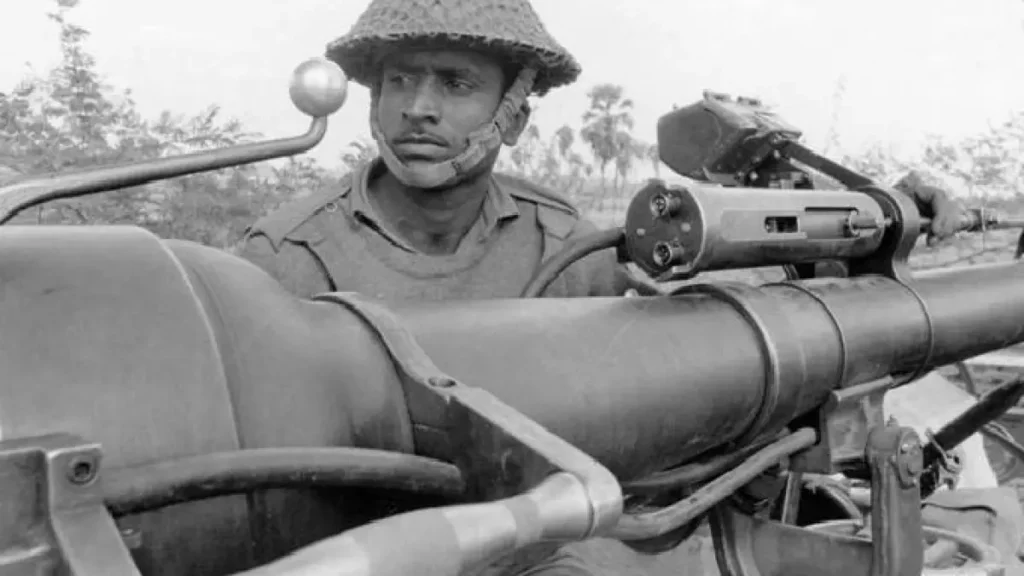
By March 1971, large-scale violence had erupted. Tens of thousands of Biharis, West Pakistanis, and pro‑Pakistan Bengalis were killed, and non‑Bengali women were assaulted. Pakistan Army personnel and their families serving in the East Pakistan Rifles were brutally murdered. In this environment of near anarchy, Operation Searchlight was launched on 25 March 1971 as a last resort to restore order and preserve the state.
India projected this operation as the biggest genocide of the 20th century, despite the fact that a small and lightly equipped force initially confronted a vastly larger and increasingly organised insurgency. With the subsequent arrival of reinforcements, order was largely restored in urban centres by mid‑1971.
Throughout this period, Pakistan continued to seek a political settlement, while India trained, armed, and deployed the Mukti Bahini from 59 camps across the border and blocked the repatriation of refugees.
War, Defeat, and Aftermath
For nine months, Pakistani forces fought an Indian-backed insurgency and later faced a full‑scale Indian military intervention, supported by overwhelming superiority on land, sea, and air, and backed by the Soviet Union. The Mukti Bahini became the guides and eyes and ears of the advancing forces.
The fall of Dhaka was therefore the culmination of a foregone strategic imbalance rather than individual cowardice or incompetence. The portrayal of Lt Gen A. A. K. Niazi as a coward ignores the operational realities of the conflict.
Bangladesh emerged not solely due to internal grievances, but as a consequence of Indian intervention enabled by internal betrayal. While a minority actively sought secession, the majority were misled into believing that the Six‑Point formula would strengthen Pakistan’s eastern wing. The disillusionment that followed culminated in the violent overthrow of Sheikh Mujib in 1975.
Bangladesh’s Changing Outlook
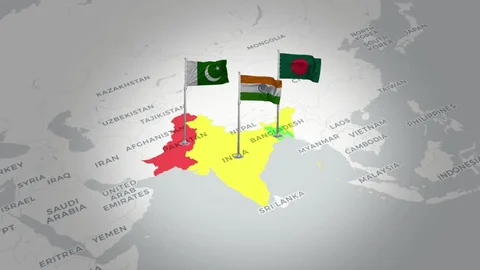
Relations between Pakistan and Bangladesh fluctuated over the decades, deteriorating under Sheikh Hasina’s rule, which aligned Dhaka closely with New Delhi. Recent political upheavals, however, have revived debates within Bangladesh regarding national identity, historical narratives, and relations with Pakistan and China.
Persisting Misperceptions in Pakistan
Despite changes in regional realities, segments within Pakistan and the West continue to internalise Indian‑crafted narratives, blaming Pakistan’s civil‑military leadership alone for the 1971 tragedy. These distorted views are periodically revived for domestic political purposes, often invoking the Mujib model as a warning—despite its historical irrelevance in present-day Pakistan.
Hasina Wajid’s Rise and Fall
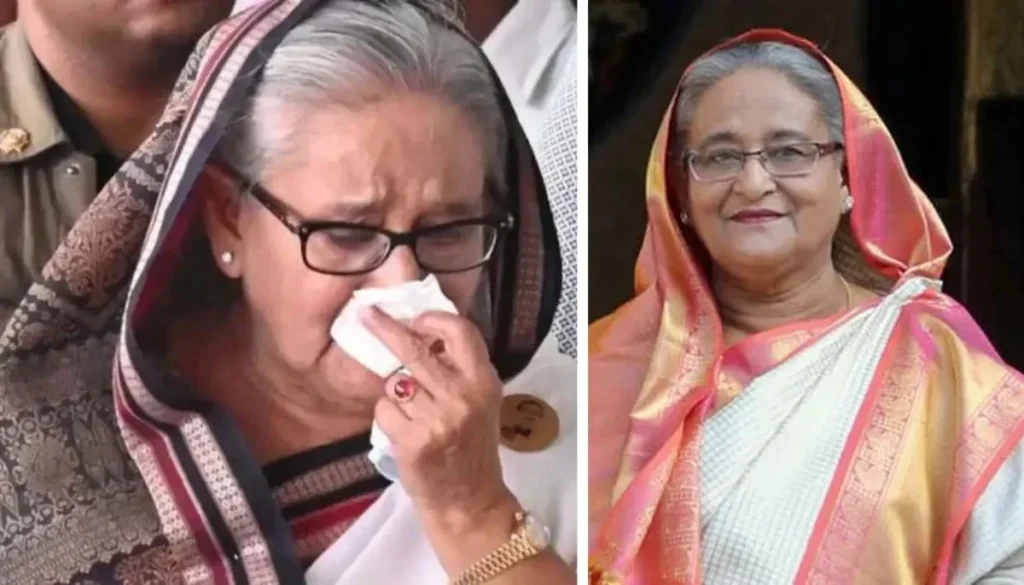
Bangladesh’s economic success under Sheikh Hasina’s leadership has often been attributed to its alignment with India and the West. However, this growth came at the cost of democratic freedoms and social cohesion. The suppression of Islamist groups, the persecution of political opponents, and the privileging of 1971 “war heroes” alienated large segments of the population.
The protests in July 2024 quota over system, which began at Dhaka University and escalated into a nationwide movement, forced Hasina to flee to India on August 5, 2024. Dhaka court sentenced Hasina Wajid to death on account of her crimes against humanity in absentia, and India is being pressured to extradite her.
Hatred against India swelled in Bangladesh as a result of the killing of a popular student leader Sharif Osman Hadi in Dhaka by two masked gunmen who fled to India.
The outraged people of Bangladesh ransacked all the offices of Awami League, burnt buildings, newspaper houses, the old house of Sheikh Mujib and surrounded the Indian Consulates. They are demanding that the killers be brought to justice. An historic funeral took place to bid farewell to their hero. Rising tempers have morphed the atmosphere into a warlike situation.
This ever deteriorating Bangladesh-India relations, coupled with India’s internal challenges—such as the Kashmir insurgency, Naxalite movement, insurgency in the seven sister states and Sikh separatism—has weakened its regional dominance of India.
India’s influence in Bangladesh has waned as the country shifts toward a pro-Pakistan stance, marking a significant geopolitical realignment.
Pakistan’s Resilience and Future Prospects
Despite its challenges, Pakistan has demonstrated remarkable resilience. Its armed forces, battle-hardened by the War on Terror, have thwarted external threats and maintained national security. The Pakistan Air Force’s performance during the 2019 skirmishes with India, particularly in the four-day war with India in May 2025 in which India’s seven 4.5 generation jets were shot down without incurring any loss, S-400 batteries, Brahmo missile storages and several air bases were destroyed. Pakistan Army captured spaces in the IOK and Rajasthan sector. The Pakistan Navy’s growing capabilities underscored the country’s military strength.
Policy Lessons and Strategic Takeaways

Narrative Warfare Is as Decisive as Military Power
The 1971 experience underscores that wars are not won solely on the battlefield. India’s sustained investment in propaganda, psychological operations, and narrative construction proved strategically decisive. Pakistan must treat information warfare, historical documentation, and strategic communication as integral components of national security, not peripheral concerns.
Political Inclusivity Must Precede Electoral Processes
Elections conducted without prior consensus on constitutional arrangements can become instruments of disintegration rather than unity. The 1970 elections demonstrate that democratic processes, when untethered from national cohesion and constitutional clarity, can empower secessionist agendas. Political reconciliation must precede electoral competition in fragile federations.
Decentralisation Should Strengthen, Not Fragment, the State
Legitimate demands for provincial autonomy must be addressed within a framework that reinforces federal unity. Allowing secessionist blueprints—such as the Six‑Point Programme—to masquerade as reform initiatives proved fatal. Clear red lines safeguarding sovereignty must never be compromised.
Early Detection of External Subversion Is Critical
India’s long term subversion of East Pakistan highlights the dangers of ignoring hybrid warfare indicators. Cultural penetration, economic manipulation, proxy militias, and diplomatic isolation were employed well before open conflict. States must institutionalise early‑warning mechanisms to detect and neutralise such threats.
Civil–Military Synchronization Is Non‑Negotiable
The absence of unity between political leadership and the military led to contradictory policies and delayed decisions. National crises demand a harmonised civil–military strategy, with clearly defined roles, unified command, and shared objectives.
Use of Force Without Political Strategy Leads to Strategic Defeat
Military action, even when unavoidable, must be accompanied by a credible political roadmap. Operation Searchlight, though tactically effective in restoring order, lacked an immediately visible political follow‑up, allowing adversaries to frame it as repression rather than stabilisation.
Protection of Minorities and Loyalists Is a Strategic Imperative
The mass killing of Biharis, pro‑Pakistani Bengalis, and non‑Bengali communities weakened Pakistan’s moral and strategic position. States must prioritise the protection of loyal populations during internal conflicts, both for ethical reasons and strategic legitimacy.
Leadership Quality Determines National Survival
Political naivety, indecision, and personal indulgence at the top can negate institutional strengths. Strategic leadership demands clarity, restraint, and an uncompromising commitment to national interests—especially during existential crises.
Avoid Mythologising Individuals and Demonising Institutions
Reducing national tragedies to heroes and villains distorts learning. The fixation on personalities—whether glorifying Sheikh Mujib or demonising General Yahya—obscures systemic failures and external manipulation. Nations must institutionalise objective accountability rather than emotional scapegoating.
The Way Forward
“The best revenge is a massive success.” – Frank Sinatra
To overcome its challenges, Pakistan must prioritize national integration, economic development, and moral rejuvenation. A comprehensive National Action Plan is needed to counter the hybrid warfare tactics employed by the Indo-US-West-Israel-Afghanistan nexus, which seeks to exploit Pakistan’s internal divisions.
Education reform, particularly the standardization of curricula across madrassas, government schools, and private institutions, is essential to foster unity and resilience. The principles of Islam, emphasizing justice, equality, and compassion, can serve as a guiding force in this endeavor.