
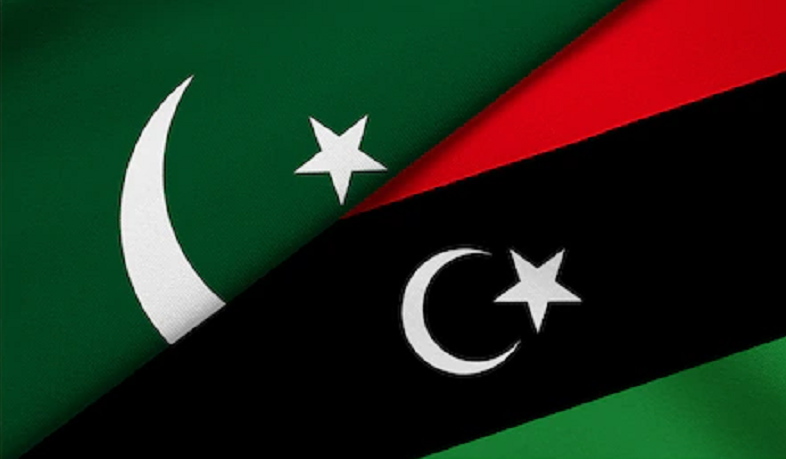
The recent development between Pakistan and Libya over a possible US $4.6 billion defence memorandum of understanding (MoU) marks an important moment in both countries’ modern history. According to reports, the deal could include the supply of 16 to 18 JF-17 Thunder fighter jets, training cooperation, and joint counter-terrorism initiatives.
- A Visit That Changed the Conversation
- Libya’s Urgent Need for Modernization
- Pakistan’s Rise as a Defence Exporter
- Strengthening Muslim Solidarity
- A Strategic Win for Pakistan’s Diplomacy
- Counterterrorism and Capacity Building
- Economic and Industrial Benefits
- Challenges Ahead, But Momentum Is Strong
- A Turning Point for Pakistan’s Defence Vision
- Conclusion: A Partnership of Hope and Capability
- The author is affiliated with the State News Agency and voluntarily contributes her research to the think tank, CDS.
- *The views and opinions expressed herein, and any references, are those of the author and do not necessarily reflect the editorial policy of the Centre for Development and Stability (CDS).
At a time when many Muslim nations are re-evaluating their defence partnerships and seeking greater independence from Western and Russian suppliers, this potential agreement shows how Pakistan’s defence industry has come of age. It also highlights Libya’s desire to rebuild its national strength after years of internal conflict and foreign intervention.
This is more than a simple arms deal, it is a reflection of shared goals, trust, and the growing recognition of Pakistan as a responsible, self-reliant and professional defence partner.
A Visit That Changed the Conversation
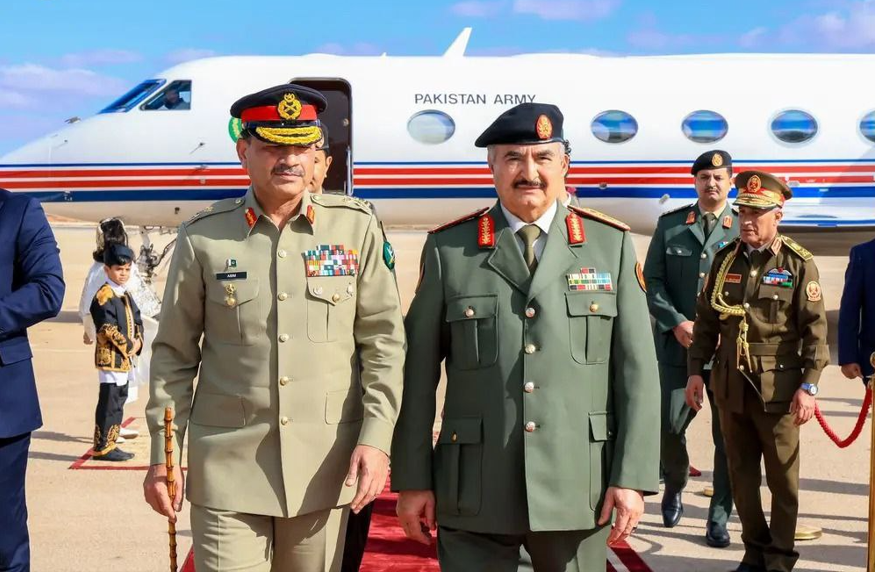
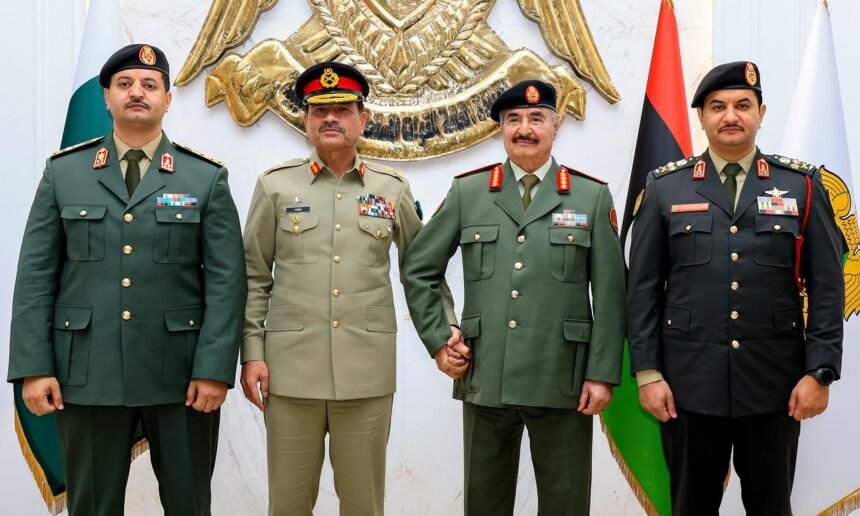
The turning point came when Pakistan’s Chief of Army Staff, General Syed Asim Munir, visited Benghazi to meet Field Marshal Khalifa Haftar, commander of Libya’s eastern-based Libyan National Army (LNA). Their discussions focused on areas like defence cooperation, training, capacity building, and counterterrorism.
Haftar expressed clear interest in acquiring advanced Pakistani defence platforms, particularly the JF-17 Thunder, an affordable, battle-proven multirole fighter jet jointly produced by Pakistan Aeronautical Complex (PAC) Kamra and China’s Chengdu Aircraft Corporation.
This visit followed another symbolic gesture earlier in the year when Lieutenant General Saddam Haftar, son of Field Marshal Haftar, visited Pakistan to explore cooperation in defence industries and technical exchange. Together, these visits established a foundation of confidence between the two militaries.
Libya’s Urgent Need for Modernization
Since the fall of Muammar Gaddafi in 2011, Libya’s air force has been operating with old and limited assets, mostly MiG and Mirage aircraft from the Cold War era. The long civil conflict, UN arms embargoes, and political fragmentation have left the country’s defence infrastructure weak.
Now, as Libya seeks to stabilise and rebuild, its air force needs affordable and effective solutions. Modern Western aircraft like the F-16 or Rafale are too expensive and politically restricted. Russian options face sanctions and logistical difficulties.
Here, Pakistan’s JF-17 offers the perfect balance: a fourth-plus-generation fighter with advanced avionics, beyond-visual-range missile capability, and AESA radar in the latest Block III version, all at a fraction of the cost of Western jets. For a country like Libya, struggling to restore control over its borders and deter extremist groups, the JF-17 could provide immediate and reliable support.
Pakistan’s Rise as a Defence Exporter
For Pakistan, this deal represents a major diplomatic and industrial success. Over the years, Pakistan has quietly transformed from an arms importer to a credible exporter.
According to the Stockholm International Peace Research Institute (SIPRI), Pakistan’s arms exports are steadily rising, driven by indigenous platforms like the JF-17 Thunder, Super Mushshak trainer aircraft, and locally produced tanks and drones.
The JF-17, in particular, has become a symbol of Pakistan’s engineering capability and military professionalism. After successful deals with Nigeria, Myanmar, and Azerbaijan, the potential agreement with Libya further strengthens Pakistan’s position as a trusted supplier in the Middle East and Africa.
It is worth noting that Azerbaijan’s recent US $4.6 billion deal for 40 JF-17s helped open the door for other Muslim countries to look beyond traditional arms markets. Pakistan’s offer of high-quality equipment with no political strings attached appeals to nations seeking autonomy in defence decisions.
Strengthening Muslim Solidarity
Beyond commercial value, the Pakistan–Libya pact holds deeper symbolic importance. It represents a revival of Muslim unity and cooperation in a world where many Muslim countries have been forced to depend on external powers for security.
Pakistan and Libya share historical bonds as members of the Organization of Islamic Cooperation (OIC) and as nations that have supported each other in difficult times. During the 1970s, under Prime Minister Zulfikar Ali Bhutto and Libyan leader Muammar Gaddafi, both countries maintained warm relations, and Pakistan even helped train Libyan military officers.
Now, decades later, this new partnership rekindles that brotherly spirit of self-reliance, showing that Muslim countries can cooperate on equal terms, develop indigenous technologies, and help each other strengthen internal stability.
A Strategic Win for Pakistan’s Diplomacy
Pakistan’s foreign policy in recent years has focused on building practical, balanced relationships across Asia, Africa, and the Middle East. Unlike the Cold War era, where nations had to choose between superpowers, today Pakistan offers neutral, professional defence partnerships that emphasize training, counter-terrorism, and technology sharing.
The potential Libya deal demonstrates how Islamabad is effectively using defence diplomacy to promote peace, stability, and economic growth. It sends a message that Pakistan’s defence cooperation is not about power politics, it is about mutual security and development.
Counterterrorism and Capacity Building
Both Pakistan and Libya face the menace of terrorism and extremism. Libya, after years of chaos, still struggles with militant groups linked to ISIS and other networks operating in the Sahel region. Pakistan, on the other hand, has gained hard-earned experience through two decades of counter-insurgency operations and intelligence-based actions against terrorist elements.
Under the proposed MoU, Pakistan can provide training and advisory assistance to Libyan forces, helping them develop institutional strength and professional discipline. Joint exercises, exchange programs, and counter-terrorism cooperation could prove invaluable for Libya’s security rebuilding efforts.
This also boosts Pakistan’s reputation as a global trainer of peacekeeping and counter-terrorism professionals, a role already recognized by its long participation in UN peacekeeping missions around the world.
Economic and Industrial Benefits
From an economic point of view, the Libya deal would inject billions of dollars into Pakistan’s defence manufacturing sector, particularly benefiting the Pakistan Aeronautical Complex (PAC) Kamra, the Air Weapons Complex, and related local industries.
Such agreements create skilled jobs, technology upgrades, and export revenues, supporting Pakistan’s broader goal of increasing non-traditional exports. Moreover, they reduce dependence on imported parts by encouraging local innovation.
There are also civil-sector opportunities. As part of the wider cooperation framework, Pakistan can assist Libya in infrastructure reconstruction, technical training, and even oil-sector manpower development. In return, Libya’s energy wealth can open investment prospects for Pakistani companies and engineers.
This partnership, therefore, goes far beyond aircraft, it has the potential to create long-term economic and human connections between the two countries.
Challenges Ahead, But Momentum Is Strong
Of course, no international agreement is without hurdles. Libya remains politically divided, and parts of the country are still under different administrations. Some Western nations may also view the deal cautiously due to the partial UN arms embargo still in place.
However, practical realities show that Libya urgently needs partners willing to help rebuild its institutions without political interference. Pakistan, maintaining a neutral and respectful foreign policy, can fill that role effectively.
Experts suggest that even if the deal progresses in phases for example, through initial training and technical cooperation before full jet deliveries, the symbolic impact will still be powerful. It will confirm Pakistan’s position as a trusted partner for post-conflict nations seeking affordable, effective defence solutions.
A Turning Point for Pakistan’s Defence Vision

Pakistan has long aspired to develop a self-sufficient defence industry that supports not only its own armed forces but also friendly nations. The progress of the JF-17 Thunder project stands as proof of that vision.
From its design and production to combat performance, the aircraft represents Pakistan’s ability to innovate and deliver. Its export success now directly contributes to national prestige, technological progress, and foreign exchange earnings.
The Libya agreement, if finalised, would mark one of the largest defence exports in Pakistan’s history. It would show that Islamabad’s commitment to make in Pakistan is paying off turning domestic expertise into a tool of international cooperation.
Conclusion: A Partnership of Hope and Capability
The potential Pakistan–Libya US $4.6 billion defence pact is not just about fighter jets. It is about rebuilding trust, strengthening Muslim unity, and proving that developing nations can rely on each other for progress.
For Libya, it means reviving its air force and securing its borders. For Pakistan, it means earning respect as a reliable exporter and peace-builder. Together, the two countries are setting an example of how shared vision and mutual respect can overcome decades of instability and dependence on foreign powers.
As Pakistan continues to expand its defence diplomacy, from Africa to the Middle East and beyond, this agreement could become a model of South-South cooperation rooted in fairness, affordability, and mutual growth.
If successfully implemented, the Pakistan-Libya defence partnership will stand as a landmark of trust and transformation, showcasing how two Muslim nations can join hands to build a safer, stronger, and more self-reliant future.