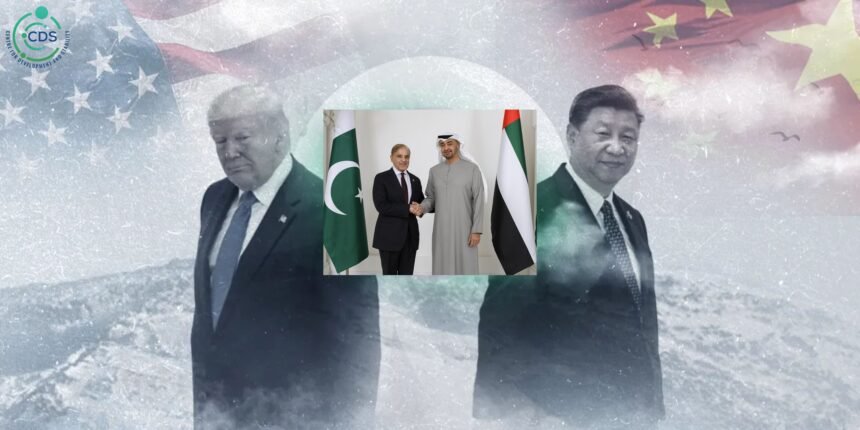

On 26th December 2025, the President of the United Arab Emirates (UAE), Sheikh Mohamed bin Zayed Al Nahyan, made his first official state visit to Pakistan. This visit marks a significant milestone in the diplomacy of South Asia and the Middle East. It comes at a time when the world is shifting from a unipolar order dominated by the United States to a multipolar world where several powers, including China, the US, and influential regional players like the Gulf states, compete for influence.
- A Relationship with Deep Roots
- The Multipolar World and Strategic Balance
- – China Factor
- – United States Engagement
- Gulf Cooperation and the UAE’s Evolving Role
- Pakistan’s Foreign Policy Strategy
- Regional and Global Impact
- Future Prospects
- The author is affiliated with the State News Agency and voluntarily contributes her research to the think tank, CDS.
- *The views and opinions expressed herein, and any references, are those of the author and do not necessarily reflect the editorial policy of the Centre for Development and Stability (CDS).
The strengthening of Pakistan-UAE ties reflects this changing global landscape and highlights Islamabad’s efforts to balance relations with multiple major players for its own economic and strategic interests. At its core, this relationship is built on deep historical bonds, economic cooperation, and people-to-people ties.
Millions of Pakistanis live and work in the UAE, making it one of Pakistan’s most important economic partners, both in terms of trade and remittances. The UAE has also been among the top sources of foreign investment, and cooperation now stretches into energy, technology, infrastructure, and defence sectors.
A Relationship with Deep Roots
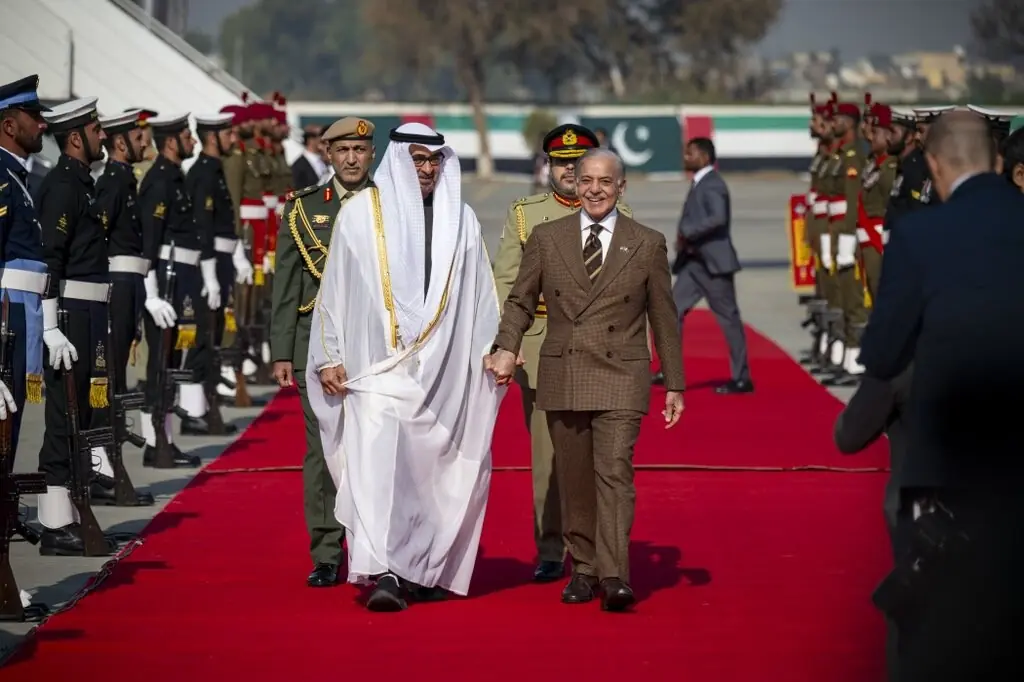
Pakistan and the UAE share a relationship rooted in shared history, cultural affinity, and strategic interest. Since the UAE’s formation in 1971, Pakistan was one of the first to recognize the new federation. Over the decades, this friendship transformed into strong state-to-state cooperation.
Pakistanis are one of the largest expatriate groups in the UAE, contributing significantly to its economy. Their remittances now play a vital role in supporting Pakistan’s foreign exchange reserves.
The UAE is also a key trading partner. Bilateral trade has surpassed $10 billion in recent years, and UAE investors have shown growing interest in sectors such as energy, ports, technology, and infrastructure. With around 1.8 million Pakistani expatriates working in the Emirates, there is also a strong human connection that reinforces diplomatic goodwill.
The Multipolar World and Strategic Balance
In today’s global politics, the influence of a single superpower is decreasing. Instead, multiple powerful states and blocs are shaping global decisions, a structure often called a multipolar world. In this dynamic environment, Pakistan must manage its key partnerships carefully.
– China Factor
China has become a central player in the region. Its bilateral ties with Pakistan through the China-Pakistan Economic Corridor (CPEC) have been a cornerstone of Islamabad’s foreign policy for over a decade. At the same time, China is deepening its relations with Gulf States, including Saudi Arabia and the UAE, through energy cooperation and infrastructure projects. This diversification of China’s partnerships reflects its ambition in global politics beyond East Asia.
For Pakistan, its close relationship with China provides important economic support and strategic depth. The CPEC has been a key driver of infrastructure development, trade linkages, and investment flows. China’s expanding role gives Pakistan a strong partner outside Western alliances, and this becomes especially important when global tensions rise among major powers.
– United States Engagement
The United States remains a significant global actor, especially in security and defence. Although Pakistan-US ties have gone through ups and downs over the past decades, Washington still plays a major role in South Asian geopolitics. At the same time, the US has strengthened its engagement in the Middle East, particularly through security cooperation with Gulf allies such as Saudi Arabia and the UAE.
For Islamabad, maintaining functional ties with the US is crucial for strategic balance and international legitimacy. However, Pakistan must carefully navigate this relationship so that it does not create tension with its Gulf partners or China, especially as the US refocuses policy toward the Indo-Pacific region.
Gulf Cooperation and the UAE’s Evolving Role
The UAE’s influence in global politics has grown steadily. Once seen mainly as an oil producer, the UAE now plays a broader role in finance, trade, investment, and regional diplomacy. It also strives to diversify its economy under Vision 2030 and seeks partnerships beyond traditional Western alliances.
The UAE’s engagement with Pakistan is part of this strategy. Prime interests include expanding trade, building investment linkages, and creating mutually beneficial economic cooperation. During President Al Nahyan’s recent visit, both sides expressed a shared commitment to deepening cooperation in areas like energy, technology, infrastructure, and people-to-people exchanges.
Beyond economics, UAE leadership is also focused on regional stability. Conversations during the visit included discussions on Middle Eastern and South Asian geopolitical developments. This reflects a broader intent by Gulf States to play a constructive diplomatic role in regional issues, from conflicts to trade corridors.
Pakistan’s Foreign Policy Strategy
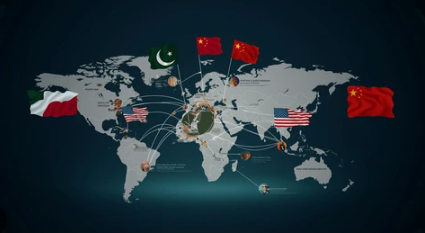
For Pakistan, achieving balance among China, the US, and Gulf nations like the UAE is a key foreign policy strategy. Islamabad seeks to avoid reliance on a single powerful ally and instead build a network of partnerships across regions.
This strategy recently became visible through several diplomatic moves:
- Strengthening ties with Saudi Arabia, including signing a Strategic Mutual Defence Agreement, shows Pakistan’s interest in collective security and Gulf cooperation.
- Deepening economic and investment cooperation with the UAE reflects Islamabad’s effort to attract foreign capital and diversify its economic support base.
- Engagement with China through CPEC and other regional initiatives reaffirms Islamabad’s commitment to long-term economic integration with Asia’s largest economy.
- Maintaining diplomatic and economic contacts with the US remains essential for global legitimacy and access to international financial systems.
- Balancing these relations requires constant adjustment. Pakistan aims to align economic incentives with strategic interests while avoiding geopolitical friction among its key partners.
Regional and Global Impact
Pakistan-UAE cooperation in a multipolar world is more than a bilateral relationship. It has regional and global implications:
- Economic Integration: Enhanced UAE investment strengthens Pakistan’s economic resilience and promotes trade connectivity across South Asia and the Middle East.
- Security Cooperation: As defence dialogues progress, both nations contribute to broader regional stability amid shifting alliances.
- Diplomatic Influence: Pakistan and the UAE often coordinate on regional crises, such as conflicts in the Middle East, showing shared diplomatic priorities.
- Balancing Power Dynamics: By engaging with multiple global powers, Pakistan plays a role in balancing influence among China, the US, and Gulf states, contributing to a more stable multipolar system.
Future Prospects
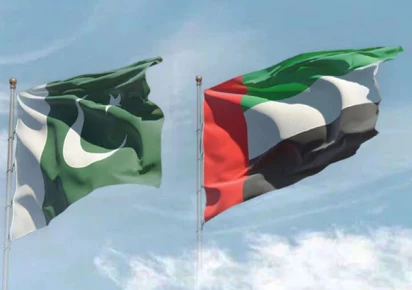
Looking forward, Pakistan and the UAE are likely to expand cooperation in several key areas:
- Investment Growth: With Pakistan actively seeking foreign capital, the UAE is expected to increase investments in infrastructure, renewable energy, technology, and logistics.
- Trade Expansion: Bilateral trade may grow beyond current levels, strengthening economic interdependence.
- Strategic Dialogue: Security discussions will likely continue as both nations seek stability in South Asia and the Middle East.
- People-to-People Links: The large Pakistani diaspora in the UAE will remain a cornerstone of bilateral goodwill and economic connectivity.
In a world where just one or two powers no longer define global leadership, Pakistan-UAE relations illustrate how middle and rising powers can carefully balance ties with larger global actors.
By navigating the interests of China, the US, and the Gulf, Islamabad and Abu Dhabi demonstrate a thoughtful approach to diplomacy that aligns economic growth with strategic stability.