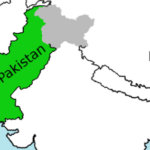

Soon after the creation of Pakistan on 14 August 1947, India, which had never reconciled with the partition of the Subcontinent, began hatching conspiracies to undo Pakistan in its infancy. East Pakistan, because of its geographical separation, socio-economic vulnerabilities, and political grievances, was chosen as the first target.
- Conclusion
- Recommendations
- 1. Unequivocal Enforcement of the Rule of Law
- 2. Dismantling Cult-Based Politics
- 3. Institutional Neutrality and Professionalism
- 4. Counter–Hybrid Warfare and Cognitive Subversion
- 5. Regulation of Foreign Funding and Digital Platforms
- 6. Reinforcement of Constitutional Governance
- 7. National Narrative and Civic Education
- 8. Political Reconciliation Within Constitutional Bounds
- The writer is a retired Brig, defence, security and political analyst, columnist, author of five books, ex-chairman TFP, Patron-in-chief CDS Think Tank, Director Meesakh Research Centre, Chief Election Commissioner Tehreek Jawanan Pakistan, takes part in TV talk shows.
- *The views and opinions expressed herein, and any references, are those of the author and do not necessarily reflect the editorial policy of the Centre for Development and Stability (CDS).
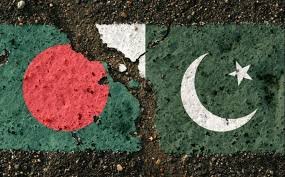
After a sustained and systematic effort spanning 23 years, India succeeded in subverting the minds of the Bengalis, making them believe that West Pakistan was their enemy and India their benefactor. With the collaboration of Sheikh Mujibur Rehman, India ultimately achieved its objective of dismembering Pakistan in 1971.
Following the creation of Bangladesh, a similar strategy of subversion was applied by RAW in Pakistan’s relatively underdeveloped provinces. Through carefully crafted narratives revolving around ethnicity, deprivation, alleged Punjabi dominance, and the so-called “Punjabi Army,” the minds of significant segments of Sindhis, Balochis, and Pashtuns—both old and new—were gradually influenced. In Punjab, influential Biradaries were influenced to fight with each other. India was glorified as Shining India and an invincible military power in South Asia. Pakistan was painted as a failing state.
After years of sustained efforts, India succeeded in carving out considerable space within these regions. Balochistan and Khyber Pakhtunkhwa have remained restive since 2004. Throughout the two-decade-long war on terror, Pakistan’s enemies operating from Afghanistan persistently attempted to destabilise, de-Islamise, denuclearise, and balkanise Pakistan.
These designs failed due to the herculean sacrifices of the Pakistan Army and ISI, coupled with the resilience of the Pakistani people. Attempts to create a wedge between the army and the populace also remained unsuccessful.
It was eventually realised by the Indo–US–Israel nexus that unless the centre of gravity—Pakistan Army—was weakened from within, their objectives of denuclearising Pakistan and converting it into a compliant state could not be achieved.
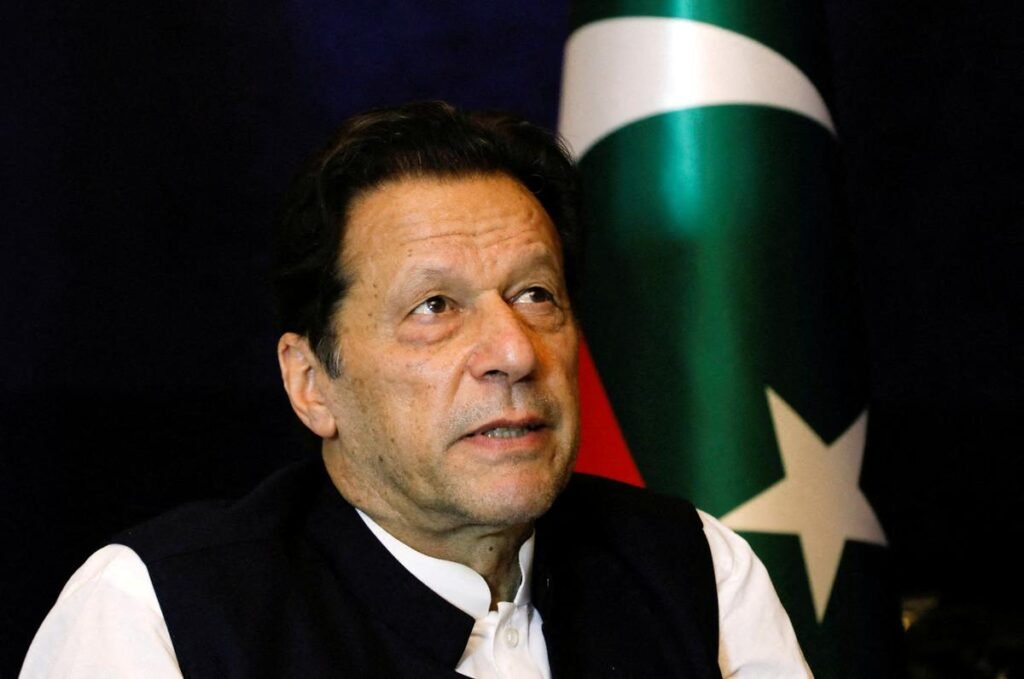
Consequently, with the support of this nexus, Imran Khan was launched as a political project to subvert the minds of urban youth, women, the middle and working classes, the educated elite, and even serving and retired officers and families of the armed forces—particularly senior officers—through a carefully cultivated cult-like political culture.
Regrettably, a small group of senior serving and retired army officers played a pivotal role in promoting him and grooming him for a “third-party experiment” aimed at dismantling the traditional two-party political system.
The perceived need for an alternative emerged in the aftermath of the Charter of Democracy signed by PPP and PML-N in 2006, which envisaged curtailing the role of the army and judiciary, the disastrous governance of PPP under Asif Ali Zardari, and the passage of the 18th Amendment, which significantly weakened the Centre.
From October 2011 onwards, an organised campaign of mind-conditioning and hero-worship of Imran Khan was launched across all provinces. Massive public rallies in Lahore and Karachi marked the turning point, altering political equations and enabling PTI to emerge as a formidable third political force.
Pakistani expatriates were actively courted by Imran Khan with promises of equal rights and political participation. Their financial contributions, along with foreign funding, played a significant role in image-building and in demonising political opponents through electronic and social media, as well as public rallies.
The plan to empower Imran Khan was executed in two phases. In Phase One, PPP was reduced to a Sindh-based regional party in the 2013 elections, while PTI swept Khyber Pakhtunkhwa. Phase Two proved more challenging, as Punjab had become an impregnable stronghold of PML-N. Political engineering, pre-poll manipulation, and polling-day irregularities were employed to ensure PTI’s victory in the 2018 elections.

Since PTI ascended to power riding on the shoulders of the military establishment and lacked political maturity, governance skills, economic vision, and diplomatic acumen, it collapsed the moment the military withdrew its support. General Qamar Javed Bajwa decided to step back from politics owing to Imran Khan’s vindictive conduct, his excessive reliance on his wife Bushra Bibi and her spiritual influence, and his dependence on Lt Gen Faiz Hamid. His flawed economic and foreign policies pushed Pakistan to the brink of default, while the army’s image was increasingly tarnished. Consequently, a united opposition removed him through a vote of no confidence in April 2022.
Imran Khan refused to reconcile with his downfall and sought to regain lost popularity and power by exploiting public sympathy and mobilising street agitation. Obsessed with his popularity, street power, and perceived support from sections of the higher judiciary, he discarded democratic and parliamentary norms and chose to confront the State and its institutions head-on.
Convinced that the military was responsible for his ouster, he vowed revenge. He branded his former patron, General Bajwa, a traitor and unleashed a campaign of vilification against senior ISI officers. After General Bajwa’s retirement, he aggressively targeted the new Army Chief, General Asim Munir. Knowingly or otherwise, he played directly into the hands of Pakistan’s adversaries by undermining the credibility of the Pakistan Army and its leadership.
The objective of Pakistan’s adversaries was to weaken the Pakistan Army, create favourable conditions for India to implement its Cold Start Doctrine, fragment Pakistan into quasi-states, and ultimately neutralise its nuclear programme.
As a consequence of the cult culture, the nation stands deeply divided and politically polarised. For the first time, fissures have appeared within the otherwise unassailable structure of the armed forces, particularly the army—the centre of gravity responsible for safeguarding Pakistan’s sovereignty and territorial integrity.
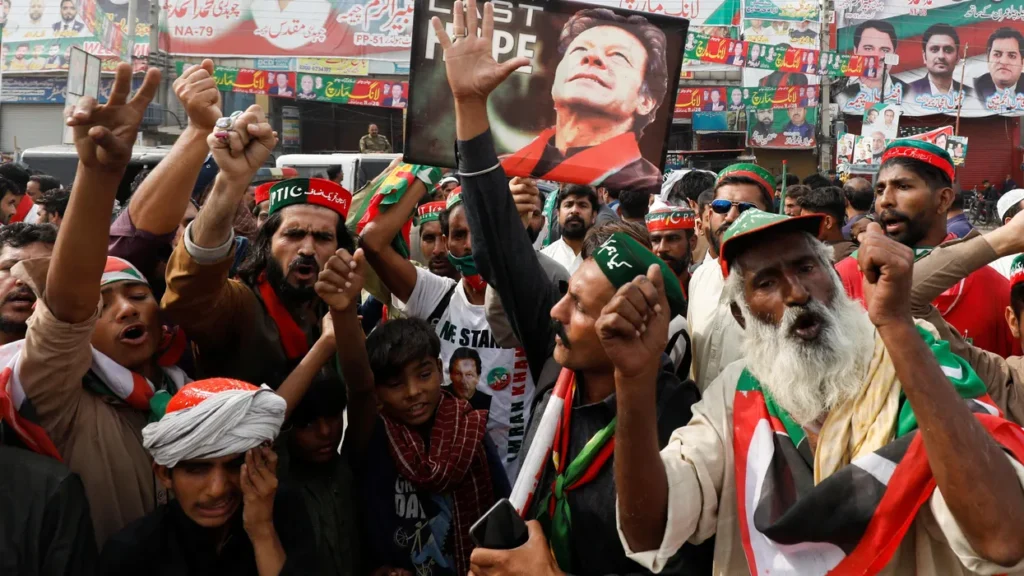
Mesmerised by Imran Khan’s charisma, a segment of retired armed forces personnel has begun prioritising loyalty to him over the institution and its leadership, thereby damaging the image of the Army Chief.
Altaf Hussain had earlier attempted to replicate the Sheikh Mujib model in urban Sindh. Imran Khan followed a similar trajectory, openly glorifying Mujib as a hero.
By projecting himself as “Taliban Khan,” he cultivated close ties with the Afghan Taliban, TTP, radical groups, and sub-nationalists to regain power through coercive means.
His strategy was to incite his followers into confronting the State, provoke rebellion within the army, and seek external support from the West, India, and Afghanistan to achieve power at any cost.
From April 2022 until his arrest in August 2023, he employed various tactics to foment chaos, anarchy, and the spectre of civil war. The violent attacks on military installations on 9 May 2023 were designed to spark mutiny within the army, undermine the Army Chief, and topple the government.
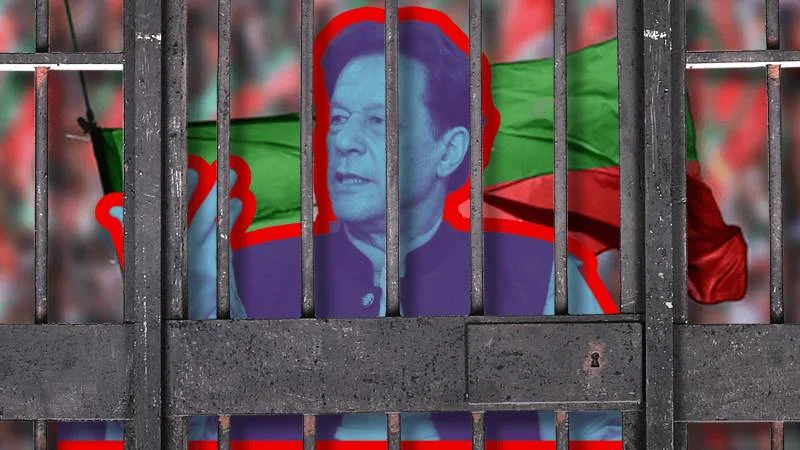
Even during incarceration, he has persisted with his destructive agenda. Retired Lt Gen Faiz Hamid, his principal facilitator, along with fervent cult followers, continued to sustain his morale. The court-martial and 14-year rigorous imprisonment awarded to Faiz Hamid has further tightened the noose of accountability around those involved in the crimes of 9 May.
Imran Khan’s excessive ambition, egotism, megalomania, arrogance, xenophobia, and above all his refusal to negotiate with the government have pushed him and his party into a blind alley from which recovery appears increasingly improbable.
Nevertheless, a section of die-hard followers continues to harbour illusions of his return, glorifying him blindly while ignoring his exposed fault lines, moral decay, and the irreversible damage inflicted upon the State and its institutions.
Conclusion
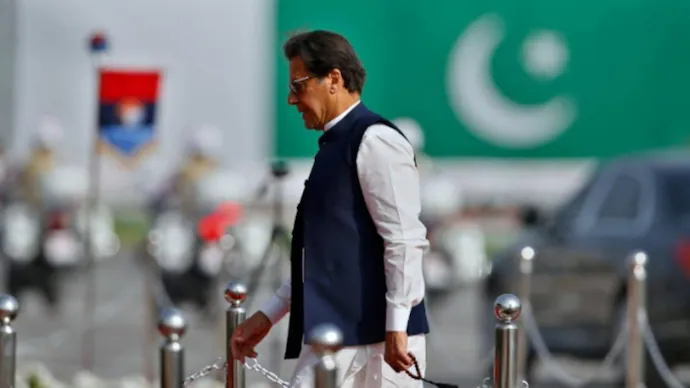
The rise and fall of Imran Khan is not merely the story of an individual’s political ambition, but a case study in hybrid warfare, psychological manipulation, and institutional subversion. By exploiting public disillusionment, youthful idealism, and existing socio-political fault lines, a cult-based political phenomenon was engineered that ultimately endangered Pakistan’s internal cohesion, civil-military balance, and national security.
Imran Khan’s transition from a manufactured political alternative to a confrontational populist revealed the inherent dangers of personality-centric politics devoid of democratic maturity, governance capacity, and respect for constitutional norms. His relentless assault on state institutions—particularly the Pakistan Army—created unprecedented political polarisation, eroded public trust, and opened dangerous spaces for hostile external actors.
The events culminating in the violent attacks of 9 May 2023 marked a decisive rupture, crossing the red line between political dissent and organised insurrection. These actions exposed the true face of the cult culture, confirming that unchecked populism, when fused with external manipulation and internal facilitators, can threaten the very foundations of the state.
Pakistan has paid a heavy price for political engineering, institutional indulgence, and delayed accountability. The episode stands as a stark warning that no individual, party, or ideology can be allowed to supersede the Constitution, the writ of the State, or the sanctity of national institutions.
Recommendations

1. Unequivocal Enforcement of the Rule of Law
All individuals involved in the planning, facilitation, and execution of the 9 May violence must be held accountable under the Constitution and relevant laws, without exception or political compromise.
2. Dismantling Cult-Based Politics
Political parties must be compelled to function as democratic institutions rather than personality-driven cults. Internal party elections, financial transparency, and accountability should be strictly enforced by the Election Commission.
3. Institutional Neutrality and Professionalism
The armed forces must remain strictly apolitical. Any serving or retired personnel found engaging in political engineering or partisan activism should face legal and disciplinary action.
4. Counter–Hybrid Warfare and Cognitive Subversion
The State must develop a comprehensive framework to counter psychological operations, social media manipulation, foreign funding, and narrative warfare aimed at destabilising society and eroding trust in institutions.
5. Regulation of Foreign Funding and Digital Platforms
Strict oversight of political funding—especially from abroad—must be enforced. Social media platforms should be regulated to prevent coordinated disinformation campaigns and incitement against state institutions.
6. Reinforcement of Constitutional Governance
Parliamentary supremacy, constitutional processes, and democratic norms must be restored and protected. No political movement should be allowed to pursue regime change through street power or coercion.
7. National Narrative and Civic Education
A coherent national narrative grounded in constitutionalism, national security, and historical truth should be promoted through education, media, and civil society to counter divisive and subversive ideologies.
8. Political Reconciliation Within Constitutional Bounds
While accountability must remain uncompromising, space should be created for political reconciliation—provided it is rooted in acceptance of the Constitution, renunciation of violence, and respect for state institutions.