
Henry Kissinger once remarked that friendship with the United States can often prove more fatal than enmity. History lends considerable weight to this observation.
- Pakistan’s External Challenges
- The Way Forward
- Conclusion
- The author is a decorated war veteran who fought the historic Battle of Hilli in former East Pakistan and recovered the body of Maj Akram Shaheed (NH). A graduate of Command & Staff and War Courses with an MSc in War Studies, he served as Defence Attaché in Egypt and Sudan, later becoming Dean of the Corps of Military Attachés in Cairo. Formerly the Army’s spokesperson (1992) and Honorary Colonel of his battalion, he is now a renowned defence, security, and geopolitical analyst, author of five books, Patron-in-Chief of CDS Think Tank, Director of Meesakh Research Centre, and a regular participant in national TV talk shows.
- *The views and opinions expressed herein, and any references, are those of the author and do not necessarily reflect the editorial policy of the Centre for Development and Stability (CDS).
With the notable exception of Israel, Washington has rarely demonstrated enduring loyalty to its allies. Its record is replete with instances of abandoned partners, discarded protégés, and shifting commitments driven purely by expediency rather than mutual trust or long-term partnership.
The United States tends to treat allies as rentier or utility states, employed to advance short-term geopolitical objectives. Once those objectives are achieved, the partner is frequently sidelined or sacrificed. Pakistan experienced this pattern repeatedly during its prolonged alignment with Washington beginning in the mid-1950s.
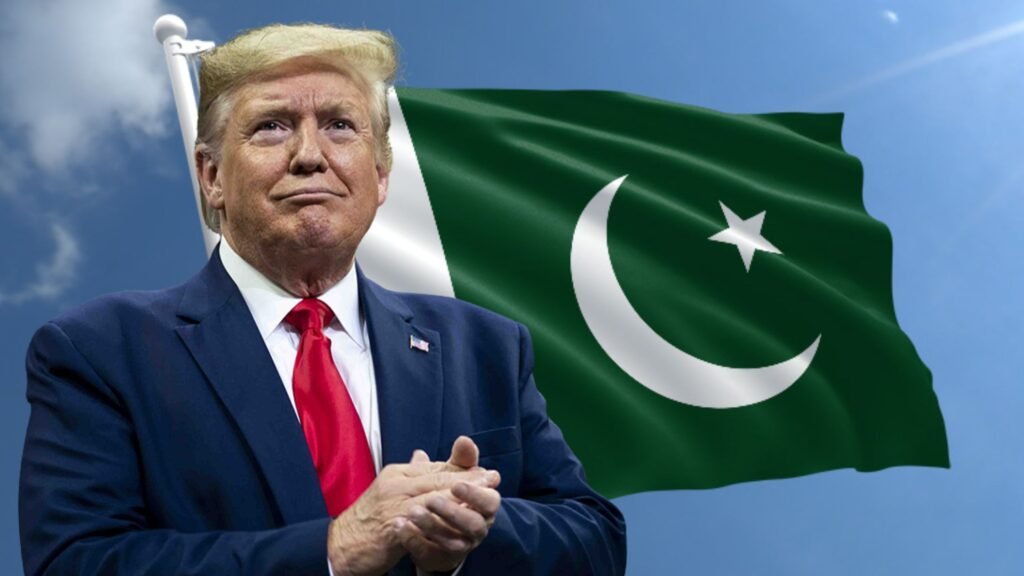
At critical moments when support was most needed, Pakistan found itself isolated. This legacy explains why many Pakistanis view President Trump’s recent warmth with deep suspicion.
India now appears to be encountering a similar cycle. For over three decades, New Delhi enjoyed unprecedented American patronage, access to advanced technologies, diplomatic shielding, and economic facilitation. This support helped India emerge as a significant regional military and economic power.
The durability of this partnership was driven largely by three converging factors: the China threat perception, strategic alignment with Israel, and to a lesser extent, the objective of containing Pakistan.
China remains the principal strategic competitor of the United States. Israel, Washington’s closest regional partner, is strategically aligned with India, while Pakistan’s nuclear capability and deepening partnership with China remain a source of concern for all three. Since the early 1990s, this informal strategic convergence has shaped regional power politics.
However, shifting global dynamics have begun to strain this axis. Israel has managed to dominate its regional environment, but India has failed to restrain China’s economic ascent or overawe Pakistan. The 2020 Galwan crisis exposed India’s military vulnerability vis-à-vis China, while its recent military setback against Pakistan in the four-day war further eroded the perception of Indian conventional superiority.
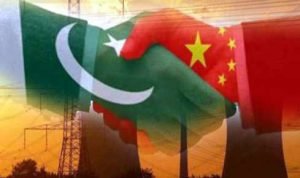
China and Pakistan, bound by a mature strategic partnership, have consolidated their military, technological, and economic cooperation. This convergence has fundamentally altered the balance of power in South Asia and frustrated India’s aspiration for regional dominance.
China’s steady rise toward major-power status has further diminished India’s strategic utility for Washington.
Against this backdrop, President Trump’s public rebukes of New Delhi and the imposition of punitive tariffs reflect Washington’s growing dissatisfaction.
India’s continued engagement with Russia and Iran, and its active role in BRICS, further complicate its relationship with the United States.
Attempts by India to hedge by improving ties with Moscow and Beijing have yielded limited dividends, as New Delhi’s strategic leverage continues to decline.
Conversely, Pakistan’s regional profile has witnessed a gradual upswing. Its recognition as a responsible middle power and an emerging regional stabiliser has opened diplomatic and economic avenues across the Middle East, Central Asia, South Asia, East Asia, and North Africa.
This diversification provides Pakistan with multiple strategic options rather than dependence on any single external patron.
Pakistan’s reform and development trajectory, supported through civil–military coordination under the SIFC framework, aims to broaden economic partnerships and attract diversified investment. Such flexibility reduces vulnerability to external pressure and political conditionality.
Military diplomacy has also yielded tangible dividends as Pakistan’s defence exports gain traction in international markets.
Optimists within the political leadership, including Khawaja Asif, argue that expanding defence exports could eventually ease Pakistan’s reliance on IMF financing. However, external opportunities alone cannot substitute for internal reform.
Sustainable progress demands strengthening moral standards, combating corruption, fostering work ethics, reducing political polarisation, building national cohesion, revitalising agriculture, energising industry for export growth, widening the tax base, and improving revenue generation.
Pakistan’s External Challenges
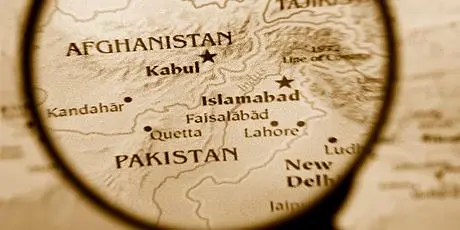
Despite improving strategic space, Pakistan continues to face serious external challenges. India remains hostile and persistent in hybrid warfare, disinformation campaigns, diplomatic pressure, and covert destabilisation efforts, particularly in Balochistan and along the western border.
Indo-Afghan strategic partnership has added a new dimension to Pakistan’s threat perception. Both are using terrorism as a tool to destabilise and fragment Pakistan.
New Delhi continues to lobby against Pakistan in international financial and regulatory forums while pursuing military modernisation with Western and Israeli assistance.
The unresolved Kashmir dispute remains a flashpoint that carries escalation risks, especially in a volatile nuclear environment. Any miscalculation could destabilise the entire region and invite external intervention.
Afghanistan presents another complex challenge. The fragile political and economic situation, border management issues, terrorism spillover, refugee pressures, and lack of international recognition of Kabul continue to impact Pakistan’s internal security and economic connectivity ambitions.
At the global level, Pakistan remains exposed to financial vulnerability through IMF conditionalities, fluctuating energy prices, debt servicing pressures, and susceptibility to economic coercion by major powers.
Strategic competition between the US and China also places Pakistan under constant pressure to balance relations without becoming entangled in great-power rivalry.
Regional instability in the Middle East, Red Sea, and Eurasian supply routes further threatens Pakistan’s trade corridors, energy security, and overseas remittances.
Clouds of war continue to gather over Iran as a result of aggressive US–Israeli designs. Even though the proposed air strikes have been shelved for now, the threat has not receded.
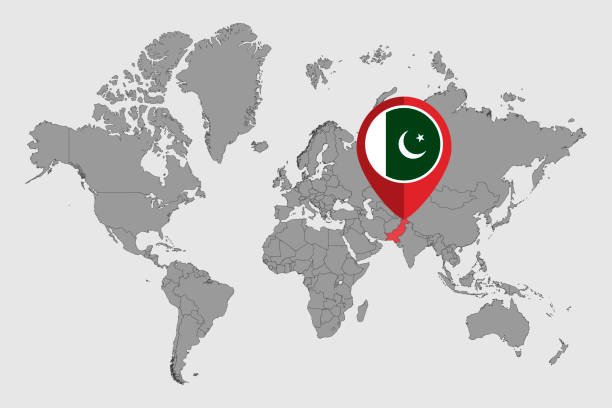
The resulting strategic uncertainty has heightened vulnerabilities in Pakistan’s southern backyard, especially along the coastline, including Gwadar and the wider Balochistan region.
The Way Forward
Pakistan’s way out lies in strategic autonomy anchored in economic resilience, diplomatic balance, and internal cohesion.
First, Pakistan must continue diversifying its external partnerships by deepening economic integration with China, the Gulf States, Central Asia, Türkiye, ASEAN, and Africa while maintaining functional engagement with the West based on mutual respect rather than dependency.
Second, economic security must be treated as national security. Export-led growth, energy sector reform, mineral development, agricultural modernization, IT expansion, and logistics connectivity through CPEC and regional corridors should remain national priorities insulated from political disruption.
Third, sustained internal stability is essential, institutional reform, rule of law, and continuity of economic policies will restore investor confidence and national credibility.
Fourth, Political reconciliation is important, but not at the cost of national interests and Pakistan’s integrity. There should be zero tolerance against those actors aligned with the terrorists, their patrons and promoting anti-Pakistan agenda.
Fifth, Pakistan must maintain credible deterrence while avoiding unnecessary escalation. Smart diplomacy, narrative building, legal warfare, and proactive engagement in international forums are essential to counter Indian propaganda and hybrid aggression.
Sixth, Expanding the existing Pakistan–Saudi Arabia strategic defence agreement into a broad-based collective defence framework by incorporating Türkiye, Egypt, Qatar and possibly Iran to strengthen deterrence against aggression.
Seventh, regional connectivity should be leveraged to convert Pakistan’s geostrategic location into geoeconomic advantage by facilitating transit trade, pipelines, rail links, and digital corridors linking South Asia, Central Asia, China, and the Middle East.
Finally, human capital development — education, skills, technology adoption, and governance reform — will determine Pakistan’s long-term competitiveness and strategic resilience.
Conclusion
Although Pakistan continues to navigate economic and institutional challenges, it is better positioned today than in previous decades to pursue strategic independence, resist coercion, and shape its regional destiny through disciplined governance, national unity, and pragmatic statecraft.