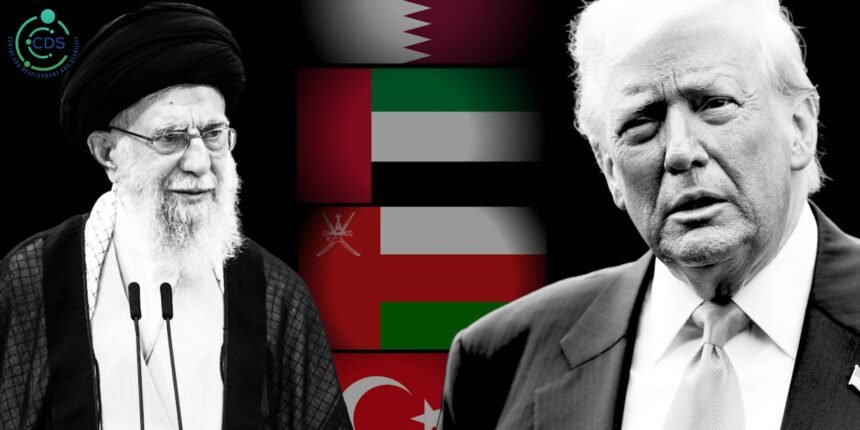

In early 2026, tensions between the United States and Iran escalated sharply, alarming global capitals and regional powers alike. What began as diplomatic friction over Iran’s nuclear ambitions and human-rights concerns has transformed into a near-military standoff. The crisis reflects deeper struggles over influence, ideology, and global power balance, with implications stretching from the Persian Gulf to Pakistan.
- Iran’s Stand: Diplomacy Under Threat
- Washington’s Calculations and the US–Israel Nexus
- The Muslim World’s Response: Unity in Restraint
- Global Trade and Economic Fallout
- China and Russia: Strategic Balancers
- Potential Scenarios: Limited Strikes, Proxy Retaliation, or Diplomacy
- Implications for Gaza and the Palestinian Question
- Pakistan’s Role: Neutral Mediation and Self-Protection
- Conclusion
- The author is a Director General of the Centre for Development and Stability (CDS), is a well-known journalist and political analyst who regularly contributes to Daily Sabha and various media channels. He recently represented Pakistan at the CIPCC in China, organized by the China Public Diplomacy Association, highlighting his active role in promoting dialogue, development, and regional cooperation.
- *The views and opinions expressed herein, and any references, are those of the author and do not necessarily reflect the editorial policy of the Centre for Development and Stability (CDS).
At the center of the storm is President Donald Trump’s renewed maximum pressure campaign, threatening to use military force unless Tehran accepts new nuclear and regional restrictions. A massive US naval armada, including the aircraft carrier USS Abraham Lincoln and several destroyers, has been deployed near Iranian waters. Trump declared that the armada was headed out to a place called Iran, and hopefully we won’t have to use it, but his words underscored how close Washington and Tehran now stand to open conflict.
Iran’s Stand: Diplomacy Under Threat
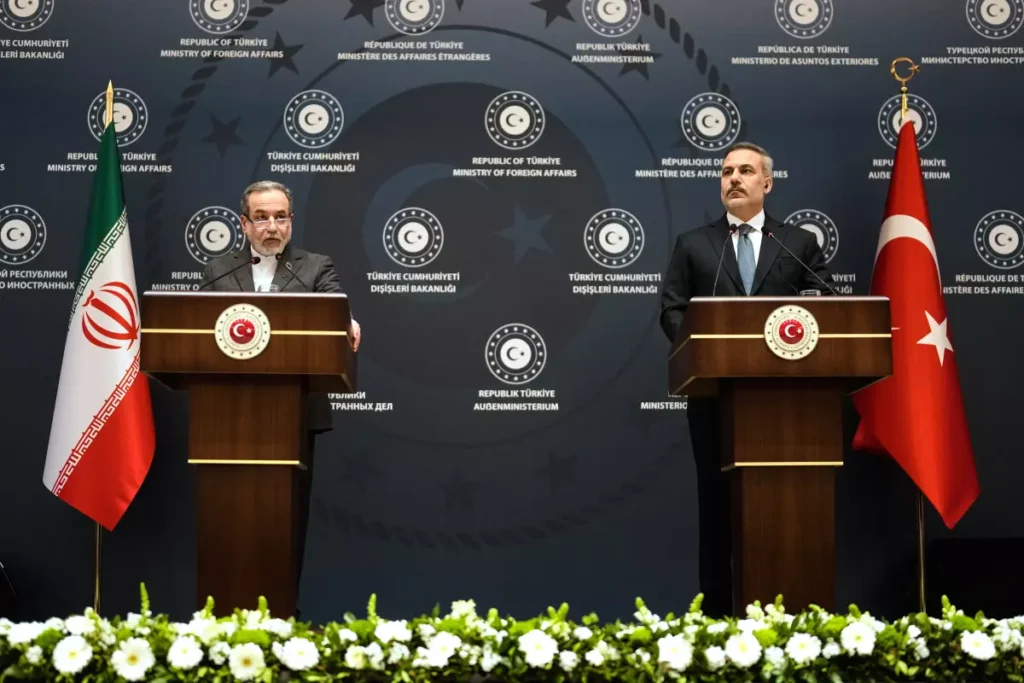
Iranian leaders continue to send mixed yet firm signals, openness to dialogue, paired with readiness for self-defence. Foreign Minister Abbas Araghchi, meeting Turkish counterpart Hakan Fidan in Istanbul, reiterated that Iran will never give up diplomacy, but insisted that talks must be based on justice and law, not pressure.
Iran’s military posture shows equal determination. The Iranian Army announced that 1,000 new drones, including reconnaissance and attack models, have joined its arsenal. Commander Amir Hamati stated that maintaining strategic advantages for fast combat and a decisive response remains the army’s priority.
These developments emphasize that while Iran’s economy suffers under sanctions, its deterrence capacity remains robust. Its network of proxies, Hezbollah in Lebanon, the Houthis in Yemen, and Shia militias in Iraq, provides asymmetric reach that could threaten U.S. and allied assets across the Middle East.
Washington’s Calculations and the US–Israel Nexus
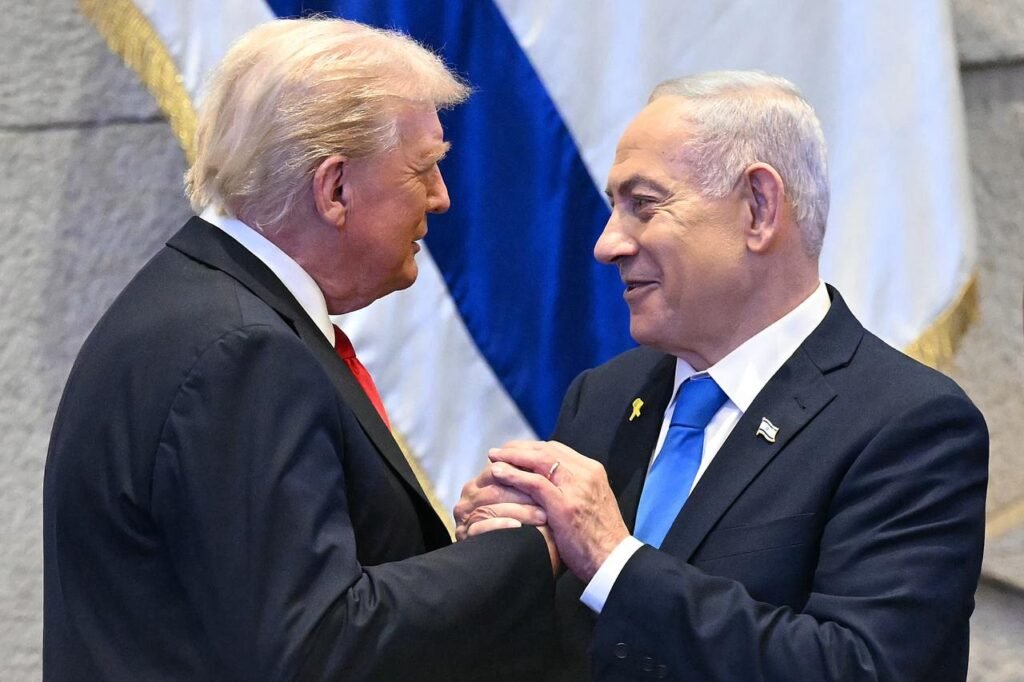
From Washington’s view, Tehran’s expanding influence and missile program justify continued pressure. President Trump insists Iran must end uranium enrichment permanently and disarm proxy groups before any sanctions relief or diplomatic normalization. Several sources report that Israel has been urging the United States to take pre-emptive action against Iran’s nuclear and drone facilities.
Analysts warn that such a US-Israel nexus could transform a limited strike into a broader regional war. Israeli media have already confirmed the presence of US destroyers in the southern port of Eilat, signaling close coordination. Iran views this as proof that Washington’s threats serve Tel Aviv’s strategic interests more than any genuine security need.
Financial institutions, including Citibank, believe Washington might opt for limited, coordinated US-Israel action aimed at avoiding full-scale escalation while still projecting dominance.
However, this approach remains extremely risky. Iran has repeatedly warned that any attack, even a limited one, will trigger immediate and decisive retaliation. Senior Iranian negotiator Kazem Gharibabadi told state media that Tehran’s priority is 200 percent readiness to defend our country, a sentiment widely echoed in Tehran’s streets.
The Muslim World’s Response: Unity in Restraint
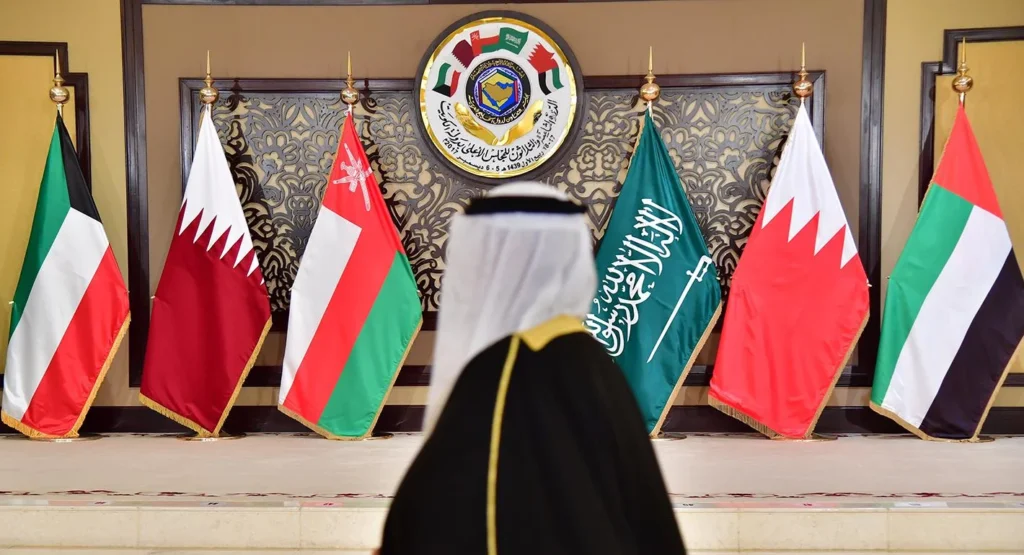
Perhaps the most remarkable feature of this crisis is the Muslim world’s collective rejection of war. For once, rival states appear united in urging restraint and diplomacy.
Saudi Arabia and the United Arab Emirates have publicly declared that their airspace will not be available for any strikes on Iran. Saudi Crown Prince Mohammed bin Salman told Arab media that we will not allow our territory or airspace to be used for aggression against any neighbor. This denial significantly constrains U.S. military logistics.
Turkey’s Hakan Fidan has emerged as a key diplomatic broker, urging the US to resist Israeli pressure for strikes and calling for the resumption of nuclear talks. Turkey’s role reflects its growing ambition to mediate in Muslim world conflicts and to prevent chaos along its borders.
Qatar and Oman, both seasoned mediators, have quietly reactivated their diplomatic channels between Tehran and Washington. Pakistan, while avoiding public alignment, has voiced deep concern and called for peace, warning that war would destabilize the region and worsen economic hardship.
Collectively, these positions form a de-facto Muslim consensus that another Gulf war must be avoided at all costs. Unlike 2003’s Iraq invasion, today’s Muslim states appear far more cautious, aware that instability would ripple directly into their own economies and societies.
Global Trade and Economic Fallout
The global economy is particularly vulnerable to Middle East instability in 2026. The Strait of Hormuz, through which nearly 20 percent of global oil exports pass daily, remains a critical choke point. Any Iranian attempt to close or harass this route would trigger worldwide oil price surges.
Already, energy markets are reacting nervously: Brent crude has climbed above $92 a barrel, its highest since mid-2025. Insurance rates for tankers in the Gulf have doubled, and shipping companies are preparing contingency rerouting plans around the Cape of Good Hope.
For Pakistan and other oil-importing Muslim economies, this scenario poses grave challenges. Rising energy costs directly inflate food prices, electricity tariffs, and manufacturing inputs. A sustained crisis could worsen Pakistan’s trade deficit and fuel inflation, threatening fragile economic recovery programs. Therefore, Islamabad has a strong incentive to promote peace and prevent any disruption to regional trade.
China and Russia: Strategic Balancers
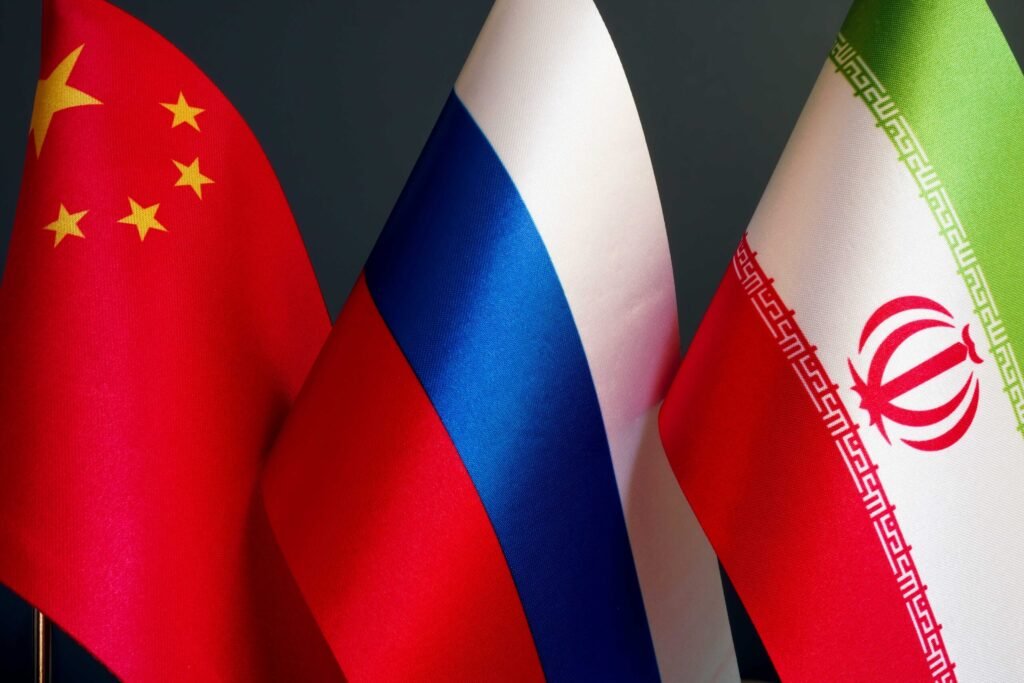
Beyond the Muslim world, two major powers, China and Russia, are playing subtle yet significant roles in tempering the crisis. Beijing has reiterated its opposition to unilateral military action and called for dialogue through international law. China’s heavy dependence on Gulf oil, along with its economic partnerships with both Iran and Saudi Arabia under the Belt and Road Initiative, motivates its push for restraint.
Moscow similarly urges diplomacy while warning Washington that any aggression against Iran could destabilize Eurasia. Russia maintains military and energy cooperation with Tehran, and a US strike would drive Iran closer to Moscow, further complicating Western strategy. Both Beijing and Moscow have the leverage, through the UN Security Council and bilateral influence, to slow escalation.
Potential Scenarios: Limited Strikes, Proxy Retaliation, or Diplomacy
Analysts outline three plausible short-term outcomes:
- Limited US-Israel Strikes: Short-targeted attacks on Iranian missile or nuclear sites. This might achieve tactical impact but would almost certainly trigger retaliatory strikes from Iran and its proxies.
- Full-Scale War: An unlikely yet catastrophic scenario involving multi-theatre engagement. This would devastate oil markets and destabilize multiple Muslim countries.
- Managed De-escalation through Diplomacy: The most desirable path, driven by regional mediation (Turkey, Qatar, Oman) and support from China and Russia. This option gains strength as Muslim countries refuse to facilitate military action.
As a global financial facilitator for the energy sector, Citibank’s energy analysis suggests that Washington currently favors ‘Option 1’, but even limited action could spiral uncontrollably.
Implications for Gaza and the Palestinian Question
A US-Iran confrontation would likely worsen the already dire humanitarian situation in Gaza. Resources, diplomatic attention, and media focus would shift toward the Gulf, sidelining Palestinian peace efforts. Moreover, if Iran, a major backer of Hamas and Islamic Jihad, becomes militarily engaged, it may encourage its allies to intensify operations against Israel, provoking harsher Israeli responses and deepening Gaza’s suffering.
In this sense, an Iran conflict would not only reshape Gulf geopolitics but also directly affect Palestine’s future, potentially erasing fragile hopes for post-war reconstruction and regional reconciliation.
Pakistan’s Role: Neutral Mediation and Self-Protection
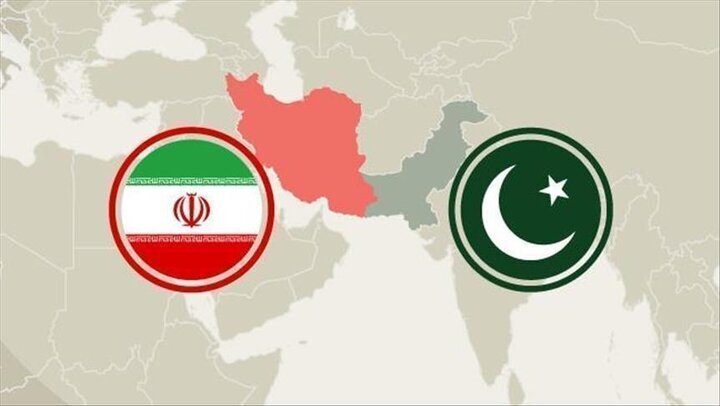
For Pakistan, neutrality and diplomacy remain the wisest course. Islamabad should:
- Advocate de-escalation in every forum, urging the United Nations and the Organization of Islamic Cooperation (OIC) to pursue dialogue instead of conflict.
- Prepare economic safeguards, such as alternate fuel sourcing, energy conservation, and regional trade diversification.
- Coordinate maritime security with regional partners to ensure the Arabian Sea and the Strait of Hormuz remain open to commercial shipping.
- Maintain balanced ties with the US, China, and Muslim states, avoiding alignment that could invite retaliation or internal sectarian tension.
This balanced diplomacy enhances Pakistan’s credibility as a peace-seeking nation and protects its national interests.
Conclusion
The world stands once again at the edge of a preventable war. The United States, with Israel’s support, thinks pressure can make Iran change. Iran, after long years of sanctions, believes that defending its pride and security is more important. The result is a high-stakes game of brinkmanship in which one miscalculation could ignite a regional inferno.
Yet, there is hope: Muslim nations, led by Saudi Arabia, Turkey, and Pakistan, are speaking in one voice against war. China and Russia’s diplomatic engagement further strengthens the global call for restraint.
The immediate task for policymakers is to convert this collective caution into concrete peace diplomacy before misjudgment plunges the world into another catastrophic Middle East war.
For Pakistan, the lesson is clear: remain neutral, act as a bridge, and protect its economic and security interests through proactive, principled diplomacy.