

By Asif Haroon Raja
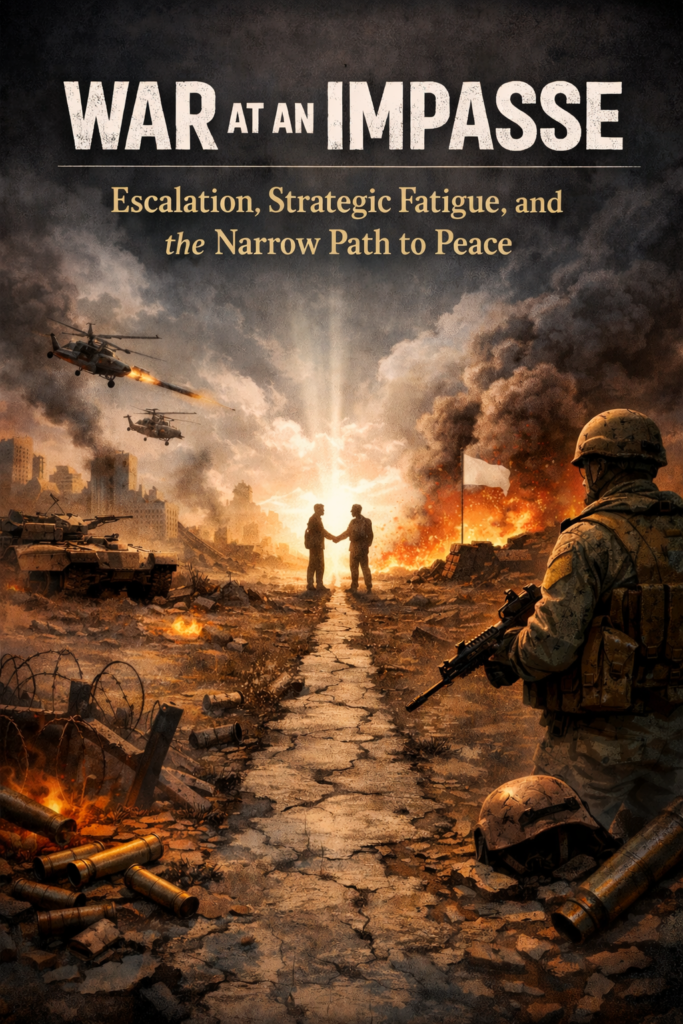
The war against Iran appears to be moving from a phase of calculated escalation into one of strategic uncertainty and attrition.
For the United States, the situation is becoming increasingly untenable. President Donald Trump is facing mounting pressure from across the domestic spectrum—political opponents, segments of his own party, sections of the Pentagon, and a war-weary public.
Reports of disquiet within the US military establishment, coupled with the abrupt dismissal of senior officers, including the Chairman of the Joint Chiefs of Staff, point toward internal strains. Such disruptions in the chain of command during an ongoing conflict rarely bode well, particularly when the war is not progressing according to initial expectations.
Washington’s early assumptions of a swift and decisive victory—through air dominance, shock-and-awe tactics, and the triggering of internal dissent within Iran—have not materialized. Instead, Iran has demonstrated remarkable resilience, maintaining both internal cohesion and operational capability. Its retaliatory strikes, including successive waves of missile and drone attacks, have not only sustained pressure but also inflicted tangible damage across multiple fronts.
Strategic Fallout of Iran’s Counter-Offensive
Iran’s counter-strikes have significantly altered the regional equation. The Strait of Hormuz has emerged as a critical flashpoint, yet key US allies remain reluctant to commit forces for its reopening, reflecting both strategic caution and war fatigue. The cohesion of the transatlantic alliance is showing visible strain, with growing divergences within NATO over the course and continuation of the conflict.
In Israel, the sustained pressure has affected both military morale and civilian confidence. Sections of the Israeli Defense Forces (IDF) and reservists are reportedly overstretched, while the civilian population—under the constant threat of missile strikes—is increasingly critical of Prime Minister Benjamin Netanyahu.
The Gulf Cooperation Council (GCC) States, long reliant on US security guarantees, now find themselves exposed. Despite hosting advanced airbases, several have proven vulnerable to Iran’s missile and drone campaigns, with multiple installations reportedly rendered inoperative. The psychological and economic costs are mounting, particularly for states like the UAE and Bahrain that have veered closer to Israel.
Pakistan, meanwhile, has played a measured and stabilizing role. Through diplomatic engagement, Islamabad has reportedly discouraged Gulf States from escalating the conflict further against Iran, highlighting the potentially catastrophic consequences for the region. This balancing act has enhanced Pakistan’s credibility in Tehran, which views it as a relatively dependable interlocutor.
Iran’s Evolving War Strategy
Despite sustained bombardment, Iran has retained its capacity to strike back with increasing sophistication. Having expended older stockpiles, it is now deploying more advanced precision-guided ballistic and hypersonic systems, alongside its well-known drone arsenal.
These capabilities have enabled Iran to achieve greater accuracy and strategic impact. Domestically, the Iranian regime appears to have retained public support. Rather than fracturing under pressure, Iranian society has shown signs of consolidation, with nationalist sentiment reinforcing resistance.
On the battlefield, Iran has shifted toward decentralized and asymmetric warfare. The Islamic Revolutionary Guard Corps (IRGC) is reportedly operating through dispersed networks, complicating targeting and reducing vulnerability to conventional military strategies.
Additionally, Iran’s regional allies and proxies—previously weakened—have re-entered the conflict, opened multiple fronts and stretched US-Israeli resources. Backing from major powers such as China, Russia, and North Korea—whether overt or tacit—has further strengthened Iran’s strategic confidence.
Reports of advanced weapons supplies, though difficult to independently verify, have contributed to a perception that Iran is now negotiating from a position of relative strength.
A Strategic Deadlock
The United States finds itself in a classic strategic dilemma. It cannot easily secure a decisive victory, yet withdrawal without tangible gains risks political and reputational costs. Options such as ground offensives targeting critical sites like Kharg Island or key nuclear facilities carry the risk of uncontrollable escalation.
Israel, for its part, appears inclined toward prolonging the conflict, possibly to draw in additional regional actors and reshape the strategic landscape to its advantage. Meanwhile, other regional players, including India, are recalibrating their positions in response to shifting geopolitical dynamics.
Why The Invaders Haven’t Subdued Iran?
The core issue is not military inability—it is a strategic choice. The US and Israel have not subdued Iran primarily because:
1. A war with Iran would be far more costly than the Iraq War. Iran is larger, more populous, and more capable.
2. Threats to oil routes like the Strait of Hormuz would impact the global economy.
3. The ability of Iran to retaliate across multiple fronts (Israel, Gulf, US bases) reinforces its strategic deterrence.
4. Proxies create plausible deniability and strategic depth.
5. Political Constraints of Trump and Netanyahu.
6. Domestic fatigue in the US after long wars and the demolition of the myth of Israeli invincibility.
Bottom Line
The real strengths of Iran are resilience, asymmetric warfare and geography, and not Iranian invulnerability, or weak US-Israeli intelligence and strike capabilities. The reality is more nuanced: Iran has not been subdued, not because it cannot be hit, but because the cost of subduing it is judged too high compared to the strategic gain.
Prospects of Peace
Despite the intensifying conflict, pathways to peace—though narrow—still exist.
First, war fatigue is setting in across multiple actors. The US faces domestic political constraints; European allies are increasingly reluctant; Gulf states are economically strained; and even Israel is confronting internal pressures. Prolonged conflict without clear gains historically pushes parties toward negotiation.
Second, Iran’s strategy of leveraging the Strait of Hormuz as a bargaining chip suggests it is not opposed to negotiations per se, but seeks talks from a position of strength.
Third, Tehran’s demands—security guarantees against future attacks and war reparations—are not entirely unprecedented in conflict resolution frameworks.
Fourth, the role of neutral or relatively trusted intermediaries will be crucial. Countries like Pakistan, along with potentially China and Russia, could facilitate backchannel diplomacy. A multilateral framework involving the United Nations Security Council may also help in crafting a ceasefire arrangement acceptable to all sides.
Fifth, de-escalation could begin with limited, confidence-building measures: partial reopening of maritime routes under international supervision, prisoner exchanges, or localized ceasefires.
Such steps, while modest, can create momentum toward broader negotiations. Finally, a face-saving mechanism for the United States will be essential. No durable peace is possible unless Washington can present the outcome domestically as a strategic success or at least a justified disengagement.
Conclusion
The conflict has reached a stage where military options are yielding diminishing returns while risks of escalation continue to grow. Neither side appears capable of imposing a decisive outcome in the near term.
Under such conditions, diplomacy—however difficult—remains the only viable path forward. Peace, if it comes, will not be the result of victory, but of necessity.
Brigadier (Retd) Asif Haroon Raja, Patron-in-Chief of CDS Think Tank, regularly appears on national and international media platforms.