
Introduction
Rare earth elements and other critical minerals such as lithium, cobalt, antimony, and tungsten have become the building blocks of modern economies. They power electric vehicles, semiconductors, renewable energy, and defense systems. As the world races to reduce dependence on China’s control of the rare earth supply chain, Washington has launched a global effort to diversify sources.
Pakistan, long believed to sit atop vast but underdeveloped mineral wealth, is now emerging in this conversation. The recent collaboration between Islamabad and Washington signals an important turn in both countries’ strategic outlook — for Pakistan, a bid to attract foreign investment and revive its economy; for the United States, an opportunity to secure alternative supplies for industries vital to its technological and defense leadership.
Pakistan’s Mineral Wealth and Geological Claims
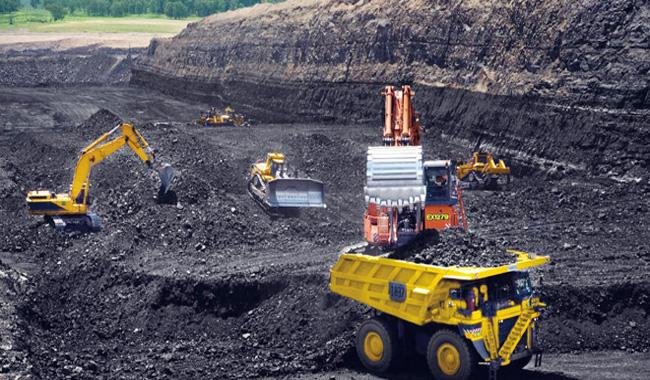
Officials in Islamabad frequently cite figures placing Pakistan’s untapped mineral reserves at around 8 trillion dollars. These estimates, based on national surveys and the Planning Commission’s “Strategy for Mineral Sector Development,” include resources such as copper, gold, lithium, tungsten, and rare earth elements (REEs).
The Planning Commission report notes that Pakistan has 92 known minerals, with 52 already exploited commercially, yet the mining sector contributes barely 3 percent to GDP. It identifies key weaknesses — poor technology, fragmented regulation, lack of modern exploration, and weak provincial coordination.
Although scientific confirmation of rare earth deposits remains limited, the U.S. Geological Survey (USGS) acknowledges Pakistan’s strong base in associated minerals such as barite, copper, and antimony. These often coexist with rare earth elements in geological formations.
Balochistan remains the primary focus, hosting Pakistan’s large copper-gold projects like Saindak and Reko Diq. The province is widely believed to hold potential for rare earths, though exploration is minimal due to security and infrastructure challenges. Khyber Pakhtunkhwa and Gilgit-Baltistan are also cited in planning documents for mineral diversification. However, the mountainous terrain and limited accessibility hinder extraction.
Despite the speculative nature of some claims, Pakistan’s geology provides a credible base for further exploration — explaining U.S. interest in early partnerships rather than waiting for fully proven reserves.
A MOU Between US Strategic Metals and Frontier Works Organization
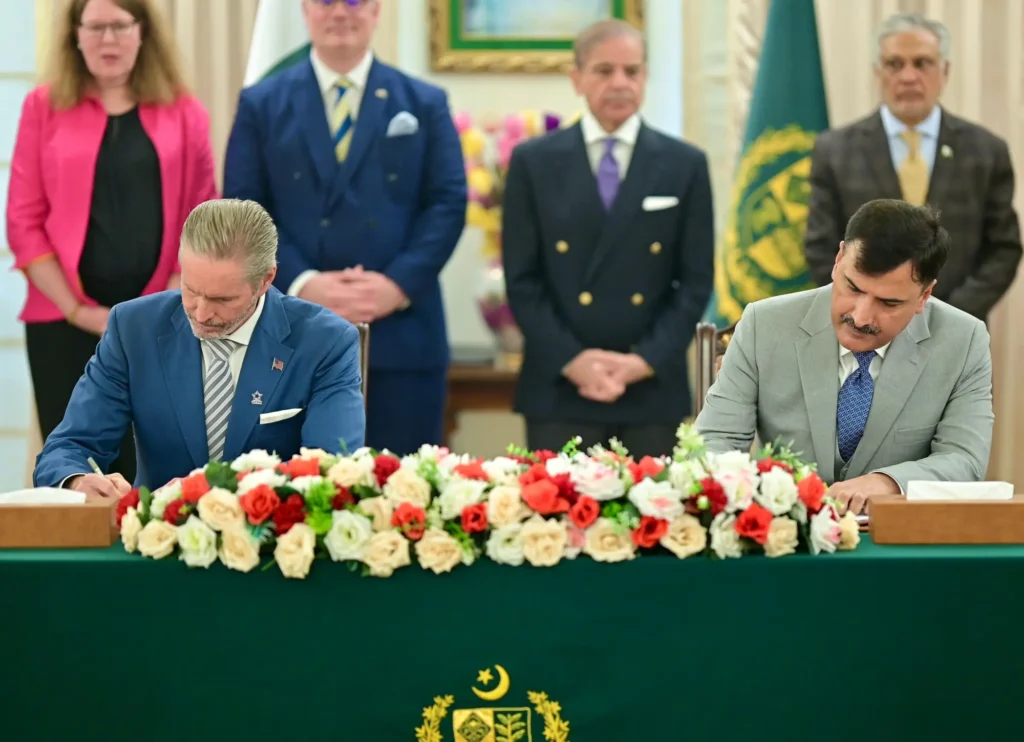
The most visible milestone in this emerging partnership came on September 8, 2025, when U.S. Strategic Metals (USSM), a Missouri-based firm specializing in recycling and production of critical minerals, signed an MOU with Pakistan’s Frontier Works Organization (FWO) at the Prime Minister’s House in Islamabad.
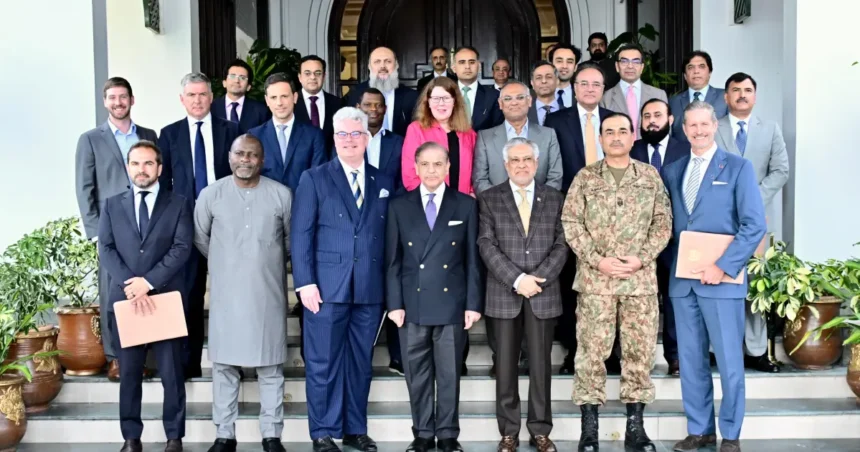
The U.S. Embassy in Islamabad reported that Acting Deputy Chief of Mission Zach Harkenrider attended the signing, while Chargé d’Affaires Natalie Baker called it “yet another example of the strength of the U.S.–Pakistan bilateral relationship that will benefit both countries.”
According to the Prime Minister’s Office, the agreement involves exploration, development, and eventual refining of critical minerals, including rare earths. The first investment phase, valued at about 500 million dollars, also envisions a poly-metallic refinery in Pakistan. Officials in the Ministry of Petroleum and Natural Resources have described this as “the beginning of a long-term partnership to bring modern mining practices and value addition into Pakistan.”
U.S. media, including AP News and Arab News, reported that under the agreement, Pakistan would begin exporting available minerals such as copper, antimony, tungsten, and rare earth elements.
First Shipment and Symbolism
Just weeks after the MOU, Pakistan announced on October 2, 2025, that it had dispatched its first-ever shipment of enriched rare earth elements and critical minerals to the U.S. under the same deal. A statement from the Prime Minister’s Office and press release by PR Newswire confirmed that both Prime Minister Shehbaz Sharif and Field Marshal Asim Munir, the Army Chief, oversaw the initiative.
The consignment reportedly contained copper concentrate, antimony, and rare-earth-bearing minerals containing neodymium and praseodymium. U.S. Strategic Metals CEO Stacy Hastie called the shipment “the first step in an exciting journey together to provide critical minerals to the United States and strengthen economic ties between our two countries.”
While symbolically powerful, analysts note that the details of the shipment—quantity, grade, and commercial value—have not been publicly disclosed. As Arab News reported, “the deal marks an important signal of intent rather than a large commercial breakthrough.”
Diplomatic Momentum and Political Endorsement
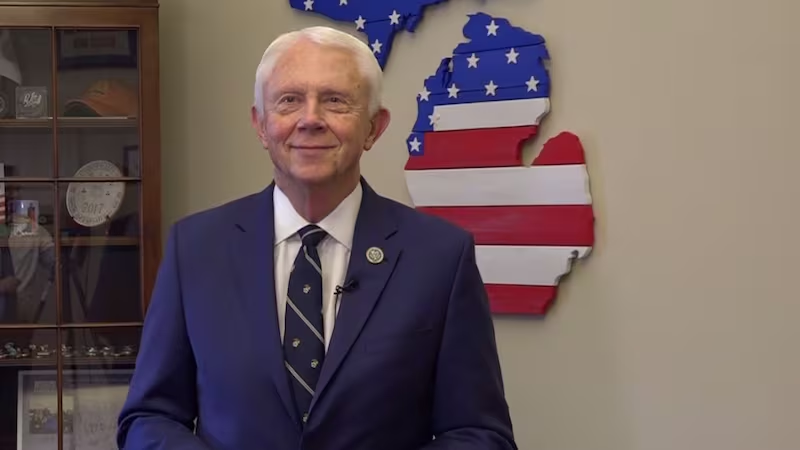
The minerals deal has triggered broader diplomatic momentum. During his Islamabad visit, U.S. Congressman Jack Bergman emphasized that “the value of the relationship going forward cannot be overestimated,” describing critical minerals as “one of many areas where Pakistan and the U.S. can build sustainable cooperation.”
At the Pakistan Minerals Investment Forum, Eric Meyer, Deputy Assistant Secretary at the U.S. State Department’s Bureau of South and Central Asian Affairs, reiterated that Washington views mineral cooperation as a strategic priority. His remarks were later echoed in a statement released by the U.S. Department of State, noting that “secure and transparent mineral supply chains are essential to global stability and shared prosperity.”
For Pakistan, this cooperation is not just about geology but also economic diplomacy. After the July 2025 Pakistan-U.S. trade agreement, which lowered U.S. tariffs on Pakistani exports and opened discussion on investment incentives, Islamabad began linking the mineral agenda with tariff relief and industrial access. Officials from the Ministry of Commerce privately described the rare-earth initiative as “an anchor project demonstrating Pakistan’s value in high-tech supply chains.”
Civil–Military Nexus and Public Debate
That the agreement was signed through the FWO, a military-run organization, rather than a civilian ministry, reflects the Army’s direct stake in resource management. The arrangement reassures foreign partners about project security but also fuels debate at home.
When Field Marshal Asim Munir presented samples of rare earth minerals to former U.S. President Donald Trump during a visit, it drew mixed reactions. Supporters saw it as bold economic diplomacy; critics, including Senator Aimal Wali Khan, called it “a salesman-like gesture” and warned against blurring military and commercial roles.
Government officials defend the approach as pragmatic. A senior Planning Ministry source told Business Recorder that “FWO’s involvement ensures operational discipline and protection in difficult terrain, while civilian agencies will handle regulatory oversight.” Still, analysts caution that long-term success depends on transparent governance, provincial coordination, and fair revenue sharing with local communities in Balochistan.
Risks, Rivalries, and Realities
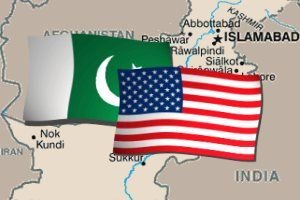
Despite the fanfare, the partnership faces significant hurdles.
Geological uncertainty remains the most fundamental. Proven rare earth deposits have not yet been confirmed through international-standard exploration. Extraction and separation of rare earths require specialized chemical facilities and environmental safeguards that Pakistan currently lacks.
Security challenges in Balochistan and parts of Khyber Pakhtunkhwa are another major concern. Insurgencies, sabotage risks, and local grievances against resource exploitation have derailed projects in the past, including some Chinese investments.
Governance complexity—especially the federal-provincial divide after the 18th Amendment—further complicates foreign investment. The Ministry of Energy (Petroleum Division) is reportedly drafting proposals to create a federal authority to coordinate mining of strategic minerals, though this could provoke provincial resistance.
At the geopolitical level, U.S. involvement introduces new dynamics. China remains deeply embedded in Pakistan’s infrastructure and mining sectors through the China-Pakistan Economic Corridor (CPEC). Some Chinese companies have existing stakes in copper and gold mining zones that overlap with areas now being studied for critical minerals. Analysts in Foreign Policy note that “U.S. entry into Pakistan’s mineral landscape, however commercially motivated, carries strategic weight given its competition with China.”
Others point out that the U.S. designation of the Baloch Liberation Army (BLA) as a Foreign Terrorist Organization earlier in 2025 could help secure future mining operations but may also reinforce perceptions of external influence in domestic security decisions.
Current Status and Outlook
By late 2025, Pakistan and the United States have taken the first tangible steps toward mineral cooperation. The MOU between USSM and FWO is active, and the inaugural shipment has reached the United States. U.S. diplomats and lawmakers have expressed continuing interest, and Pakistan’s government has promised policy reforms to attract more investment in exploration and refining.
Yet experts caution that commercial-scale production will require years of sustained work—comprehensive geological mapping, environmental assessments, and industrial infrastructure. An analyst summarized it aptly: “Minerals diplomacy opens doors, but questions linger over Pakistan’s capacity to benefit from the $500 million deal.”
If Islamabad can match ambition with institutional discipline, and Washington maintains interest beyond immediate strategic optics, the cooperation could evolve into a model for responsible mineral development in South Asia.
For Pakistan, success would mean not only export revenue but also technology transfer, local job creation, and international credibility. For the United States, it could secure an alternative foothold in a crucial supply chain while strengthening ties with a long-standing but often uneasy ally.
Ultimately, the Pakistan-US partnership on rare earths is less about the rocks themselves and more about trust, transparency, and timing. Whether it becomes a cornerstone of economic diplomacy or a short-lived experiment will depend on how both sides manage the delicate balance between opportunity and overreach.