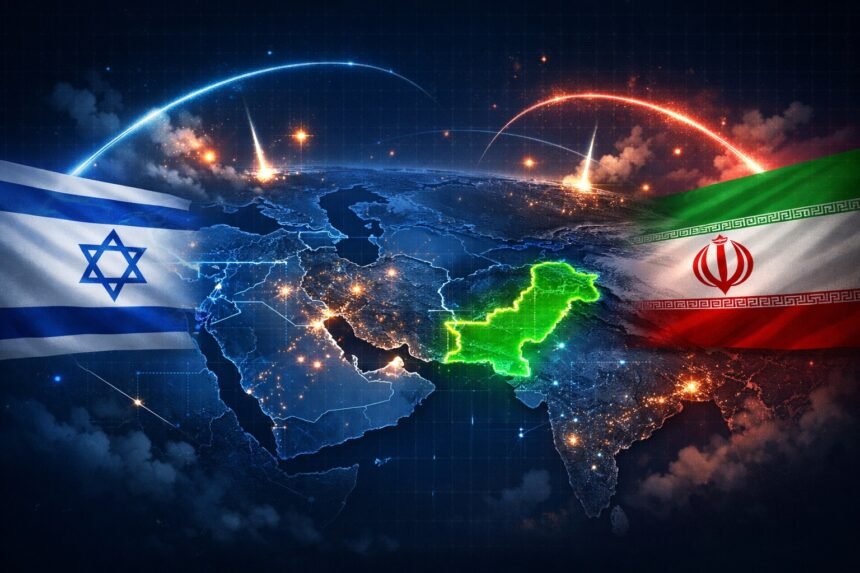

The war that started with Israel attacks on Iran has become a matter of great worry not only for this region, but also for the entire world. Because the impact of this war, particularly after the closure of the state of Hormuz, is being experienced everywhere. At the same time, Pakistan is also preparing to cope with the current situation. The most alarming concern right now is the shortage of oil and gas supply. And it is worsening day by day.
This day and age, Pakistan and all other states whose economies largely depended on oil and gas supplies passing through the Strait of Hormuz are facing a critical challenge of arranging alternative supplies to meet their energy needs.
However, facing such circumstances is not new for Pakistan, as the country has previously faced similar crises. Pakistan has been able to maintain balance between Iran and the Gulf states earlier as well. So, Pakistan is quite accustomed to it.
Traditionally, Pakistan has maintained strong relations with Saudi Arabia, at the same time, it has also sustained good relations with Iran due to cultural ties and geographic proximity. Therefore, so far, Pakistan has played a constructive role by advising all parties to engage in dialogue. The challenge is that Israel and Iran have largely been insensitive to advice, whether from Pakistan or their own people.
The situation is changing rapidly. The ongoing conflict has further reshaped the global order; this is because international law is increasingly being violated under the justification of preemptive strikes. Preemptive strikes have become normal practice without taking into consideration the authority or legitimacy of the UN Security Council. And after the arrival of Mr. Donald Trump as the president of the U.S., deterioration is happening at a fast pace and there are no norms or international law or rules of interstate conduct left anymore.
On the other hand, in the U.S. numerous voices across political divides have questioned the necessity of the conflict, arguing that the US was not facing any imminent threat from Iran.
Moreover, the Trump administration is facing embarrassment, having long portrayed itself as a peace-promoting leader, still waging a war that has led to the deaths of 167 young schoolgirls in a remote area of Iran. Such attacks on civilians, including hospitals, have caused the US to rapidly lose any moral ground it might have claimed, resounding previous patterns in Gaza.
In the Middle East, Israel’s bombing campaigns, supported by US interventions, have alarmed regional actors as well. Pakistan has wanted to mediate between Iran and Saudi Arabia, requesting that American bases not be used against Iran and urging Iran to refrain from attacking Saudi territory, consistent with its strategic defense agreement with Saudi Arabia.
Diplomacy, however, may have limited impact, as the conflict’s outcome will ultimately depend on military capabilities. Besides, India’s involvement in war also increased the doubts and its relations with Iran have been affected when US submarine sank the Iranian frigate IRIS Dena in the India Ocean. India’s alignment with Israel and the U.S. has raised questions about its reliability in Middle Eastern affairs.
Iran seems capable of sustaining the war, continuing to strategically deploy missiles and drones despite the loss of top leadership, including Rahbar. However, this intricate environment strengthens Pakistan’s diplomatic role to prevent escalation and encourage negotiations. The challenge is to assess the current risks carefully and formulate strategies that protect Pakistan’s economic and strategic interests while maintaining regional stability.