
By Nuzhat Nazar
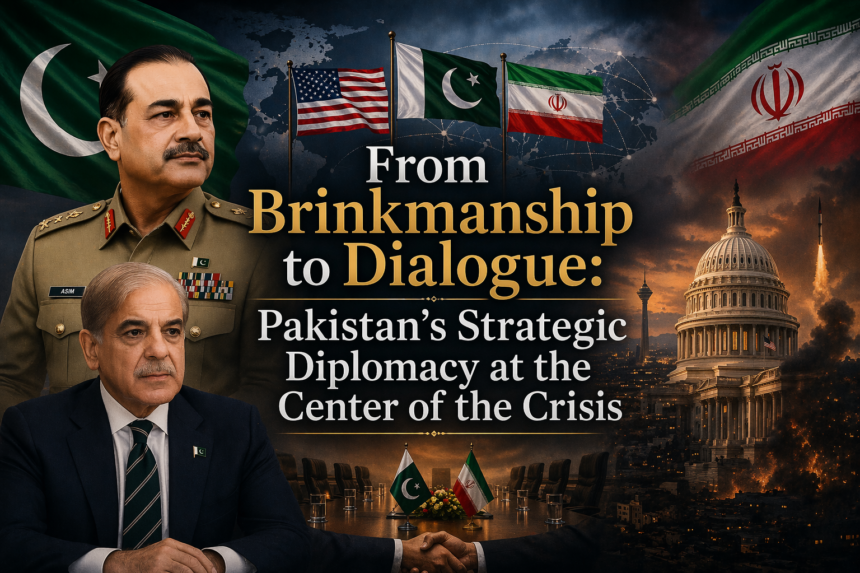
The Iran-US-Israel crisis was shaped by escalation across the region, but its trajectory began to change in Islamabad, where confrontation gradually gave way to dialogue.
For weeks, the direction of the crisis appeared predictable. Military signaling intensified, threats around the Strait of Hormuz raised concerns over global energy flows, and the possibility of a wider regional conflict began to look increasingly real. What started as a confrontation between key actors expanded into a layered crisis, involving regional alignments, economic vulnerabilities, and domestic political pressures within major capitals.
It was in this environment that diplomacy re-entered the picture. The shift was neither accidental nor symbolic. It was structured and deliberate. And significantly, it took place in Islamabad. The choice of location reflected more than convenience. It reflected trust, access, and the ability to sustain engagement at a moment when tensions could easily have escalated further.
From Escalation to Engagement
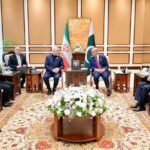
The talks in Islamabad represented the highest level of direct engagement between the United States and Iran in decades, since 1979. The presence of US Vice President JD Vance alongside senior Iranian political and diplomatic leadership underscored the seriousness of the moment.
The negotiations lasted nearly 21 hours and involved multiple rounds of discussions, written proposals, and technical exchanges. This was not performative diplomacy. It was substantive engagement under pressure. While the talks did not produce a final agreement, they achieved something strategically significant.
They interrupted the cycle of escalation. Both sides remained engaged despite clear differences. They exchanged positions, clarified red lines, and departed without shutting down communication. In a crisis where miscalculation could have led to rapid escalation, sustaining dialogue itself becomes a meaningful outcome. Islamabad created the conditions that made that possible.
Divergent Objectives at the Negotiating Table
The discussions revealed how deeply the positions of both sides remain anchored in their respective strategic priorities.
The United States approached the talks with a focus on long-term containment of Iran’s nuclear capability. Its core demand centred on securing a clear and binding commitment that Iran would not pursue nuclear weapons. This included limiting enrichment pathways and restricting the technological capacity that could enable rapid weaponisation.
At the same time, Washington insisted on ensuring uninterrupted navigation through the Strait of Hormuz, recognising its importance for global energy stability. Sanctions relief remained conditional, tied to verifiable compliance mechanisms.
Iran’s position reflected a different set of priorities.
Tehran framed the negotiations around sovereignty and strategic autonomy. It rejected constraints on its nuclear programme that went beyond civilian use as defined under international norms. It also resisted intrusive verification measures, viewing them as undermining its independence. On the Strait of Hormuz, Iran maintained that its role in the waterway is strategic and non-negotiable.
In addition, Iran broadened the scope of discussions. It raised the issue of frozen assets, sought compensation for losses linked to the conflict, and pushed for a wider regional ceasefire that would extend beyond the immediate US-Iran dynamic. These demands show an attempt to reframe the negotiations from a narrow security issue into a broader strategic settlement.
Why Agreement Remained Elusive
The absence of a final agreement was rooted in structural differences rather than procedural shortcomings. The nuclear issue remained the central divide, with Washington seeking forward-looking guarantees and Tehran unwilling to compromise on what it considers sovereign rights. The question of control and access in the Strait of Hormuz added another layer of complexity. Differences over sequencing, particularly on sanctions relief, further complicated the process.
However, what distinguishes the Islamabad round is not the lack of agreement but the way these differences were managed. In earlier negotiation cycles, such divergences often resulted in abrupt breakdowns. In this case, they were contained within a structured dialogue.
Both sides continued engagement, exchanged proposals, and left with a clearer understanding of each other’s positions. This reflects a shift from outcome-driven diplomacy to process-driven engagement, where maintaining the channel becomes as important as reaching an agreement.
Pakistan’s Role as a Connector State
Pakistan’s contribution to this process went beyond hosting the talks. It acted as a connector state, maintaining engagement with multiple actors while avoiding alignment with any single side. Its ability to remain accessible to Washington, Tehran, Riyadh, and Beijing created a unique diplomatic space.
According to sources in the foreign office and the establishment, Pakistan’s role began well before the formal negotiations. Communication channels were active during the escalation phase, allowing Islamabad to facilitate indirect exchanges and maintain contact when tensions were still rising.
This continuity helped create the conditions necessary for direct engagement.
Pakistan’s value lies in its relevance rather than mere neutrality. It is able to engage across divides without becoming part of them. In a fragmented international environment, this form of positioning translates into practical influence.
Credibility Reinforced Through Mutual Recognition
A notable outcome of the Islamabad talks was the acknowledgment of Pakistan’s role by both sides. The United States described the discussions as substantive and conducted in good faith, while Iran expressed appreciation for Pakistan’s facilitation efforts.
Such convergence is rare in a context defined by deep mistrust. It indicates that Pakistan’s approach was seen as credible and balanced. Rather than attempting to impose outcomes, Islamabad focused on sustaining the process. This reinforced its standing as a reliable facilitator capable of managing complex engagements.
Unwinding a Multi-Layered Crisis
The crisis being addressed in Islamabad is not confined to a single issue. It is embedded within a broader network of tensions that include US-Iran rivalry, Israel-Iran escalation, ongoing developments in Lebanon, and vulnerabilities linked to Gulf infrastructure and energy routes.
These dynamics intersect with global energy markets, regional security arrangements, and domestic political considerations. Under such conditions, diplomacy becomes more complex and more necessary. Even initiating dialogue requires careful calibration. Sustaining it requires consistent engagement. Islamabad did not resolve these complexities, but it created a platform where they could begin to be addressed without triggering further escalation.
An Emerging Pattern in Global Diplomacy
The structure of the Islamabad process reflects a broader shift in global diplomatic practice. It aligns with principles often associated with China’s approach, which emphasises dialogue, gradual engagement, and regional ownership of solutions. At the same time, Russia’s continued interaction with Tehran has helped maintain the strategic space required for negotiations.
What emerges is not a formal alignment but a functional convergence. China provides a framework that prioritises dialogue. Russia contributes to maintaining the balance. Pakistan operationalises the process by facilitating direct engagement.
This model reflects an evolving international system in which influence is increasingly defined by the ability to sustain processes rather than impose outcomes.
The Way Forward: Sustaining the Process
Despite the absence of a final agreement, the diplomatic process remains active. According to sources in the foreign office and establishment, there is an expectation that further rounds of talks may take place, with Pakistan continuing to facilitate engagement. Both sides have avoided closing the door, and communication channels remain open. This underscores a broader shift in how progress is measured. Agreements may take time, but maintaining engagement ensures that the path toward resolution remains available.
Conclusion: Where the Direction Began to Change
The Islamabad talks did not resolve the crisis, but they altered its direction. They demonstrated that even in a highly polarised environment, dialogue can be sustained and escalation can be managed. Pakistan has emerged not simply as a host, but as a credible diplomatic actor capable of connecting opposing sides and maintaining engagement under pressure.
Its role reflects a broader shift in global diplomacy, where influence is exercised through facilitation, access, and continuity. Conflicts often escalate in contested spaces. Their resolution begins in places where dialogue can take hold. For this crisis, that process has begun in Islamabad.
Nuzhat Nazar is a journalist and strategic affairs analyst with more than ten years of experience reporting on foreign policy, defence, and economic developments. Based in Islamabad, she focuses on geopolitics, regional security dynamics, and Pakistan’s positioning in a shifting global order.