
When Time Becomes Iran’s Advantage and America’s Constraint
(By: Nuzhat Nazar)
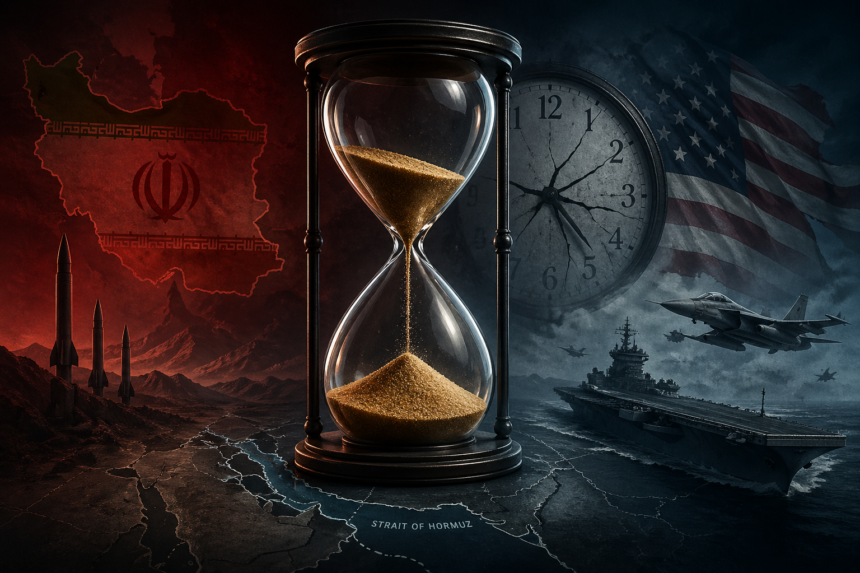
The approaching end of the 60-day window under the US War Powers framework is not just a procedural milestone. It is the moment where law, politics, and battlefield reality converge, and where the balance of leverage subtly begins to shift.
For President Donald Trump, the clock is no longer strategic; it is institutional. Once the 60-day period expires, sustaining a prolonged military campaign without congressional authorization becomes politically and legally difficult. Historically, US presidents have tested these limits, but rarely in situations where the conflict lacks a clear, quick, and decisive outcome. This is where the current situation with Iran becomes fundamentally different.
What initially appeared as a show of force is now evolving into a test of endurance. And endurance is not where the United States traditionally dominates in asymmetric or regionally contained conflicts.
Iran, by contrast, operates on a completely different strategic timeline. Its advantage does not lie in conventional military superiority, but in layered resilience. Geography alone gives Tehran depth. Mountainous terrain, dispersed infrastructure, and hardened military assets make rapid, decisive strikes less effective. Any escalation risks becoming drawn out, costly, and uncertain.
But geography is only one layer.
Operationally, Iran does not need to “win” in the traditional sense. It needs to avoid collapse while steadily increasing the cost of engagement. Whether through maritime pressure points like the Strait of Hormuz, calibrated proxy activity, or controlled escalation, Iran’s doctrine is built around strategic patience. This creates a scenario where time itself becomes a weapon.
Then comes the narrative battlefield. The longer the conflict drags, the harder it becomes for Washington to sustain a coherent justification, especially if economic consequences begin to ripple globally. Rising oil prices, supply chain disruptions, and pressure on allies will gradually erode the initial political consensus. Iran understands this well. It frames itself not as the aggressor, but as a state resisting external pressure, a narrative that resonates across parts of the Global South and even within segments of Western discourse.
Alliances further complicate the picture. While the United States retains unmatched formal alliances, the current global environment is fragmented. Countries like China and Russia may not intervene directly, but their strategic positioning creates diplomatic space for Iran. Even US allies, particularly in Europe, are far more cautious when conflicts risk long-term economic fallout.
This brings the focus back to Trump’s decision point.
If he seeks congressional approval, the debate itself becomes a political battleground – one that exposes divisions, raises questions about objectives, and potentially limits operational flexibility. If he pulls back, it risks being framed as strategic retreat. And if he attempts to prolong the situation through ceasefires or limited engagements, it effectively hands Iran what it wants most: time.
This is the paradox of the current moment. Military superiority does not automatically translate into strategic advantage. In fact, under certain conditions, it can create pressure for quick results..results that may not be achievable.
Iran is not necessarily stronger in absolute terms. But in this phase of the conflict, it may be better positioned for the kind of war that is unfolding.
And that is where the real shift lies -not on the battlefield, but in the structure of the confrontation itself.