
Asif Haroon Raja
Key Features of the Proposed 14-Point Agreement of Iran:
Iran
Immediate End to the War
As soon as the Memorandum of Understanding (MoU) is signed, a formal announcement declaring the cessation of hostilities in the region will be made.
30-Day Window and Islamabad/Geneva Talks
Within 30 days of the agreement, detailed negotiations will be held in either Islamabad or Geneva to finalize discussions on sanctions relief and the future of Iran’s nuclear program.
Restoration of Navigation in the Strait of Hormuz
During this 30-day period, Iran would gradually lift restrictions on maritime traffic, while the United States would progressively ease its naval blockade.
Nuclear Program and Transfer of Enriched Uranium
Iran has reportedly shown willingness to transfer its highly enriched uranium outside the country.
In return, Washington would release billions of dollars in frozen Iranian assets and provide phased sanctions relief.
The American Response
US Secretary of State Marco Rubio described the situation as “extremely complex,” noting that the Iranian leadership remains divided into competing factions, which may complicate consensus-building.
He also warned that if negotiations collapse, the United States reserves the right to reimpose the naval blockade and resume military operations.
Rhetorical War
Tehran’s formal response to the American proposal was expected the following day.
US President Donald Trump stated that “Iran’s military capability has been severely degraded,” adding: “We will see what Iran does next.”
He warned that if progress stalled, Washington could revert to “Project Freedom,” possibly in an expanded “Project Freedom Plus” format with additional measures.
Trump nevertheless expressed cautious optimism, saying that Iran may genuinely seek an agreement and that Washington expected a formal communication from Tehran shortly.
Meanwhile, Iranian officials issued strong warnings to countries supporting the proposed American resolution.
Ebrahim Azizi declared that backing the US resolution could have “grave consequences,” including the possibility of the permanent closure of the Strait of Hormuz for supporting states.
He argued that no fair resolution could ignore what Tehran sees as the root causes of regional instability, particularly American and Israeli actions.
Subsequently, President Trump publicly rejected Iran’s reported response, writing on social media that the reply from Iran’s “so-called representatives” was “totally unacceptable.”
Earlier, he had reiterated that Iran would never be allowed to possess nuclear weapons and stated that the US had already targeted nearly “70 percent” of its designated objectives in Iran.
He warned that additional strikes could continue for another two weeks if required.
In another statement, Trump accused Iran of “playing games” with the United States and the wider international community, saying that Tehran had relied on delay tactics for the past 47 years.
He also accused the Iranian regime of killing thousands of protesters over the decades.
Iranian authorities responded swiftly, saying
Trump’s remarks held no significance for Tehran and emphasized that Iranian national policy was not designed to satisfy any American president.
Iranian officials added that if Trump was dissatisfied with Iran’s reply, “that is better for Iran.”
The negotiating team, they said, had been instructed to focus solely on proposals serving the interests of the Iranian nation.
Iranian security sources further argued that the American proposals effectively amounted to demanding Iran’s surrender before excessive US conditions.
Tehran’s counterproposals reportedly emphasized compensation for wartime damages inflicted upon Iran and reaffirmed Iran’s sovereignty over the Strait of Hormuz.
Latest Situation
US President Donald Trump, in an interview with journalist Sharyl Attkisson, stated that Iran’s stockpile of enriched uranium could be targeted at any time, and if anyone attempted to move or access it, the United States would immediately know.
According to Trump, Iran has already been militarily defeated; however, military operations against Iran are not yet completely over.
He claimed that Iran’s “A and B leadership teams” had been eliminated, while a large part of the “C team” had also been neutralized.
The US President further stated that Iran could never be allowed to possess nuclear weapons because, in his view, it could not use them responsibly.
He added that the United States itself does not need the Strait of Hormuz, but any actions regarding it are being undertaken in the interest of America’s allies.
Earlier, Trump had described Iran’s response on social media as “totally unacceptable,” making it clear that Washington was dissatisfied with the latest developments.
It is noteworthy that Iran’s position was reportedly conveyed to the United States through Pakistani mediation efforts.
Major Development: Iran’s New Nuclear Proposal to the United States
According to a recent report by The Wall Street Journal, Iran has presented a new proposal aimed at reducing tensions with the United States.
Key Points of Iran’s Proposal
Iran is prepared to dilute part of its stockpile of enriched uranium.
The remaining stockpile would be transferred to a third country other than the United States.
Iran has also stipulated that if negotiations fail, the transferred uranium stockpile must be returned to Tehran.
US Response and Key Obstacles
According to sources, the proposal falls significantly short of American demands because:
The United States seeks the complete elimination of Iran’s enriched uranium stockpile, whereas the Iranian proposal does not meet that condition.
Iran has categorically refused to dismantle or permanently shut down its nuclear facilities.
Current Impasse
Iran says its proposals are legitimate and genuine, and has stated that it is ready to teach a lesson to any aggressor.
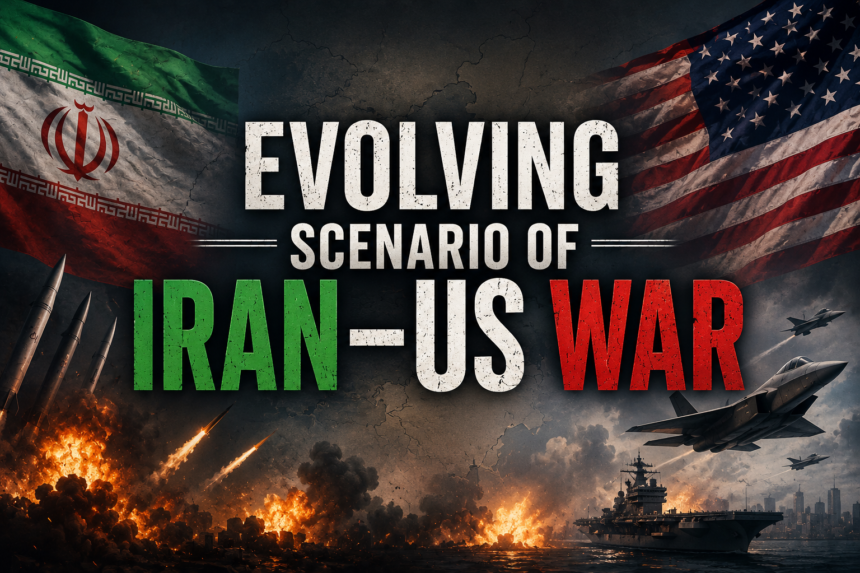
Trump retorted that the proposal is stupid and vowed complete victory. He added, the ceasefire in the Middle East is on a ‘massive life support’ and threatened that the US Navy may revive operations to escort ships through the Strait of Hormuz.
Netanyahu wants the war to continue till the complete destruction of Iran’s nuclear facilities including uranium stockpile.
UAE has joined the Indo-US-Israel axis and is secretly carrying out missile attacks against Iran.
The United States, Israel, and the UAE have been striving to draw the Arab States and Pakistan into the conflict in pursuit of their objective to weaken or destroy Iran, while India appears eager to see the flames of war spread toward Pakistan as well.
Pakistan is continuing with its diplomatic efforts to defuse the volatile situation and settle the conflict through negotiations.
My Strategic Assessment
The evolving US-Iran de-escalation framework appears less like a permanent settlement and more like a controlled strategic pause designed to prevent a wider regional war.
Both sides seem exhausted by escalation, yet unwilling to concede their core strategic objectives.
For Washington, the principal aim remains preventing Iran from crossing the nuclear threshold while preserving American credibility and Israeli security interests.
For Tehran, the priority is regime survival, sanctions relief, strategic dignity, and preservation of its deterrent capability.
Several factors will determine whether this initiative matures into a durable agreement or collapses into renewed confrontation:
- Internal Divisions in Iran:
The Iranian political structure is fragmented between pragmatists seeking economic relief and hardliners who view compromise as strategic capitulation.
- Israeli Factor:
Benjamin Netanyahu will remain skeptical of any arrangement that leaves Iran with residual nuclear infrastructure or missile capability.
- Strait of Hormuz Leverage:
The Strait remains Iran’s most potent geopolitical pressure point. Any prolonged disruption could destabilize global energy markets and drag external powers deeper into the crisis.
- Trump’s Negotiating Style:
Trump’s strategy combines coercive pressure with transactional diplomacy. His repeated references to renewed military action indicate that Washington is still operating under a “peace through overwhelming pressure” doctrine.
Future Outlook
Even if a temporary understanding is reached, distrust between Tehran and Washington is too deep for a comprehensive reconciliation in the near future.
The most realistic outcome may therefore be a managed rivalry rather than genuine normalization.
In essence, the proposed arrangement could reduce immediate tensions and avert a catastrophic regional war, but it is unlikely to eliminate the underlying ideological, geopolitical, and strategic conflict between the United States, Iran, and Israel.
Pakistan’s Role
The changing geopolitical landscape provides Pakistan an opportunity to improve relations with neighbouring Muslim States and promote regional economic integration based on mutual security and connectivity.
The crisis has reinforced the importance of strategic autonomy in foreign policy. Pakistan is therefore likely to continue pursuing a multidimensional diplomatic approach rather than becoming part of rigid military blocs.
About the Author
Brigadier (Retd) Asif Haroon Raja, SI (M) is a war veteran. He is Command and Staff Course and War Course qualified, holds an MSc in War Studies, and served as Defence Attaché in Egypt and Sudan, as well as Dean of the Corps of Military Attachés in Cairo.
He is a defence, security, and geopolitical analyst, international columnist, author of five books, former Chairman of Thinkers Forum Pakistan, Patron-in-Chief of Centre for Development Studies Think Tank, Director of Meesakh Research Centre; he regularly appears on media platforms.