
Asif Haroon Raja
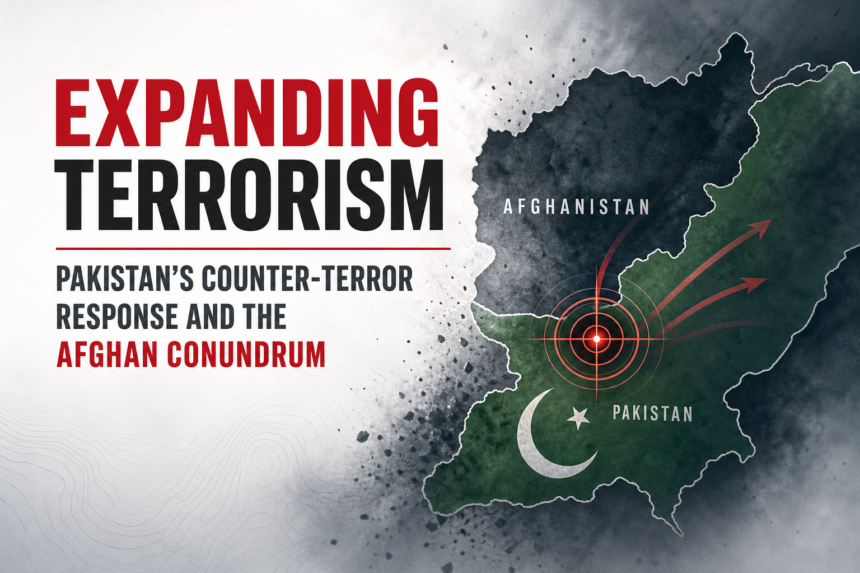
In the wake of the steadily intensifying cross-border terrorism orchestrated by the Tehrik-i-Taliban Pakistan (TTP) and Balochistan Liberation Army (BLA) from Afghan soil into Khyber Pakhtunkhwa and Balochistan, Pakistan was compelled to expand the scope of its intelligence-based operations.
Operation Ghazab Lil-Haq
This escalation culminated in extending the operational theatre across the border under Operation Ghazab Lil-Haq, marking a decisive shift from defensive containment to proactive deterrence.
Indo-Afghan Nexus
The necessity to strike deeper inside Afghanistan became unavoidable due to the growing nexus between India and elements within Afghanistan, coupled with the persistent refusal of the de facto Afghan Taliban regime to dismantle terrorist infrastructure or sever its links with anti-Pakistan groups.
IEA’s Support to TTP
Instead of acting as a responsible neighbor, the regime has continued to provide sanctuary, operational space, and logistical support to TTP militants.
Data from 2025–2026 indicates that Afghan-based militants were responsible for the majority of terrorist attacks within Pakistan, underscoring the gravity of the threat.
Despite repeated diplomatic engagements, Kabul has declined to rein in the TTP leadership or extradite its key figures. Rather, its posture has emboldened these groups.
Coordinated Border Attacks
Matters escalated further when, reportedly at India’s behest, Afghan forces launched coordinated attacks on Pakistan’s western border posts in October last year and again in February.
These incursions were not isolated provocations but appeared to be tactically designed to facilitate large-scale infiltration of TTP and BLA operatives into Pakistani territory, thereby creating a two-front internal security challenge.
On both occasions, Pakistan’s armed forces responded with precision and resolve, repulsing the attacks and inflicting significant losses on the aggressors.
Results Achieved
These developments set the stage for the launch of Operation Ghazab Lil-Haq in February, which has since yielded substantial tactical and operational gains within a short span of time.
Pakistani forces successfully dismantled a wide network of TTP sanctuaries, hideouts, and launch pads across the border. Several high-value targets, including senior commanders, were neutralized.
Key training facilities—including suicide bomber indoctrination camps in Kandahar and command-and-control centers in Jalalabad—were destroyed.
As a result, the TTP’s organizational cohesion has been severely disrupted, its operational capability degraded, and its leadership forced into concealment.
Beyond targeting non-state actors, the operation also inflicted considerable damage on segments of Afghanistan’s defense infrastructure that were allegedly being used to facilitate hostile activities.
Ammunition depots, fuel reserves, logistics hubs, communications centers, and select command headquarters were neutralized. Strategic assets, including drone facilities and aviation resources at Bagram Air Base, were also targeted.
Additionally, Pakistan established tactical control over approximately three dozen forward posts and secured a 32-kilometer-deep enclave across Zhob District to preempt infiltration routes.
In parallel, Pakistan is actively evaluating the creation of a buffer zone along the western frontier and exploring alternative connectivity corridors to Central Asia, thereby reducing dependence on unstable transit routes.
All major infiltration corridors and transit points have been effectively sealed.
Return of Afghan Refugees
Domestically, a long-overdue policy shift is underway regarding Afghan refugees. Given the mounting evidence of their exploitation by hostile networks, repatriation efforts—particularly of undocumented individuals—have been accelerated on security grounds.
Compounding Afghanistan’s challenges are the reported disruption of trade routes, including limitations linked to Chabahar Port, which has further strained its fragile economy.
Internal Fractures in Afghanistan
These cumulative pressures have triggered internal fractures within Afghanistan. Power struggles are emerging, with influential factions increasingly challenging the authority of the Tehrik-i-Taliban Afghanistan (TTA) leadership.
Northern regions, in particular, appear to be slipping from centralized control.
Under mounting strain, segments of the Taliban leadership have signaled a willingness to engage with Pakistan and consider its legitimate security concerns.
External Footprints in Afghanistan
However, the situation remains complicated by the entrenched influence of external actors. The deep strategic footprints of India, Israel, and, to a lesser extent, the United States—combined with sustained financial flows—have constrained the autonomy of the Haibatullah-led regime, rendering it susceptible to external manipulation.
India’s Dilemma
For India, the stakes remain exceptionally high. Following its setback in the brief but intense conflict with Pakistan in May last year, New Delhi appears intent on restoring its regional standing.
Recognizing the limitations of direct military confrontation, it has increasingly leaned toward asymmetric warfare—leveraging proxies, information operations, and disinformation campaigns.
Substantial financial resources are reportedly being funneled into destabilization efforts aimed at stretching Pakistan’s security apparatus and tarnishing its international image.
Shrinking Space of TTP
At the same time, evolving regional dynamics are reshaping militant alignments. The growing strain between the TTP and Kabul, pressure from China and Central Asian States, and the reluctance of key Gulf actors such as Qatar and Saudi Arabia to support extremist elements have constrained the TTP’s operational space.
Additionally, declining local support within Khyber Pakhtunkhwa has further weakened its footing.
Concentrated Focus on Baluchistan
In response, there are credible indications that hostile networks are recalibrating their focus toward Balochistan, with increased support being channeled to the BLA.
Intelligence assessments suggest that a renewed wave of coordinated attacks is being planned to destabilize the province, making it the next focal point of hybrid warfare against Pakistan.
The Transformation of BLA A Dangerous Journey from Local Insurgency to a Global Terror Network
The ongoing insurgency in Balochistan is no longer merely a local rebellion. The geopolitical landscape of 2026 has made it evident that the Balochistan Liberation Army (BLA) has evolved into a highly lethal, hybrid terrorist organization.
Modern War Machine and Global Alliances
The BLA has now begun operating under the umbrella of Al-Qaeda. Emulating the model of the terrorist group JNIM, active in Mali and other African States, the BLA is increasingly acquiring expertise in the use of chemical weapons and advanced technologies.
Key Facts You Need to Know
Triangular Alliance Growing cooperation between the BLA, Tehreek-e-Taliban Pakistan (TTP), and Al-Qaeda has emerged as a serious threat to the region and to global economic corridors such as the New Silk Road.
Operation Herof-2 The coordinated attacks across 13 districts in early 2026 demonstrate that their command structure and operational design are now being guided by globally experienced handlers.
Use of Technology Artificial Intelligence (AI), blockchain-based funding mechanisms, and the dark web are being utilized to spread propaganda and create a misleading narrative against the State.
Exploitation of Women Following the PKK model, women are being used as frontline fighters. Even protest camps established under the guise of humanitarian causes are being exploited as safe havens for militants.
Shadow Economy In regions such as Nimroz and Chagai, smuggling networks and shell companies have been used to establish a parallel economy to finance terrorist activities.
State Response
While Pakistan’s security forces have effectively dismantled many of these networks within Balochistan, safe havens in Afghanistan and financial backing linked to Al-Qaeda continue to sustain this menace.
The time has come to recognize the true face of this “Global Saboteur,” which exploits the grievances of innocent people to advance an agenda of international terrorism.
About the Author
Brigadier (Retd) Asif Haroon Raja, SI (M) is a war veteran. He is Command and Staff Course and War Course qualified, holds an MSc in War Studies, and served as Defence Attaché in Egypt and Sudan, as well as Dean of the Corps of Military Attachés in Cairo.
He is a defence, security, and geopolitical analyst, international columnist, author of five books, former Chairman of Thinkers Forum Pakistan, Patron-in-Chief of Centre for Development Studies Think Tank, Director of Meesakh Research Centre; he regularly appears on media platforms.