
By Zhao Yunfei
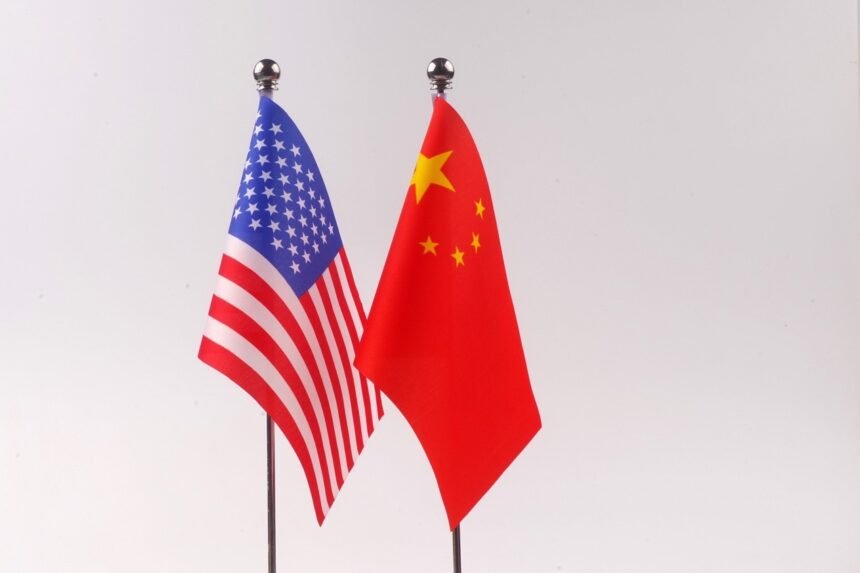
China and the U.S. share a responsibility to leverage dialogue as a safeguard against strategic miscalculation. Stability across the Taiwan Strait is of paramount importance, and issues from trade to military-to-military communication also carry significant weight for global stability.
U.S. President Donald Trump’s state visit to China arrives at a pivotal time for both bilateral relations and the wider international order. As the world’s two economic heavyweights, both sides have every reason to embrace strategic prudence over confrontation.
In an era when geopolitical tensions dominate the headlines, keeping lines of communication open between Beijing and Washington is one of the few reliable ways to reduce miscalculations.
As Chinese Foreign Ministry spokesperson Guo Jiakun noted, “heads-of-state diplomacy plays an irreplaceable role in providing strategic guidance for China-U.S. relations.”
China has repeatedly signaled that it is prepared to expand cooperation with the U.S. while managing differences through equality, mutual respect, and mutual benefit — an approach that could help inject much-needed stability and predictability into an increasingly volatile international landscape.
Heads-of-State diplomacy as strategic guidance
Through all the ups and downs, the lesson stands out: when tensions rise, heads-of-state diplomacy becomes the most effective mechanism for stabilizing the overall relationship.
The meeting goes beyond bilateral concerns, as the two leaders exchange views not only on the future direction of China-U.S. relations, but also on broader questions tied to global peace and development.
When President Xi Jinping met with President Donald Trump in Busan in October 2025, the message from Beijing was clear: China and the United States must look beyond short-term frictions and focus on the bigger picture. Xi urged both sides to recognize the long-term benefits of stable ties, strengthen dialogue, manage differences responsibly, and deepen practical cooperation. His vision for the relationship, rooted in mutual respect, peaceful coexistence, and win-win cooperation, offers a constructive path forward for major-country relations. Trump, meanwhile, acknowledged the weight of the relationship, describing China-U.S. ties as the world’s most important, and expressed hope for continued communication between the two sides.
This kind of top-level engagement matters because it provides strategic direction at moments when bilateral tensions could otherwise spread across trade, technology, and security. As Foreign Minister Wang Yi has noted: “Turning our backs on each other would only lead to mutual misperception and miscalculation; sliding into conflict or confrontation could drag the whole world down.”
Respecting core interests
At the same time, dialogue requires clear boundaries. Both countries have fundamental interests, especially around sovereignty, security, and development.
For China, the Taiwan question remains the most important. In a February call, President Xi reiterated that Taiwan is part of China and that China will never allow the island to be separated. He stressed that the U.S. must strictly adhere to the one-China principle and the provisions of the three China-U.S. joint communiqués and cease arms sales to Taiwan.
The Maritime Military Communication Agreement (MMCA), which resumed in 2024, has become one of the most practical guardrails in the bilateral relationship. In Hawaii last November, military representatives from both countries met under the MMCA framework to discuss maritime security conditions, review operational cases, and improve communication procedures. Both sides acknowledged that professional military dialogue helps frontline forces interact more safely and reduces the risk of misunderstanding.
Such mechanisms are increasingly important in today’s security environment. Stable China-U.S. relations extend far beyond the two countries. As conflicts drag on elsewhere and unilateral pressures mount, many developing nations worry about a return to a Cold War mentality and bloc confrontation.
As permanent members of the UN Security Council, both China and the U.S. have the responsibility to prevent confrontation from escalating. In an uncertain world, peaceful coexistence between the two countries reflects strategic wisdom.
(Zhao Yunfei is a journalist for CGTN.)