
China-Pakistan Five-Point Initiative, a diplomatic framework for restoring peace in the Gulf and the Middle East
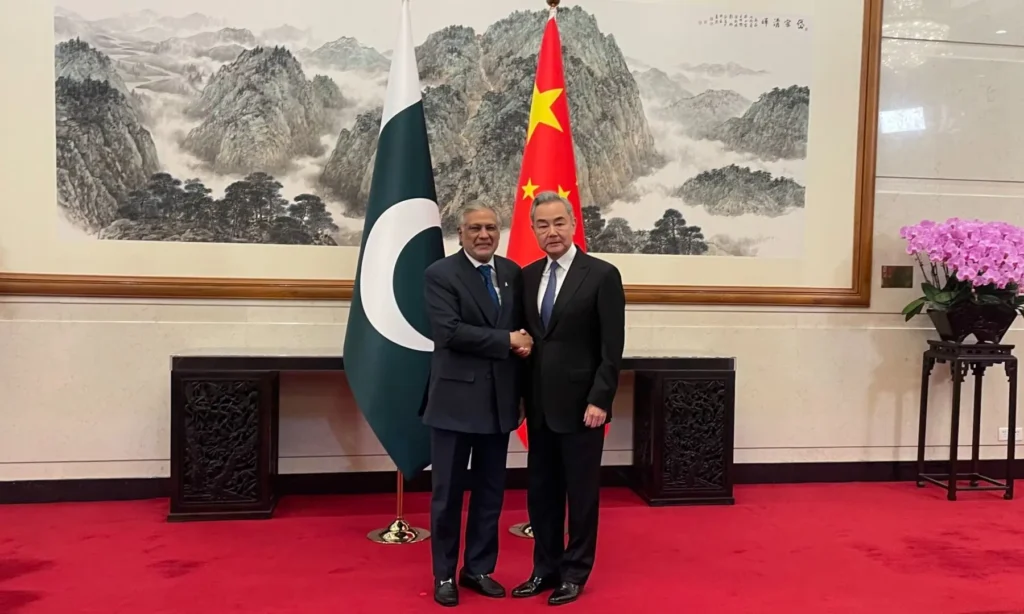
Amid escalating tensions in the Gulf and Middle East, China and Pakistan have jointly proposed a five-point initiative aimed at restoring peace, stability, and adherence to international norms. Member of the Political Bureau of the Communist Party of China (CPC) Central Committee and the Minister of Foreign Affairs of the People’s Republic of China H.E. Mr. Wang Yi and Deputy Prime Minister/Foreign Minister of the Islamic Republic of Pakistan, Senator Mohammad Ishaq Dar met in Beijing on 31 March 2026 to review the situation in the Gulf and Middle East Region. The initiative reflected a shared commitment to diplomatic engagement and multilateral cooperation in a rapidly deteriorating regional security environment.
The two sides proposed the following measures:
Both countries emphasize the necessity of halting ongoing violence to prevent further escalation across the region. Recognizing the severe humanitarian consequences of continued conflict, the proposed measure underscored the importance of ensuring unhindered access to humanitarian assistance for affected populations.
China and Pakistan strongly advocated for the prompt initiation of peace talks, reiterating that dialogue and diplomacy remain the only sustainable means of conflict resolution. The initiative stressed the importance of respecting the sovereignty, territorial integrity, and political independence of regional states, including Iran and Gulf countries. It called upon all parties to commit to peaceful negotiations while refraining from the use or threat of force during the process.
Besides, a key pillar of the framework was the protection of civilians and non-military infrastructure. The initiative urged all actors involved in the conflict to adhere strictly to International Humanitarian Law (IHL) to safeguard civilian lives. It specifically highlighted the need to avoid targeting critical infrastructure such as energy facilities, desalination plants, power grids, and peaceful nuclear installations, which are vital for civilian survival and regional stability.
The strategic significance of the Strait of Hormuz was also an important part of the proposed measures. As one of the world’s most crucial maritime routes for energy and trade, its security is vital for global economic stability. China and Pakistan called for the protection of ships and crew operating in the area and advocated for the swift restoration of safe, uninterrupted maritime passage.
Finally, the initiative emphasized the primacy of the United Nations and its Charter. Both countries reaffirmed their commitment to true multilateralism and called for collective international efforts to establish a comprehensive peace framework. Such a framework, grounded in international law, was seen as essential for achieving long-term peace and stability in the region.
The China-Pakistan five-point initiative represented a pragmatic and timely diplomatic effort to address one of the most volatile geopolitical crises of recent times. By prioritizing de-escalation, dialogue, humanitarian protection, and multilateral cooperation, the proposal measures are a structured pathway toward sustainable peace. However, whether regional and global actors will align with this framework remains to be seen, but it irrefutably reinforces the growing role of China and Pakistan as promoters of diplomatic conflict resolution in an increasingly fragmented international order.