
Part One
Optimistic Atmosphere in Switzerland
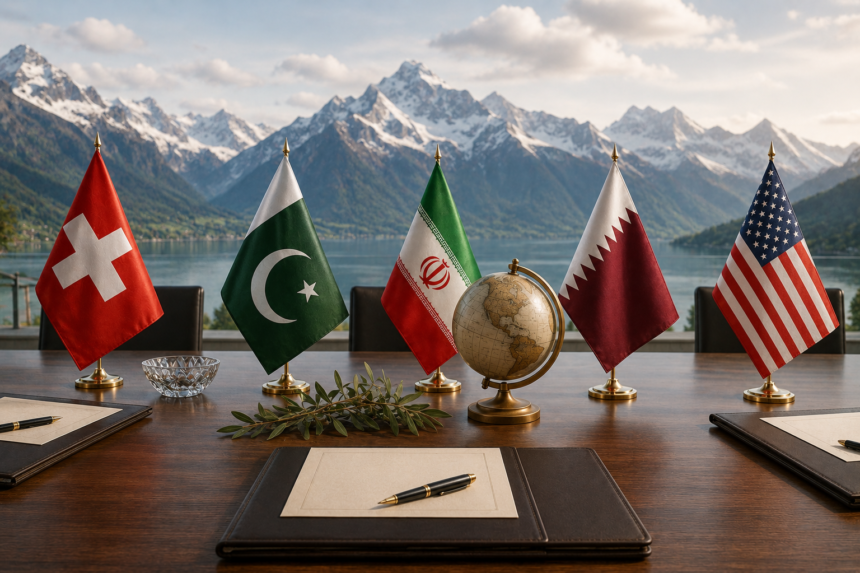
Following the arrival of the American, Iranian, Pakistani, and Qatari delegations in Switzerland, expectations were high that the negotiations could mark a significant step toward reducing tensions and opening a new chapter in regional diplomacy. By several accounts, the atmosphere before the formal talks was cautiously optimistic. According to reports circulating at the time, members of the American team, led by Vice President JD Vance, believed that meaningful progress was possible. Some participants reportedly described the discussions as constructive and potentially historic, raising hopes that a diplomatic breakthrough might be within reach.
Diplomacy Nearly Collapsed
However, the momentum was abruptly disrupted by a series of public statements from President Donald Trump. Through social media posts and public remarks, Trump adopted a highly confrontational tone, warning Iran of severe consequences should negotiations fail. His rhetoric included threats of renewed military action and references to the possibility of devastating consequences for Iran if a settlement could not be reached.
Iran’s Concerns
The Iranian delegation viewed these statements as inconsistent with the spirit of diplomacy and confidence-building that the talks required. Iranian officials reportedly lodged their concerns with the Pakistani and Qatari mediators, arguing that threats and negotiations could not proceed simultaneously. The resulting tension cast a shadow over the proceedings. Iranian representatives declined certain ceremonial engagements and temporarily suspended their participation in some aspects of the talks while seeking clarification regarding Washington’s intentions. The episode highlighted the deep mistrust that continues to characterize U.S.–Iran relations and demonstrated how quickly diplomatic progress can be undermined by conflicting political messages.
Iranian officials publicly maintained that they would not negotiate under pressure. Senior Iranian leaders argued that decades of sanctions, threats, and military pressure had failed to alter Tehran’s strategic calculations and that mutual respect remained an essential prerequisite for any lasting agreement. The Swiss negotiations thus became a vivid illustration of the central dilemma facing all parties: while diplomats were attempting to build momentum toward compromise, political rhetoric outside the negotiating room threatened to derail the very process they were seeking to advance.
Fragility of Diplomacy and Significance of Mediation
The incident reinforced the importance of consistent messaging and the indispensable role played by mediators such as Pakistan and Qatar in keeping channels of communication open during periods of heightened tension. Ultimately, the episode demonstrated how fragile diplomacy can be. Even when negotiators appear close to finding common ground, a single political intervention can place months of painstaking efforts at risk.
Pakistan’s Crucial Intervention
At this critical juncture, it was Pakistan’s quiet but effective diplomacy that prevented the negotiating process from collapsing altogether. While emotions were running high and the atmosphere had become increasingly strained, Pakistan’s diplomatic and military leadership worked behind the scenes to keep channels of communication open.
The Mediator’s Moment
Rather than allowing the talks to break down completely, Pakistani interlocutors engaged both sides separately, urging restraint and emphasizing the potentially catastrophic consequences of a return to military escalation. Working in close coordination with Qatar, Pakistan played the role of a trusted intermediary at a moment when direct communication between Washington and Tehran had become extremely difficult. Pakistani officials reportedly reassured the Iranian delegation that the negotiating process should not be judged solely by public rhetoric and encouraged all parties to focus on the larger strategic objective of preventing a wider regional war.
Building Bridges Amid Hostility
At the same time, Pakistan conveyed to the American side the depth of Iranian concerns and the need for confidence-building measures if diplomacy was to survive. This delicate balancing act required patience, credibility, and a level of trust that Pakistan had gradually built with all stakeholders through months of sustained engagement. The significance of Pakistan’s role rested not merely in hosting conversations or relaying messages. It was Pakistan’s ability to maintain the confidence of competing actors that enabled the process to remain alive during one of its most vulnerable moments. When frustration threatened to overwhelm diplomacy, Pakistan helped create the political space necessary for both sides to step back from confrontation and return to dialogue.
The Art of Quiet Diplomacy
In many ways, this was a classic example of preventive diplomacy. There were no dramatic public announcements, no grandstanding, and no immediate headlines. Yet the steady, persistent efforts undertaken behind closed doors helped prevent a dangerous escalation that could have engulfed the entire region. The eventual continuation of the negotiations and the subsequent diplomatic progress that followed served as a testament to the effectiveness of Pakistan’s mediation efforts.
Pakistan Emerges as the Region’s Peacemaker
At a time when many regional actors were viewed through the prism of rivalry and conflict, Pakistan emerged as a stabilizing force—demonstrating that constructive diplomacy, backed by credibility and strategic patience, can often achieve what threats and coercion cannot.
Pakistan Saved the Day
The Swiss episode will likely be remembered not only for the tensions that briefly endangered the talks but also for the skillful intervention that kept diplomacy alive. In that regard, Pakistan did not merely participate in the process; it helped save it.
To be concluded
The author Brigadier (Retd) Asif Haroon Raja, SI (M), is a war veteran. He is Command and Staff Course and War Course qualified, holds an MSc in War Studies, and served as Defence Attaché in Egypt and Sudan, as well as Dean of the Corps of Military Attachés in Cairo. He is a defence, security, and geopolitical analyst, columnist, featured columnist of IntelDrop magazine, Washington, author of five books, former Chairman of Thinkers Forum Pakistan, Patron-in-Chief of Centre for Development Studies Think Tank, Director of Meesakh Research Centre; he regularly appears on media platforms.