
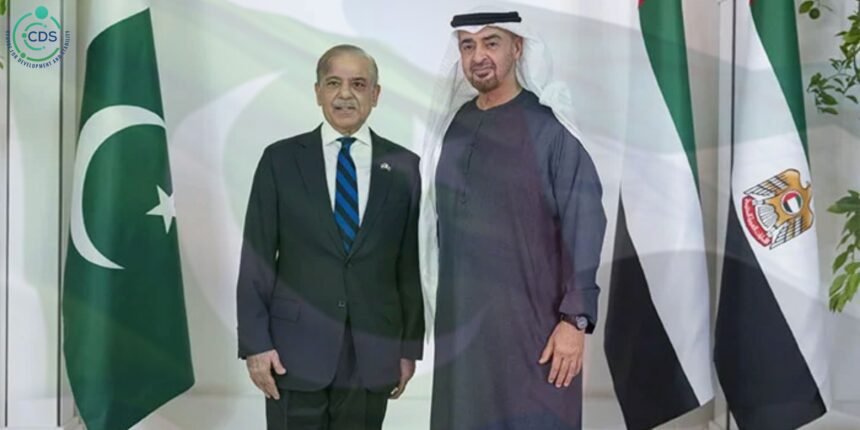

The United Arab Emirates (UAE) President and Ruler of Abu Dhabi, Sheikh Mohamed bin Zayed Al Nahyan, will undertake his official visit to Pakistan tomorrow on December 26, 2025, at the invitation of Prime Minister Shehbaz Sharif. The visit marks a major diplomatic milestone, reflecting the deep-rooted and time-tested brotherly ties between Pakistan and the UAE.
- A Relationship Rooted in Brotherhood and Mutual Respect
- Economic and Investment Ties: A Relationship of Opportunity
- A Lifeline of Remittances and Human Connection
- Strengthening Defense and Strategic Cooperation
- Regional Importance of the Visit
- Pakistan-UAE Partnership in Global Context
- Symbolic Significance: Islamabad Holiday and National Warmth
- From History to Future: A Partnership of Progress
- Conclusion: Brotherhood Beyond Borders
- The author is affiliated with the State News Agency and voluntarily contributes her research to the think tank, CDS.
- *The views and opinions expressed herein, and any references, are those of the author and do not necessarily reflect the editorial policy of the Centre for Development and Stability (CDS).
According to the Foreign Office of Pakistan, the UAE president will be accompanied by a high-level delegation including ministers and senior officials. The two sides will hold comprehensive discussions on the entire spectrum of bilateral relations as well as regional and international developments. The visit is expected to further strengthen cooperation in the areas of trade, investment, energy, and development, while promoting regional peace and stability.
A Relationship Rooted in Brotherhood and Mutual Respect
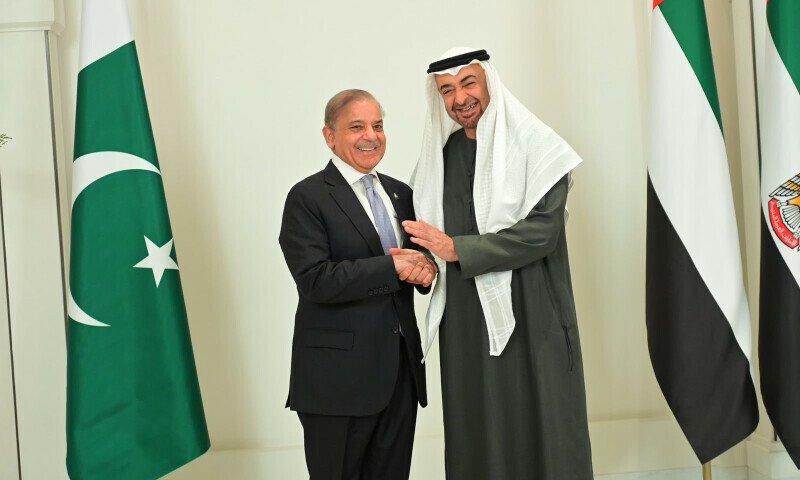
Pakistan and the United Arab Emirates share a longstanding bond founded on mutual respect, shared faith, and deep cultural and historical connections. Since the UAE’s formation in 1971, Pakistan has been among the first countries to recognize the new federation.
Over the decades, this partnership has evolved into a strong alliance encompassing political, economic, defense, and people-to-people ties.
The founding father of the UAE, Sheikh Zayed bin Sultan Al Nahyan, held deep affection for Pakistan and its people. His frequent visits to Pakistan, particularly to the province of Punjab, left a legacy of generosity and friendship that continues under the leadership of Sheikh Mohamed bin Zayed Al Nahyan.
The UAE has consistently extended humanitarian aid and development support to Pakistan. From building hospitals, mosques, and schools to funding infrastructure and energy projects, the UAE’s contribution has had a lasting impact on Pakistan’s socio-economic growth.
Economic and Investment Ties: A Relationship of Opportunity

Today, the UAE stands as one of Pakistan’s largest trading partners in the Middle East. The volume of bilateral trade has been steadily increasing, with potential for significant growth. The UAE is also a major investor in Pakistan’s energy, telecommunications, ports, and real estate sectors.
One of the most prominent examples is the Port Qasim and Karachi port investments, along with ongoing projects in the renewable energy sector. Moreover, the UAE’s Etisalat is one of the largest foreign investors in Pakistan’s telecom industry, while companies like DP World have shown sustained interest in logistics and maritime development.
The Pakistan-UAE Joint Ministerial Commission and the Pakistan-UAE Business Council continue to play pivotal roles in exploring new avenues of cooperation especially in agriculture, IT, renewable energy, and defense production.
A Lifeline of Remittances and Human Connection
Beyond economic cooperation, the human connection between the two nations is equally significant. Over 1.6 million Pakistani expatriates live and work in the UAE, contributing to the prosperity of both countries. Pakistani workers are valued contributors in various sectors including construction, healthcare, aviation, and services. Their remittances play a vital role in Pakistan’s economy, making the UAE one of the top sources of foreign remittances for the country. This dynamic community forms a bridge of friendship and goodwill, strengthening cultural and social ties across borders.
Strengthening Defense and Strategic Cooperation

Defense collaboration remains another cornerstone of Pakistan-UAE relations. The armed forces of both countries maintain strong professional ties, with regular joint training exercises, capacity building, and defense procurement cooperation.
Recently, Pakistan’s indigenously developed JF-17 Thunder fighter jets have attracted interest from Middle Eastern partners, including the UAE. Discussions surrounding defense technology exchange and training programs reflect mutual trust and strategic alignment in security matters.
Both Islamabad and Abu Dhabi share common views on counterterrorism, regional stability, and combating extremism. Their coordination in regional forums such as the Organization of Islamic Cooperation (OIC) and the United Nations reinforces a shared commitment to peace and development.
Regional Importance of the Visit
Sheikh Mohamed bin Zayed Al Nahyan’s visit comes at a time when the regional geopolitical landscape is evolving rapidly. The Middle East and South Asia are witnessing dynamic changes from energy realignments and new trade corridors to global efforts for peace and cooperation.
Pakistan’s geo-economic vision, combined with its strategic location at the crossroads of South Asia, Central Asia, and the Middle East, presents a mutually beneficial opportunity for both nations.
The UAE’s ambition to diversify its economy under “Vision 2030” aligns closely with Pakistan’s economic revival and investment drive under Prime Minister Shehbaz Sharif. Strengthening bilateral ties can lead to collaborations in renewable energy, food security, information technology, and climate resilience areas crucial for sustainable growth.
Pakistan-UAE Partnership in Global Context

The world is transitioning toward new energy trends, shifting trade routes, and emerging technological revolutions. In this context, Pakistan and the UAE are natural partners. The UAE’s expertise in green energy, innovation, and logistics, coupled with Pakistan’s human capital and strategic location, can produce a powerful partnership for regional prosperity.
Pakistan also values the UAE’s support in international forums and its humanitarian assistance during crises, such as floods and natural disasters. In turn, Pakistan has always stood by the UAE in its security and development endeavors.
This enduring partnership is not merely political, it reflects shared faith, cultural affinity, and deep-rooted people-to-people connections.
Symbolic Significance: Islamabad Holiday and National Warmth
The government’s announcement of a local holiday in Islamabad on December 26 reflects the importance and prestige attached to the UAE president’s visit.
While some federal institutions will continue operations, the symbolic gesture signifies national warmth and hospitality extended to the distinguished guest.
Pakistan’s capital is expected to host the UAE delegation with full state protocol, underscoring the depth of the brotherly relationship between the two countries. The streets of Islamabad are being prepared to welcome Sheikh Mohamed bin Zayed Al Nahyan in a manner that reflects Pakistan’s traditions of respect and friendship.
From History to Future: A Partnership of Progress
The Pakistan-UAE friendship has withstood the test of time, from the early years of diplomatic cooperation to the modern-day strategic partnership. It has expanded beyond economics to encompass education, cultural exchange, technology, and environmental sustainability.
Looking forward, both countries are expected to sign new agreements and MoUs aimed at enhancing cooperation in:
- Energy and infrastructure development
- Agriculture and food security
- Tourism and aviation
- Renewable and clean energy
- Defense collaboration
These initiatives will not only boost economic growth but also strengthen regional stability, a shared goal of both Islamabad and Abu Dhabi.
Conclusion: Brotherhood Beyond Borders
The upcoming visit of UAE President Sheikh Mohamed bin Zayed Al Nahyan is more than a diplomatic engagement, it symbolizes brotherhood, shared destiny, and a renewed vision for the future. It reaffirms that Pakistan and the UAE are bound by ties of faith, friendship, and mutual prosperity.
As both nations enter a new era of cooperation, this visit stands as a reminder that their relationship is built on trust, respect, and a common aspiration for peace and progress.
The partnership between Pakistan and the United Arab Emirates is not just about the past, it is about building a better, stronger, and more prosperous future together.