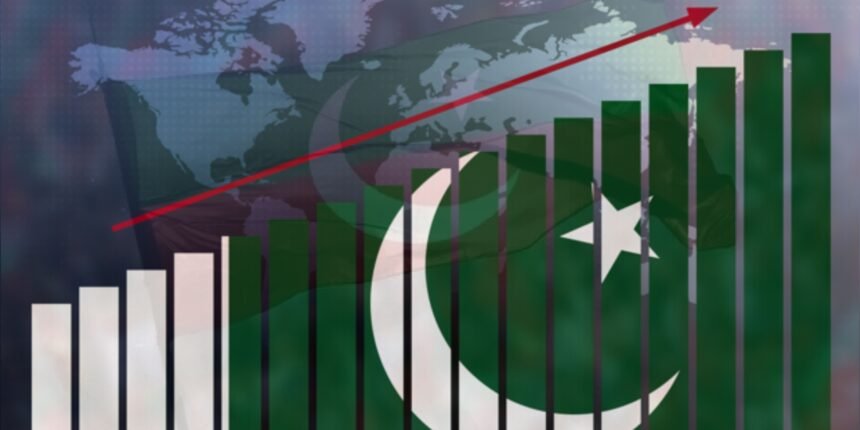

Until 6 May 2025, Pakistan was widely portrayed as a failing and irrelevant state, while India enjoyed the halo of “Shining India.” This perception was decisively overturned after the outstanding outcome of the four-day war with India. Pakistan emerged stronger, more confident, and strategically resilient, while its armed forces, under the resolute leadership of the CDF and COAS Field Marshal Asim Munir, earned renewed respect among the comity of nations.
- The writer is a retired Brig, war veteran who fought the epic battle of Hilli in former East Pakistan and recovered the body of Maj Akram Shaheed NH. He is command & staff course and war course qualified, MsC war studies degree holder, he served as defence attache’ in Egypt and Sudan and also as the Dean of Corps of Military Attachés in Cairo. He is a defence, security and political analyst, columnist, author of five books, ex-chairman TFP, Patron-in-chief CDS Think Tank, Director Meesakh Research Centre, Chief Election Commissioner Tehreek Jawanan Pakistan, and takes part in TV talk shows . He was appointed the Army’s spokesperson in 1992, and after retirement served as Honorary Colonel of the Battalion of the unit he commanded for eight years.
- *The views and opinions expressed herein, and any references, are those of the author and do not necessarily reflect the editorial policy of the Centre for Development and Stability (CDS).
The war not only averted a looming crisis but also reinforced Pakistan’s internal cohesion and external standing. It has created the necessary strategic space for economic revival and national take-off. In stark contrast, India finds itself mired in diplomatic embarrassment, strategic setbacks, and growing global scepticism, eroding the carefully cultivated image of regional supremacy.
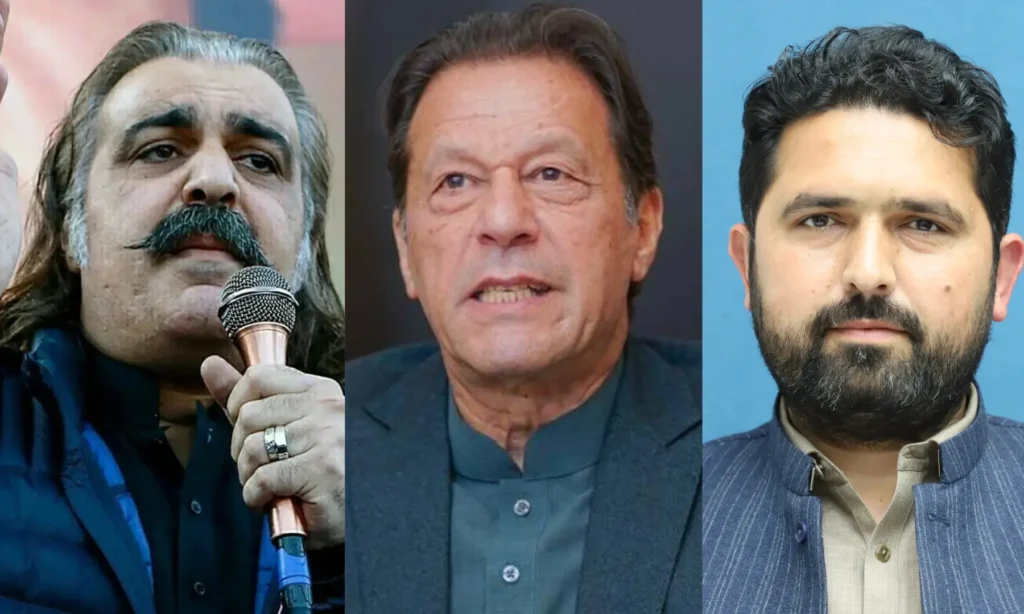
These rapidly changing political, military, and economic dynamics have jolted the PTI leadership and its cult-like following. The so-called largest political party and its self-proclaimed most popular leader now find themselves politically stranded.
A visible shift has also occurred within the media landscape. Outlets and journalists that were once uncritically aligned with PTI have begun highlighting suppressed facts and presenting alternative narratives. Even discarded PTI leaders and fence-sitters have started questioning the party’s self-destructive course.
Increasingly, scrutiny is being directed at the flawed, impulsive, and confrontational policies of the jailed Imran Khan, which have pushed PTI into a quagmire from which recovery appears improbable. These changing media tones have further unsettled the diehard cult followers, who now accuse the military and ruling coalition of spreading misinformation, disinformation, fake news, and AI-generated content. Whether factual or exaggerated, this discourse necessitates a broader understanding of modern media warfare.
Historically, the British pioneered the use of media as an instrument of divide and rule. The United States later perfected this weapon during the Cold War to demonise the Soviet Union. After emerging as the sole superpower in 1991, Washington intensified information warfare, often employing Europe, Israel, and India as proxies to pressure and bully non-compliant states.
India, steeped in Chanakyan doctrines, has long relied on deception, subversion, and media warfare to dominate its neighbourhood. To advance its hegemonic ambitions in South Asia—particularly against Pakistan—it established a Disinformation Lab in Brussels in 2006, covertly run by Indian Chronicles and promoted by ANI. This factory of lies pumped out fabricated narratives portraying Pakistan as a terror-sponsoring and dangerously unstable state. Though exposed in 2021, the network continues to operate in altered forms.
Following PTI’s removal from power through a constitutional vote of no confidence in April 2022, Imran Khan chose confrontation over reconciliation. He mobilised street power, poisoned the minds of youth, and incited his followers through inflammatory rhetoric, openly calling for rebellion and even “jihad” against the state.
PTI’s social media machinery, directed by its founder, replicated India’s disinformation model and linked itself with Western, American, Israeli, Afghan, and Indian networks to malign Pakistan, its institutions, and particularly the army leadership. For Pakistan, this internal information assault proved more corrosive and dangerous than external threats.
From April 2022 onwards, PTI leaders and workers resorted to violence, abuse, fakery, and relentless character assassination. No political party in Pakistan’s history has descended to such depths of vulgar propaganda, personal attacks, and institutional ridicule. In their desperation to regain power, they spared no one and sought assistance from Pakistan’s external adversaries.
The IMF was urged to withhold financial support, FATF was lobbied to grey-list Pakistan, and foreign parliaments were petitioned to impose sanctions. Hostile figures such as Narendra Modi, Sheikh Mujib, and Hasina Wajid were eulogised, while Pakistan’s own leaders and generals were vilified as traitors. Field Marshal Asim Munir was subjected to the vilest abuse, and senior ISI officers were publicly ridiculed. Political opponents were mocked, insulted, and branded thieves unworthy of dialogue.
The Pakistan Army was repeatedly taunted with references to 1971, with warnings that a similar catastrophe would follow unless PTI was restored to power. Imran Khan openly predicted Pakistan’s disintegration and fantasised about it turning into Sri Lanka, Sudan, or Syria. His residences at Bani Gala and Zaman Park were fortified with the assistance of TTP and Afghan militants. Law enforcement personnel were attacked, fired upon, petrol-bombed, and their vehicles torched.
PTI rallies degenerated into spectacles of hooliganism, where women were cynically used both as entertainment and as human shields. PTI supporters harassed Pakistani civil and military officials abroad, while Lt Gen Faiz Hameed was instrumentalised to manipulate the judiciary, undermine democratic parties, and weaponise accountability institutions like NAB for political coercion.
Media houses, expatriate networks, and anti-Pakistan elements were systematically mobilised to destabilise the state. The culmination of this destructive trajectory was the orchestrated vandalism of nearly 300 military installations on 9 May 2023. To evade responsibility, PTI’s media apparatus absurdly labelled the violence a “false flag” operation.
Repeated assaults on Islamabad using KP government resources followed, led by Chief Minister Gandapur, while current KP Chief Minister Sohail Afridi continues to issue threats of renewed attacks, including plans to storm Adiala Jail. All this chaos has been justified under the distorted slogan of “Haqiqi Azadi.”

Imran Khan now stands convicted in multiple cases, with sentences ranging from seven to seventeen years, yet remains defiant, insisting on continued confrontation. His stance increasingly diverges from voices within his fractured party, which has lost its symbol, cohesion, and political identity. Whatever popularity remains is largely confined to social media metrics.
Justice is gradually catching up. The mystery surrounding the murder of journalist Arshad Sharif will eventually be resolved, and the real culprits exposed. Those involved in the 9 May violence are being handed down stiff sentences, and the mastermind—widely known—will not escape accountability.
The only viable path forward for Imran Khan and his disarrayed party lies in abandoning violence, acknowledging grave mistakes, and offering an unconditional apology. This alone can open the door to reconciliation and political accommodation.
Meanwhile, the coalition government today stands on firmer ground. It has averted default, stabilised macroeconomic indicators, and placed Pakistan back on the path of development. Full military support provides the strongest guarantee of continuity. Robust civil-military cooperation augurs well for national stability and has unlocked avenues for foreign investment.
SIFC and CPEC serve as the twin engines of economic revival. Strategic partnership with China and defence cooperation with Saudi Arabia underpin Pakistan’s security architecture. Military success, reinforced by diplomatic, political, economic, and legal gains, has outmanoeuvred India and pushed aggressive Afghanistan onto the defensive. Sustained counterterrorism operations have shrunk the operational space of Fitna Al-Khawarij.
China, Russia, Central Asian states, Iran, and even the United States—each affected by terrorism—are willing to cooperate with Pakistan in eradicating this menace. Military diplomacy has yielded dividends, with several Muslim countries signing defence agreements and procuring JF-17 Thunder jets and other equipment.
Finally, the establishment of Central Defence Force Headquarters and the Army Rocket Force Command has further strengthened Pakistan’s conventional deterrence.
Pakistan today is not only resilient—it is resurgent.