
Asif Haroon Raja
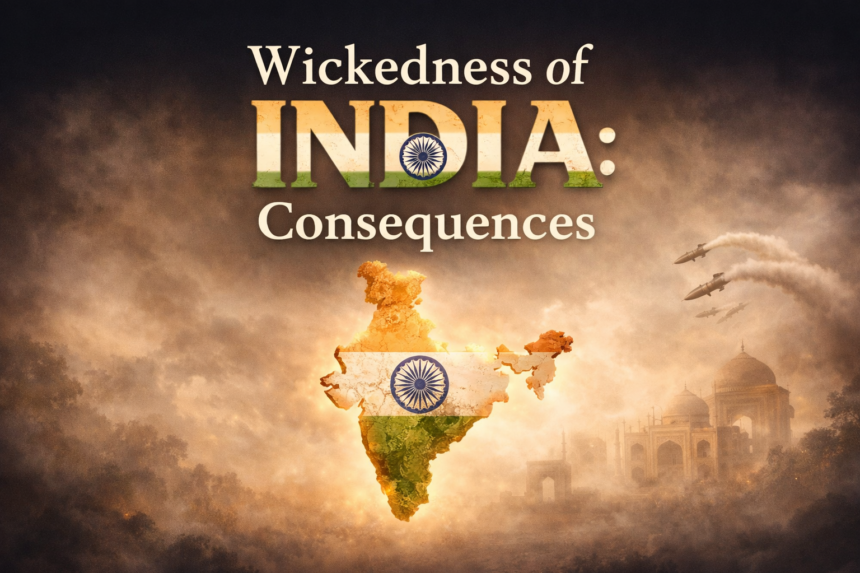
Indian policymakers today find themselves in a deep strategic quandary. The political, military, and diplomatic setbacks suffered in the aftermath of the four-day war with Pakistan continue to erode New Delhi’s standing.
For the first time in decades, Washington appears to be recalibrating its preferences, showing a discernible tilt towards Pakistan—an unsettling development for India’s strategic calculus.
The much-touted Indo-US-Israel alignment, supplemented by tacit coordination with Afghanistan to destabilize Pakistan through proxy warfare, is also faltering.
Pakistan’s shift from a reactive to a proactive posture—combining calibrated military responses with an effective diplomatic and media counteroffensive—has blunted these designs.
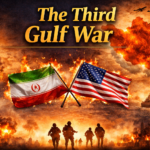
Sensing an opportunity in the US-Israel military campaign against Iran, India attempted to reposition itself to regain favor with the Donald Trump administration.
Like Washington and Tel Aviv, Indian strategists miscalculated that overwhelming air superiority and technological dominance would compel Iran to capitulate within days.
Despite being regarded as a strategic partner of Iran, India’s conduct during the June conflict raised serious questions about its reliability.
Reports of intelligence collaboration between Research and Analysis Wing and Mossad, allegedly aimed at sabotage operations and targeted eliminations, further deepened mistrust.
India’s overt political alignment with Israel reinforced these perceptions. Just days before the outbreak of hostilities, Narendra Modi visited Tel Aviv, publicly embracing Benjamin Netanyahu and expressing unequivocal solidarity with Israel’s position.
At the military level, the Indian Air Force—still recovering from the reputational damage inflicted during the brief but intense conflict with Pakistan—appeared eager to reassert itself.
Reports suggesting a willingness among Indian pilots to participate alongside Israeli forces against Iran, though controversial, reflected a broader impulse to regain lost prestige.
India’s alleged involvement in facilitating US targeting of an Iranian vessel—reportedly linked to a joint naval engagement—further complicated its position.
Such actions, whether direct or indirect, have been perceived as escalatory and detrimental to regional stability.
Today, India finds itself caught in a strategic paradox. The geopolitical winds are shifting, and New Delhi’s earlier assumptions are proving increasingly untenable.
In contrast, Pakistan—despite having its own reservations and lack of formal defense arrangements with Iran—chose to adopt a principled stance. During both the June conflict and the ongoing crisis, Islamabad extended diplomatic and moral support to Tehran, positioning itself as a voice of restraint and stability.
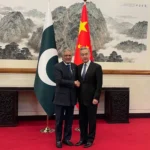
The leadership of Asim Munir and Shehbaz Sharif has been instrumental in elevating Pakistan’s international image. Through measured diplomacy and strategic clarity, Pakistan is increasingly being viewed as a peacemaker and a net stabilizer, playing a constructive role in efforts to de-escalate tensions.
As a result, Pakistan has significantly strengthened its goodwill among the Iranian leadership and public alike.
History often reminds us that strategic overreach and moral inconsistency carry consequences. As the adage goes, “Man proposes, God disposes.” Indeed, ultimate outcomes are shaped by forces beyond human design.
All praise is due to Allah, the Best of Planners.