
Rimsha Saleem
A human security study illustrating how maritime disruptions, rising fertilizer expenses, and shifting donor funding threaten food security for millions in vulnerable non-combatant nations.
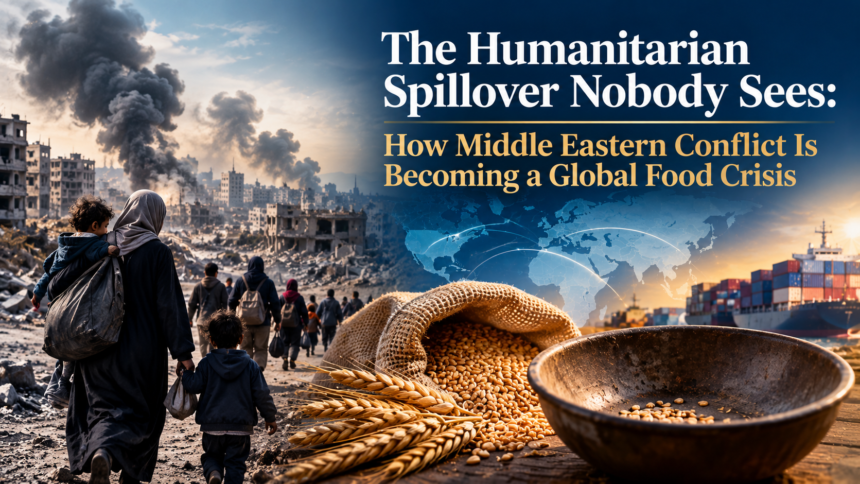
The Humanitarian Spillover Nobody Sees: How Middle Eastern Conflict Is Becoming a Global Food Crisis
The kinetic reality of modern warfare is frequently measured in localized strikes, immediate casualties, and destroyed physical infrastructure. Yet the most devastating humanitarian consequences of contemporary geopolitical conflicts often manifest thousands of kilometers away from the active battlefields. On October 2, 2026, UN Women released a sobering analysis indicating that the Middle East conflict and accompanying disruptions around the Strait of Hormuz could push an additional 22 million people worldwide into acute food insecurity by the end of the year, with women and girls accounting for 53 percent or 11.7 millions of those affected. This secondary disaster illustrates how the hyper-connectivity of global trade, energy supply chains, and agricultural inputs converts localized security friction into a systemic global human security crisis.
The transmission mechanism from regional military conflict to global hunger operates through a compounding chain of economic shocks. Insecurity in strategic maritime chokepoints like the Strait of Hormuz and the Bab el-Mandeb instantly inflates commercial shipping costs through war-risk insurance premiums and lengthier rerouting around the African continent. Concurrently, energy price volatility drives up fuel expenses required for domestic transport and agricultural machinery, while directly inflating the cost of nitrogen-based fertilizers derived from natural gas. When fertilizer costs surge, smallholder farmers in low-income nations cut back application rates, leading to lower crop yields in subsequent harvest cycles. As food production drops and import costs rise, domestic staple prices spike, eroding the purchasing power of households already living on the margin.
This systemic crisis is further exacerbated by the severe contraction of global humanitarian funding. As international attention and donor budgets pivot toward active war zones and urgent regional security stabilization, long-standing humanitarian operations across fragile and conflict-affected states face critical shortfalls. Major aid institutions, including the World Food Programmed (WFP) and the World Health Organization (WHO), are forced to reduce ration sizes and scale back emergency assistance programs. In places like Sudan, Yemen, Afghanistan, and Palestine where populations are already enduring structural collapse and conflict the combination of reduced aid allocations and elevated global food import costs creates a destructive feedback loop that dramatically accelerates malnutrition rates.
South Asia represents a particularly vulnerable node in this interconnected global web. The region combines dense populations, high dependence on imported energy and agricultural inputs, and limited fiscal space to cushion external shocks. Within this context, Pakistan faces an acute risk environment where internal vulnerabilities directly interact with external shocks. Structurally dependent on imported crude oil, liquefied natural gas, and fertilizer raw materials, any sustained disruption along Persian Gulf trade corridors immediately inflates Pakistan’s import bill, strains foreign exchange reserves, and depreciates the national currency.
The internal transmission within Pakistan is swift and severe. Higher landed fuel costs drive up electricity tariffs and transport overhead, raising the retail price of essential foods for urban consumers and rural workers alike. For farmers, expensive diesel and fertilizer reduce agricultural profit margins, threatening domestic yield forecasts for primary crops like wheat and rice. Compounded by lingering climate vulnerabilities and tight fiscal conditions under international adjustment programs, Pakistan’s state capacity to deploy agricultural subsidies or expand social safety nets is severely constrained. When global humanitarian organizations concurrently reduce their local funding allocations, millions of vulnerable families lose their primary buffer against deep food insecurity.
Understanding the Middle Eastern crisis through a human security lens requires recognizing that modern wars no longer remain contained within geographical borders. Disrupting maritime trade corridors and global energy flows acts as a force multiplier for global inequality, disproportionately harming those who have no direct involvement in the primary dispute. For international policymakers, stabilizing regional conflict must be treated not only as an imperative of military deterrence or state diplomacy, but as a critical requirement for global food security, economic stability, and human survival.
UN warns of food insecurity as Hormuz disrupts fertiliser supplies
This video provides official context from UN officials detailing how disruptions around the Strait of Hormuz directly impact global fertilizer supplies and deepen acute hunger across vulnerable regions.
Author
I am an independent researcher with a passion for exploring global affairs through the lens of critical thinking and evidence-based analysis. My writing examines contemporary political, economic, and strategic issues, with the aim of presenting balanced perspectives that inform, engage, and encourage meaningful discourse.