
For nearly two decades after 9/11, Pakistan’s engagement with the world was defined largely by one phrase: the War on Terror. Whether dealing with Washington, Beijing, Riyadh, or Kabul, Islamabad’s international relevance was viewed primarily through the prism of security. Today, however, Pakistan has an opportunity to redefine that narrative.
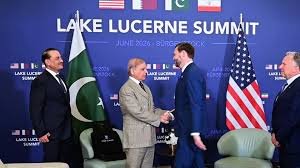
The Islamabad Memorandum of Understanding (MoU), and the successful conclusion of its first High-Level Committee meeting in Burgenstock, Switzerland, may well mark Pakistan’s most significant diplomatic achievement since the post-9/11 era. More importantly, it signals a shift in Pakistan’s international role.
from a frontline state confronting conflict to a facilitator of dialogue in one of the world’s most volatile regions.
The significance of the recent developments extends far beyond another round of US-Iran talks. The committee concluded with agreement on a roadmap towards a final deal within sixty days, the establishment of a political oversight mechanism, and the launch of technical negotiations. Prime Minister Shehbaz Sharif welcomed the outcome and reaffirmed Pakistan’s commitment to supporting dialogue and diplomacy, while senior American officials also expressed optimism over the progress made.
Perhaps the most consequential development, subject to formal implementation, is the reported decision by Washington to permit Iranian oil sales under a 60-day arrangement. If carried through, it would represent the first such opening since the 1979 Iranian Revolution. More importantly, it demonstrates that both sides are moving beyond crisis management towards confidence-building through economic incentives.
The coincidence of the 60-day sanctions window and the 60-day diplomatic roadmap is unlikely to be accidental. It reflects a carefully designed process in which every political concession is matched by a reciprocal economic or technical step. Instead of demanding complete compliance before offering relief, both sides appear to be testing trust incrementally. This is how durable diplomacy is often built. Not through grand declarations but through phased implementation!
Pakistan’s role in this process deserves closer attention.
Alongside Qatar, Islamabad has emerged as an indispensable facilitator of dialogue. Qatar has long established itself as a discreet diplomatic bridge, hosting negotiations involving actors who cannot engage publicly. Pakistan complements that role differently. It enjoys working relations with both Washington and Tehran while maintaining strategic partnerships with Saudi Arabia, the United Arab Emirates, China, Turkey, and other regional stakeholders. Few countries possess that combination of access and credibility.
Equally important, Pakistan has deliberately resisted becoming a party to the region’s sectarian rivalries. Despite sharing a long border with Iran and maintaining deep security and economic ties with Gulf Arab states, Islamabad has consistently advocated dialogue over confrontation. That balanced approach has enhanced its credibility at a time when trust has become the scarcest commodity in Middle Eastern diplomacy.
Pakistan also has more at stake than almost any other regional actor.
Nearly every major escalation in the Gulf directly affects Pakistan’s economy. Rising oil prices increase the country’s import bill, instability threatens remittance flows from millions of Pakistanis working in Gulf countries, maritime insecurity jeopardises trade routes through the Arabian Sea and the Strait of Hormuz, while prolonged regional conflict complicates border management with Iran and undermines the broader vision of regional connectivity, including CPEC.
For Islamabad, therefore, peace is not merely an idealistic foreign policy objective; it is an economic necessity.
The Middle East itself is also undergoing profound transformation. Regional capitals increasingly recognise that sustained prosperity cannot coexist with perpetual conflict. Saudi Arabia’s Vision 2030, the UAE’s ambition to become a global financial and logistics hub, Qatar’s mediation diplomacy, and Iran’s search for sanctions relief all point towards a common objective: regional stability that enables investment, trade and economic diversification.
The current negotiations reflect this changing reality.
This is no longer solely about Iran’s nuclear programme. The agenda now encompasses sanctions relief, energy markets, maritime security in the Strait of Hormuz, mechanisms to prevent escalation, political oversight committees and technical implementation frameworks. In essence, negotiators are attempting to construct a broader regional security architecture rather than merely revive a single agreement.
The reported remarks by US Vice President JD Vance reinforce that assessment. His emphasis on keeping the Strait of Hormuz open, creating mechanisms to manage future crises and framing the process as an economically beneficial agreement suggests Washington increasingly views stability as a strategic investment rather than simply a security objective.
Yet no discussion of Middle East diplomacy can ignore the principal uncertainty.
History demonstrates that attempts at US-Iran rapprochement have often encountered resistance from actors who view reconciliation as altering the regional balance of power. The current process will inevitably be tested by developments elsewhere in the region. Any significant military escalation, particularly involving Israel and Iran’s regional allies, risks disrupting the fragile momentum generated in Switzerland.
Diplomatic breakthroughs rarely fail because negotiators stop talking. They fail because events on the ground overtake the negotiating table. This is precisely why Pakistan’s continued engagement matters.
Unlike major powers pursuing competing strategic agendas, Islamabad’s interests remain relatively straightforward: regional stability, secure energy supplies, uninterrupted trade, and peaceful borders. That allows Pakistan to project itself as a facilitator rather than a competitor.
The expected visit of Iranian President Masoud Pezeshkian to Pakistan immediately after the Switzerland talks further underlines Islamabad’s emerging diplomatic relevance. It reflects confidence that Pakistan can continue serving as an honest interlocutor as negotiations move from framework agreements to practical implementation.
If this process ultimately succeeds, Pakistan will gain more than diplomatic recognition. It will have demonstrated that middle powers can play meaningful roles in resolving conflicts that larger powers alone cannot settle. Such success would strengthen Pakistan’s international standing, deepen its strategic partnerships across the Gulf, enhance its credibility in Washington and reinforce its image as a responsible regional stakeholder.
For too long, Pakistan has been defined internationally by the conflicts it has endured. The Islamabad Memorandum offers an opportunity to be recognised instead for the peace it helps create.
Whether the negotiations culminate in a comprehensive agreement remains uncertain, and the coming sixty days will be decisive. Yet one reality is already evident. Pakistan, working alongside Qatar, has helped create one of the most significant diplomatic openings between the United States and Iran in decades.
If that opening leads to lasting peace, historians may remember the Islamabad Memorandum not merely as another diplomatic document, but as the moment Pakistan began transforming from a frontline state of the War on Terror into one of the Middle East’s most credible facilitators of peace.
Nuzhat Nazar is a journalist and strategic affairs analyst with more than ten years of experience reporting on foreign policy, defence, and economic developments. Based in Islamabad, she focuses on geopolitics, regional security dynamics, and Pakistan’s positioning in a shifting global order