
(By: Nuzhat Nazar)
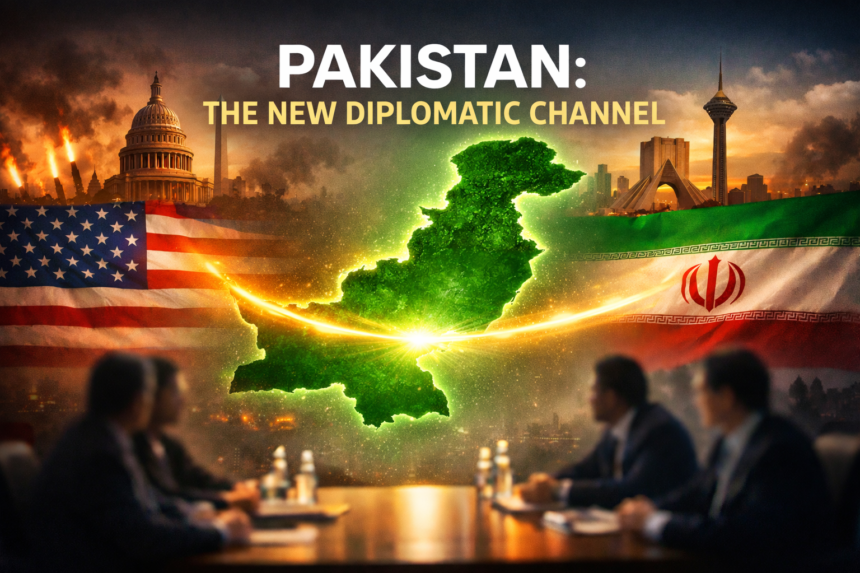
What we are witnessing around Pakistan’s role in the Iran–US talks is no longer just occasional mediation. It is slowly turning into something more structured, more consistent, and more important.
Field Marshal Asim Munir’s visit to Tehran, right after the high level talks in Islamabad, shows that this process did not end with one meeting. It has moved forward. What is taking shape now is ongoing shuttle diplomacy, where communication is being carried from one side to the other to keep the process alive.
And this is where the real shift lies.
Hosting talks is a one time event. But keeping both sides talking, especially when trust is low, is a completely different role.
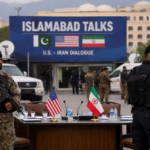
The Islamabad talks themselves were historic. For the first time in decades, senior US and Iranian officials sat across the table. There was no final agreement, but importantly, there was no collapse either. Instead of walking away, both sides stayed engaged. Messages continued to move, backchannels remained active, and now visits like the one to Tehran are part of that same effort to reduce differences.
Pakistan, in this situation, is not just offering space. It is helping keep the conversation going.
On one side, the civilian leadership is engaging regional players. On the other, the military leadership is maintaining direct and trusted lines with Tehran, while staying connected to Washington’s side of the talks. This parallel engagement reflects how diplomacy is now being managed in complex conflicts, where no single channel is enough.
Right now, the talks are in what diplomats often call the gap bridging stage. The difficult issues are still there. Uranium enrichment, sanctions relief, and control over the Strait of Hormuz remain unresolved. But what matters is that neither side has stepped away.
And that is exactly where Pakistan’s role becomes critical.
By continuing to carry messages and keep both sides engaged after the formal talks ended, Islamabad is becoming more than just a mediator. It is turning into the operating channel through which dialogue continues, even when things slow down or stall.
In Washington as well, there is growing acknowledgement of this role. The White House has described Pakistan as an “incredible mediator,” appreciating its efforts and signalling that Islamabad currently remains the only active channel facilitating communication between the two sides.
This role, however, is not without risk.
The situation on the ground is still tense. The ceasefire remains fragile. There are real concerns about escalation, whether through a potential US naval move or Iran responding in ways that could disrupt regional trade routes. If things break down, Pakistan will not just lose a diplomatic role, it will also face pressure from both sides.
Still, something larger is taking shape.
In the past, diplomacy was seen as successful only if it produced a deal. Now, the ability to keep talks alive is becoming just as important. Different countries are playing different roles. Major powers bring pressure, regional states try to contain the situation, and countries like Pakistan are creating the space where communication continues.
In that sense, Pakistan’s role is not about solving the crisis overnight. It is about making sure it does not spiral out of control.
The fact that both Washington and Tehran are still exchanging messages through Islamabad, and are open to meeting again on Pakistani soil, shows that this channel now has value on its own, even without a final agreement.
For Pakistan, this brings both opportunity and responsibility.
It increases its importance in a region where influence now depends on who can connect, not just who can align. But it also means Pakistan has to stay careful, balanced, and consistent, managing expectations from both sides without overplaying its hand.
The next phase will be crucial. If this ongoing diplomacy manages to narrow the gaps, Pakistan’s role will become even stronger. If it fails, the risk is that tensions return quickly, and communication breaks down.
But one thing is already clear.
Pakistan is no longer standing on the sidelines of this crisis.
It is now part of the process that is keeping it from getting worse.