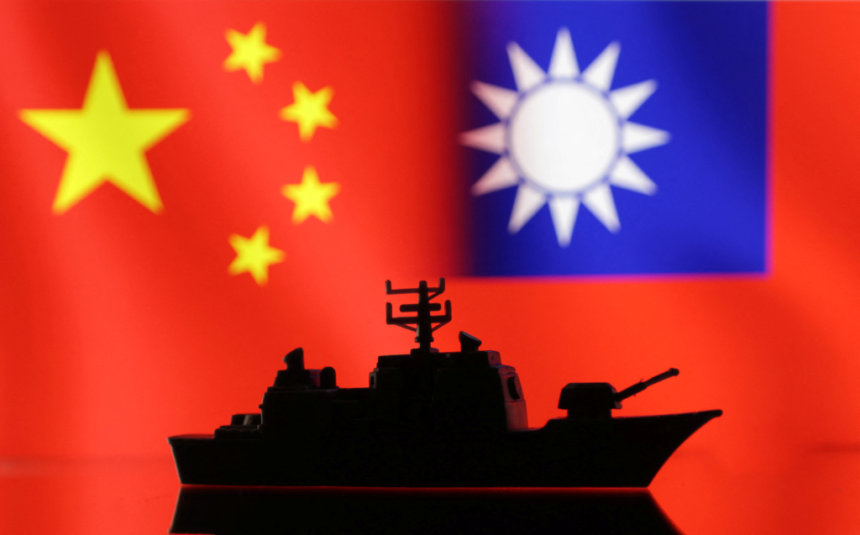

In the long and complex history of China, the question of Taiwan has always stood as one of the most sensitive and emotional issues. To understand today’s developments around the Taiwan Strait, one must first look at the historical context, a history written not only in politics but also in the struggle for national unity, dignity, and sovereignty.
- A Divided Past: The Roots of the Taiwan Question
- The Turning Point: “Justice Mission 2025”
- Russia’s Support: A Strategic Alignment in a Changing World
- Western Response: Familiar Rhetoric, Double Standards
- Regional Reactions: Stability First
- The Bigger Picture: A New World Order in the Making
- A Warning Ignored: The Risk of Escalation
- China’s Stand: Peace through Strength
- Pakistan’s Perspective: Standing with a Trusted Friend
- The Road Ahead: Dialogue, Respect, and Realism
- Conclusion: China’s Message to the World
- The author is a Director General of the Centre for Development and Stability (CDS), is a well-known journalist and political analyst who regularly contributes to Daily Sabha and various media channels. He recently represented Pakistan at the CIPCC in China, organized by the China Public Diplomacy Association, highlighting his active role in promoting dialogue, development, and regional cooperation.
- *The views and opinions expressed herein, and any references, are those of the author and do not necessarily reflect the editorial policy of the Centre for Development and Stability (CDS).
A Divided Past: The Roots of the Taiwan Question
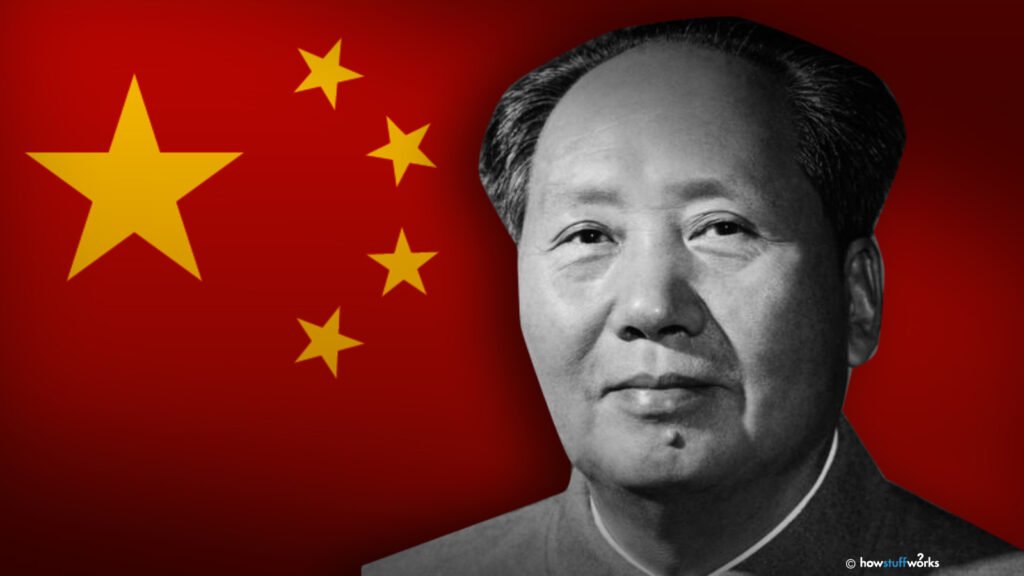
In 1949, after years of civil war, the Communist Party of China, led by Chairman Mao Zedong, emerged victorious and established the People’s Republic of China (PRC) in Beijing. The defeated forces of the Kuomintang (KMT), led by Chiang Kai-shek, fled to Taiwan and established a separate administration there. From that moment onwards, the island became a lingering symbol of separation, a wound that the Chinese people have never forgotten.
The government in Beijing has always maintained that Taiwan is an inseparable part of China, a position recognized by the United Nations and accepted by most countries under the One-China Principle. Over the decades, China has worked tirelessly to promote peaceful reunification through dialogue, trade, and cultural exchange.
However, the calm of diplomacy has often been disturbed by foreign interference, especially from the United States and some of its allies. The sale of arms to Taiwan, the visits of Western politicians to Taipei, and constant naval patrols in the South China Sea have been viewed in Beijing as direct provocations and attempts to undermine China’s sovereignty.
The Turning Point: “Justice Mission 2025”
It is against this historical backdrop that the People’s Liberation Army (PLA) launched its major military exercise named “Justice Mission 2025” around Taiwan. The drills, announced by the Eastern Theater Command, are among the largest and most coordinated operations seen in recent years.
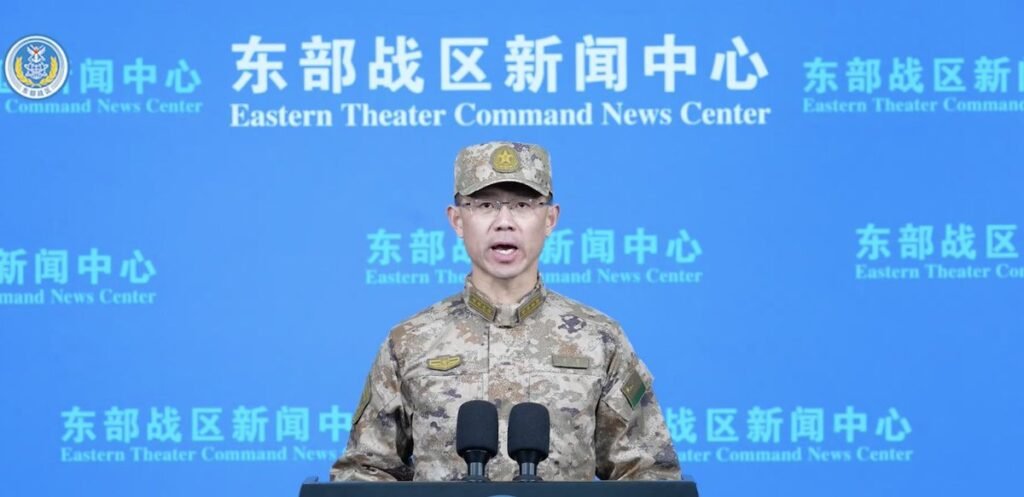
According to Colonel Shi Yi, spokesperson for the command, the exercise involves multiple branches of the PLA, including the Army, Navy, Air Force, and Rocket Force. These forces have been deployed in strategic regions, including the Taiwan Strait, and the north, southeast, southwest, and eastern areas of Taiwan.
The drills focus on several critical aspects of modern warfare:
- Sea-air combat readiness patrols
- Joint seizure of comprehensive superiority
- Blockade operations targeting key ports and regions
- All-dimensional deterrence missions beyond the island chain
Vessels and aircraft are approaching Taiwan from multiple directions, conducting joint operations designed to test the PLA’s real combat capabilities and coordination across branches. Shi Yi described the mission as a stern warning to Taiwan independence forces and to external powers attempting to interfere in China’s internal affairs.
He further emphasized that the drills are legitimate and necessary actions to protect China’s sovereignty, security, and national unity. Beijing’s message is clear: China does not seek conflict, but it will never allow its territory to be divided.
Russia’s Support: A Strategic Alignment in a Changing World
Just as these drills began, a strong signal of diplomatic and strategic backing came from Moscow. On December 28, 2025, Russian Foreign Minister Sergey Lavrov reaffirmed that Russia would support China in the event of any escalation over Taiwan. He cited the 2001 Treaty of Good-Neighborliness, Friendship, and Cooperation as the foundation for this stance, emphasizing that both nations are committed to mutual respect for sovereignty and territorial integrity.
Over the years, China and Russia have developed an increasingly close strategic partnership, especially in defense and technology. Reports from 2025 suggest that Russia has been providing advanced airborne systems, pilot training programs, and joint maneuver expertise to strengthen the PLA’s readiness for potential high-intensity operations.
This collaboration is not about aggression; it reflects a shared philosophy of independence from Western influence and a commitment to building a multipolar world order. Both nations have suffered from Western sanctions, military encirclement, and political pressure. Their unity now symbolizes a new global balance, one that values mutual respect and non-interference.
Western Response: Familiar Rhetoric, Double Standards
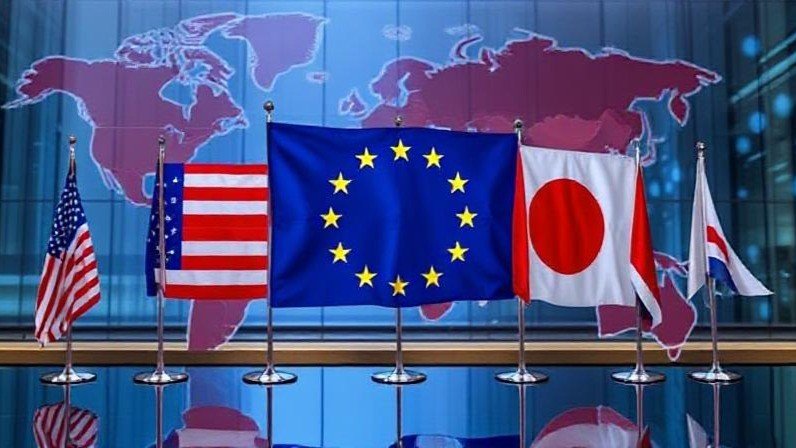
Unsurprisingly, the reaction from Western capitals was filled with the usual rhetoric of provocation and threats to stability. The United States, Japan, and several European countries expressed concerns over China’s exercises. The Pentagon called them destabilizing actions, while Tokyo urged Beijing to exercise restraint.
However, these statements often overlook a critical truth: it is Western interference that continues to inflame the situation. The U.S. has been arming Taiwan under the pretext of self-defense, approving military sales worth billions of dollars. American warships frequently sail through the Taiwan Strait, claiming freedom of navigation, while NATO allies openly discuss Indo-Pacific strategies aimed at containing China.
This pattern reveals the double standards in Western policy. When the U.S. conducts global military exercises thousands of miles from its borders, it calls them defensive. But when China conducts drills within its own territorial waters, they are labeled as aggressive. Such hypocrisy only deepens mistrust and fuels unnecessary confrontation.
Regional Reactions: Stability First
While the U.S. and its allies criticize Beijing, many countries in Asia have taken a more balanced stance. The ASEAN nations, particularly Indonesia, Malaysia, and Thailand, have emphasized the importance of dialogue and regional stability, avoiding any direct criticism of China.
Even Pakistan, a long-standing and trusted friend of China, has expressed understanding of Beijing’s position. Pakistani analysts note that China’s military preparedness is defensive, not expansionist, and that its main objective is to preserve unity, not provoke war.
Pakistan’s foreign policy has always supported the One-China Principle, recognizing Taiwan as part of China. For Islamabad, the Taiwan issue is not only a matter of diplomacy but also of moral principle, a belief that no foreign power has the right to divide another sovereign state.
The Bigger Picture: A New World Order in the Making
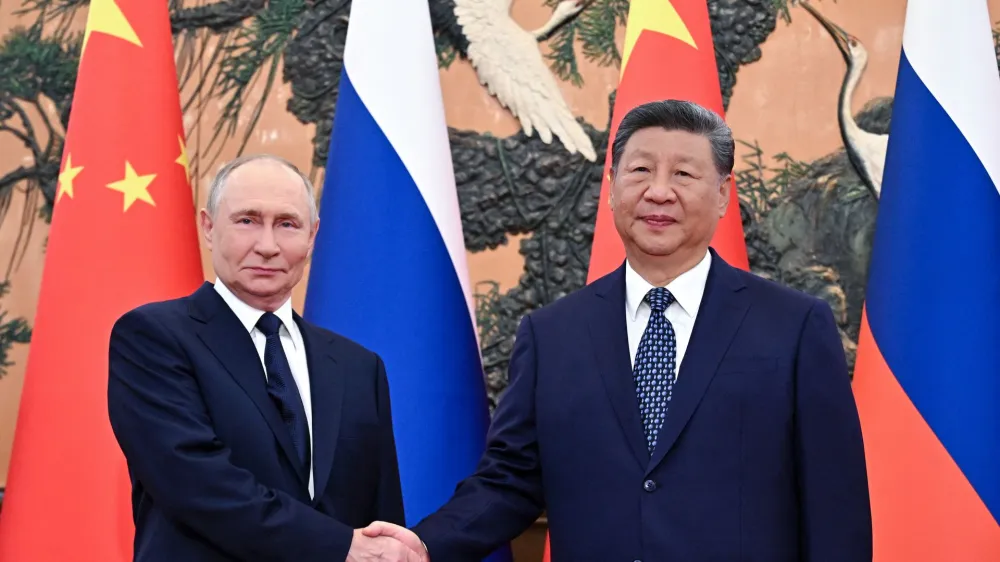
The events around Taiwan and the growing China-Russia cooperation indicate a major shift in global politics. The world is witnessing the decline of Western dominance and the rise of a new multipolar structure, where power and influence are distributed more fairly among regions.
For decades, the West has dictated global narratives, often through military alliances like NATO and economic pressures. But the unity between China and Russia represents an alternative path, one based on equality, sovereignty, and mutual development. This partnership is now inspiring other nations in Asia, Africa, and Latin America to resist external manipulation and pursue independent foreign policies.
A Warning Ignored: The Risk of Escalation
While China and Russia’s cooperation is stabilizing in intent, the refusal of Western powers to accept this new reality could lead to severe consequences. With no end in sight for the Russia-Ukraine conflict and tensions rising in the Taiwan Strait, the possibility of a wider global confrontation cannot be dismissed.
Analysts have already begun warning that if Western nations continue pushing military alliances toward China’s periphery, involving Japan, the Philippines, or Australia, it could ignite a chain reaction leading to a larger global crisis.
In simple terms, the path of provocation leads to war, while the path of dialogue ensures peace. Unfortunately, recent global history shows that the lessons of Iraq, Libya, and Ukraine have not been learned by the Western world.
China’s Stand: Peace through Strength
For Beijing, the message of “Justice Mission 2025” is not one of aggression but self-defense and deterrence. The drills demonstrate that China is fully capable of protecting its sovereignty while still preferring peaceful resolution.
President Xi Jinping has repeatedly stressed that reunification with Taiwan will happen, peacefully if possible, but by force if necessary. Chinese Foreign Ministry website states:
This determination mirrors China’s philosophy of peace through strength. By maintaining strong defense capabilities, Beijing ensures that no foreign power can challenge its unity or undermine its rise.
Pakistan’s Perspective: Standing with a Trusted Friend
From a Pakistani lens, the current developments hold important lessons. Both Pakistan and China have faced external interference in their internal affairs, whether through political pressure, media propaganda, or security threats. Both nations understand the importance of independence, territorial integrity, and national dignity.
Pakistan has always stood by China on critical issues, from the Belt and Road Initiative (BRI) to the Taiwan question. In the same spirit, China has supported Pakistan on Kashmir, economic development, and defense cooperation.
This mutual trust forms the heart of the Pakistan-China Iron Brotherhood, a relationship that has withstood time, pressure, and global shifts. For Pakistan, supporting China’s rightful stance on Taiwan is not just diplomacy; it is loyalty to a friend that has always stood by us.
The Road Ahead: Dialogue, Respect, and Realism
The world stands at a crucial moment. As the U.S. and its allies continue to expand their influence in Asia, and as China strengthens its defense to protect its sovereignty, the balance of global power is being reshaped.
However, the future does not have to be defined by conflict. If the international community accepts the principles of sovereignty, mutual respect, and non-interference, peace can prevail.
The Taiwan question is not a global crisis; it is an internal matter of China, and the world must respect that.
Conclusion: China’s Message to the World
The “Justice Mission 2025” drills mark more than a military event. They symbolize a reaffirmation of China’s historical mission to reunify its territory and protect its national dignity. With Russia’s backing and the support of many friendly nations, China’s position today is stronger than ever.
The West may continue its narrative of confrontation, but history favors those who stand on the side of truth and sovereignty. The world should not misread China’s patience as weakness, nor its strength as aggression.
China’s vision is simple: A united nation, a peaceful region, and a fair world order. The only question that remains is whether the rest of the world is ready to respect it.