
Asif Haroon Raja
The atmosphere in both Pakistan and Iran was initially one of cautious optimism when Pakistan successfully brokered a two-week ceasefire on 8 April 2026, bringing a halt to nearly six weeks of intense hostilities between the United States and Iran.
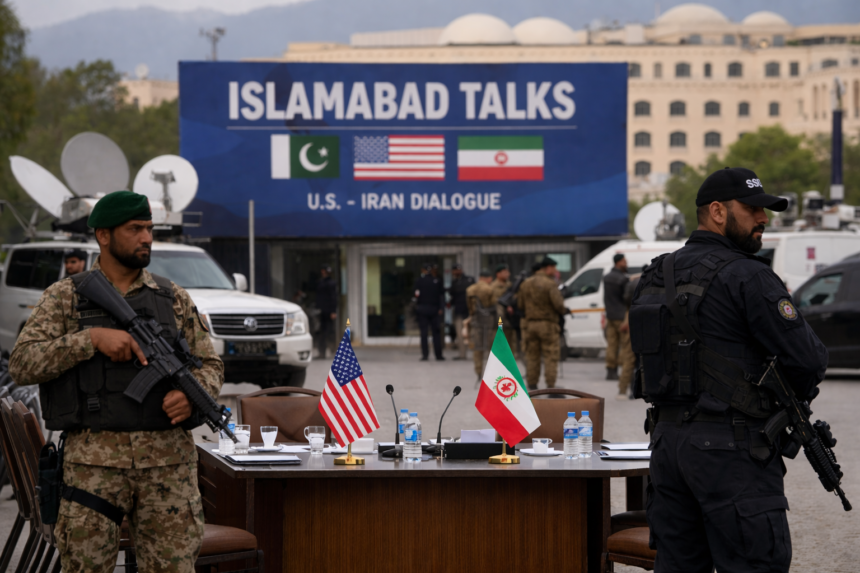
Islamabad subsequently hosted high-stakes peace talks, positioning Pakistan as a central diplomatic bridge in a deeply polarized conflict.
Prime Minister Shehbaz Sharif, Deputy Prime Minister Ishaq Dar, and Chief of Army Staff Asim Munir played key roles as facilitators. The negotiations unfolded in three stages—indirect, direct, and technical—marking the first face-to-face engagement between Washington and Tehran in 47 years.
Breakthrough Without Resolution
Despite the historic nature of the peace talks, the outcome remained inconclusive. After nearly 21 hours of negotiations, US Vice President JD Vance departed Islamabad on 12 April without a formal agreement.
The talks faltered over three core issues:
- Iran’s nuclear program.
- Control and status of the Strait of Hormuz.
- The Lebanon theatre.
A notable shift in the tone of negotiations reportedly followed Vance’s consultations with Donald Trump and particularly with Benjamin Netanyahu, after which flexibility gave way to rigidity.
Yet, the talks were not a failure in totality. They broke decades of silence, clarified red lines, and established a direct channel of communication.
Importantly, Vance acknowledged Pakistan’s constructive role, signaling that Islamabad may continue to serve as the primary venue for future engagements. He heaped praises on PM Shahbaz and Field Marshal Asim, saying, ‘they are incredible statesmen’.
Ceasefire on Paper, Escalation in Practice
While diplomacy unfolded in Islamabad, developments on the ground painted a contradictory picture. The United States simultaneously moved to reinforce its military presence in the Gulf, indicating preparations for a possible escalation rather than de-escalation.
Iran, for its part, remained equally vigilant, accelerating its defensive preparations and strengthening its strategic depth.
This dual-track approach—negotiation alongside military buildup—reveals a fundamental reality: the ceasefire is tactical, not strategic.
The Hormuz Factor: From Leverage to Flashpoint
The Strait of Hormuz has emerged as the central pressure point in this confrontation.
Following the US–Israeli strikes on 28 February, Iran effectively weaponized the strait by restricting access, while selectively allowing passage under controlled conditions.
This asymmetric tactic enabled Tehran to:
- Maintain leverage without full closure.
- Generate revenue through controlled maritime flow.
- Avoid direct escalation with neutral trading nations.
However, instead of pursuing confidence-building measures, Washington escalated the situation.
The Naval Blockade: Strategy or Miscalculation?
On 12 April, President Trump announced a naval blockade of Iranian ports, aimed at choking Tehran’s oil exports—its economic lifeline.
This move raises serious concerns:
- It is widely viewed as contrary to international maritime law.
- Key US allies, including European and NATO members, have refused to endorse it.
- It risks transforming economic coercion into direct military confrontation.
Rather than weakening Iran decisively, the blockade may produce unintended consequences:
- Spike in global oil prices.
- Economic disruption for energy-dependent states.
- Strategic backlash from major powers.
China Enters the Equation
China, Iran’s largest oil customer, has responded cautiously but firmly. President Xi Jinping emphasized the need for “unimpeded navigation,” framing the Strait as a global commons rather than a conflict zone.
Beijing’s position reflects broader strategic concerns:
- Approximately 90% of Iran’s oil exports flow to China.
- Disruption directly threatens Chinese energy security.
- The blockade is perceived as US unilateralism.
- The passage of a Chinese-linked tanker through the Strait despite US presence is particularly significant. It underscores a dangerous reality:
Any attempt to enforce the blockade against Chinese shipping could trigger a superpower confrontation.
Economic Realities Undermining the Blockade
Ironically, Iran appears to have anticipated such a move. Large volumes of its oil are already afloat in international waters, particularly near Southeast Asia, beyond immediate interdiction.
This weakens the intended impact of the blockade and raises a critical question:
Is Washington reacting too late to alter the economic equation?
Wider Strategic Context
The blockade has also exposed fractures within the Western alliance. Several US partners have distanced themselves from escalation, reflecting:
*War fatigue.
*Economic concerns.
*Legal objections.
At the same time, rising oil prices and global uncertainty are beginning to impose costs not just on adversaries, but on allies and domestic constituencies within the United States.
Future Prospects: Between Diplomacy and Confrontation
The ceasefire remains fragile, with its expiry looming. Two broad scenarios are emerging:
- Diplomatic Continuation.
- Backchannel and technical-level discussions progress, leading to another round of talks—possibly again in Islamabad.
Renewed Escalation
Failure to bridge core differences results in the collapse of the ceasefire and resumption of hostilities.
Despite the rhetoric, there are indications that dialogue channels remain open.
Reports suggest that another round of negotiations may be imminent, with Islamabad still the preferred venue, though alternatives such as Geneva or Istanbul are also under consideration.
President Trump himself has hinted at possible participation in future talks, an indication that diplomacy, however strained, is still in play.
Conclusion
The Islamabad talks mark a historic but incomplete breakthrough. They have opened a door that had remained shut for nearly half a century, yet the path ahead remains uncertain.
The fundamental contradiction persists:
- Negotiations are being pursued even as coercive strategies intensify.
- The naval blockade of the Strait of Hormuz has transformed a regional conflict into a potential global flashpoint.
- With China now indirectly involved and US allies hesitant, the margin for miscalculation has narrowed dangerously.
- Pakistan’s diplomatic role has been widely acknowledged, but its real test lies ahead—whether it can help convert this fragile pause into a sustainable peace.
For now, the world watches a tense equilibrium where war and diplomacy coexist uneasily, and perhaps temporarily.
End Note
The guns may have fallen silent for now, but the war has merely changed its form.
History may record that while diplomats talked peace in Islamabad, strategists elsewhere were preparing for the next war.
In reality, the ceasefire is not a bridge to peace—it is a pause between storms. And if wisdom does not prevail, the next phase will not be negotiated in conference rooms, but decided in the turbulent waters of Hormuz.
Unless Washington replaces coercion with compromise and Tehran tempers defiance with flexibility, the Strait of Hormuz could become the trigger point of a far wider conflict.
What stands before the world is not a stable ceasefire, but a countdown—where one misstep could ignite a confrontation no power will be able to control.
If the current course persists, the naval blockade will not coerce Iran into submission—it will internationalize the conflict, drawing in great powers and turning the Strait of Hormuz into the most dangerous flashpoint of the 21st century.
About the Author
Brigadier (Retd) Asif Haroon Raja is a war veteran who fought in the Battle of Hilli in former East Pakistan and recovered the body of Major Akram Shaheed, NH. He is Command and Staff Course and War Course qualified, holds an MSc in War Studies, and served as Defence Attaché in Egypt and Sudan, as well as Dean of the Corps of Military Attachés in Cairo.
He served as the Pakistan Army’s spokesperson in 1992 and later as Honorary Colonel of the battalion he commanded for eight years.
He is a defence, security, and geopolitical analyst, international columnist, author of five books, former Chairman of Thinkers Forum Pakistan, Patron-in-Chief of CDS Think Tank, Director of Meesakh Research Centre, and regularly appears on national and international media platforms.