
By: Nuzhat Nazar
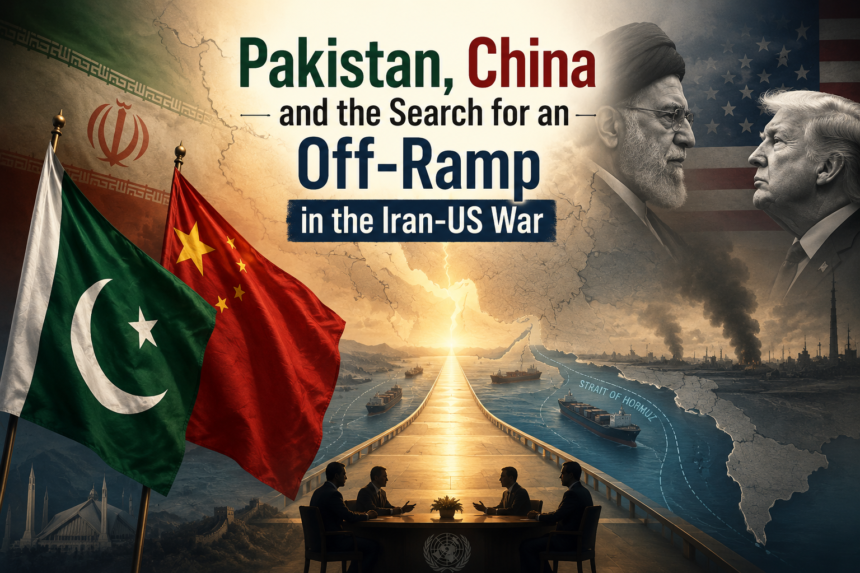
The Iran-US war has reached a dangerous but potentially decisive moment. After more than three months of conflict, the battlefield has not produced a clear winner, but diplomacy has begun to create a possible exit. Reports of a proposed 60-day understanding between Washington and Tehran, centred on reopening the Strait of Hormuz, managing Iran’s nuclear file and preventing further escalation, show that both sides may now be searching for a way to step back without appearing defeated.
This is where Pakistan’s role becomes significant. Islamabad is not a distant observer of this crisis. It is a direct stakeholder. A wider war involving Iran, the United States, Israel and the Gulf would immediately affect Pakistan’s security, economy, energy supplies, border stability and regional diplomacy. For Pakistan, therefore, mediation is not merely an act of goodwill. It is a strategic necessity.
The emerging diplomatic track also comes at a moment when China has openly appreciated Pakistan’s efforts in facilitating the temporary ceasefire between the United States and Iran and in hosting the Islamabad Talks. That acknowledgement is important. It places Pakistan’s diplomacy within a broader regional stabilisation framework, where Islamabad and Beijing are working in parallel to prevent the Middle East crisis from becoming a wider global shock.
The proposed 60-day arrangement, if finalised, will not end the Iran-US rivalry. It will not settle every dispute over Iran’s nuclear programme, sanctions, regional influence, Israel’s security concerns, maritime access or the future of the Gulf. But it can create space. In diplomacy, space matters. Wars often end not when every issue is resolved, but when all sides begin to understand that the cost of continuing is higher than the price of compromise.
The Strait of Hormuz sits at the centre of this crisis. Its reopening is not only a maritime issue; it is a global economic issue. A prolonged disruption in the Strait would affect oil markets, shipping routes, insurance costs, inflation and energy security far beyond the Middle East. Pakistan, already managing economic pressures, cannot afford another wave of imported inflation caused by energy shocks. China, as one of the world’s largest energy importers, also has a direct interest in preventing Hormuz from becoming a permanent theatre of confrontation.
This explains why Beijing is watching the war with unease. China has deep energy, trade and diplomatic interests in the Gulf. It has relations with Iran, economic ties with Gulf states and a strategic partnership with Pakistan. Unlike Washington, Beijing does not want the Middle East to be reorganised through prolonged military pressure. China’s preference is stability, energy continuity, trade security and negotiated settlements. This is where Pakistan and China’s diplomatic interests converge.
Pakistan’s advantage is geography, credibility and communication. It shares a border with Iran, maintains relations with Tehran, has working ties with Washington, deep strategic trust with Beijing and strong connections with the Gulf. This gives Islamabad a rare diplomatic position. It may not be able to impose a settlement, but it can help keep channels open, carry messages, reduce misperceptions and support a framework in which both sides can claim political space.
The Islamabad Talks were important precisely because they kept the possibility of dialogue alive when escalation was still dominating the headlines. In a conflict marked by distrust, even keeping two adversaries engaged is a diplomatic achievement. Pakistan’s stated position has been consistent: uphold the ceasefire, continue engagement and work for durable peace. That position is realistic because Islamabad knows that any collapse of diplomacy would push the region back toward military confrontation.
However, Pakistan must also be careful. Mediation in such a high-stakes conflict carries risks. The United States may seek to use diplomacy to secure maximum concessions from Iran without addressing Tehran’s core concerns. Iran may use talks to gain time while avoiding deeper compromise. Israel may not fully support a deal that reduces pressure on Iran without dismantling Tehran’s regional capabilities. Gulf states may support de-escalation but remain deeply concerned about future Iranian behaviour. In such a complex environment, Pakistan must avoid becoming a vehicle for anyone’s pressure strategy.
That is why Islamabad’s role should remain principled, balanced and realistic. Pakistan should not present itself as the architect of a final peace deal. Instead, it should present itself as a responsible facilitator of dialogue. The difference matters. A facilitator creates conditions for negotiation; it does not own the outcome. This protects Pakistan from blame if talks fail and allows it to continue playing a useful role if talks succeed.
China’s support strengthens Pakistan’s diplomatic space. Beijing’s appreciation of Islamabad’s peace efforts gives Pakistan regional legitimacy and international weight. It also signals that the China-Pakistan partnership is no longer limited to CPEC, infrastructure and bilateral security. It is increasingly connected to wider regional stability. During Prime Minister Shehbaz Sharif’s visit to China, both sides linked their strategic partnership with Middle East peace, Gulf stability and a broader commitment to international law and peaceful dispute resolution. This is an important evolution in Pakistan-China relations.
For Pakistan, this moment also helps counter the narrative that it is only a security-dependent state. By facilitating dialogue between the United States and Iran, and by coordinating with China on regional peace, Pakistan can project itself as a stabilising power. This is especially important after years in which Pakistan’s international image was often shaped by conflict, terrorism, economic crisis or domestic instability. Mediation gives Islamabad a different diplomatic identity: a state that can help reduce tensions rather than merely survive them.
Yet the outcome remains uncertain. The proposed 60-day arrangement may become a bridge to serious negotiations, or it may become only a temporary pause before another round of escalation. Much will depend on whether Washington is prepared to offer credible sanctions relief, whether Iran is prepared to accept meaningful nuclear restraints, whether the Strait of Hormuz remains open, and whether Israel and regional actors accept the logic of de-escalation.
The United States also faces its own political calculations. A weak deal may be attacked domestically as a concession to Iran. No deal, however, risks prolonging war, damaging energy markets and deepening global instability. Iran faces a similar dilemma. It cannot appear to surrender under pressure, but it also cannot ignore the economic, military and diplomatic costs of prolonged conflict. This is why both sides need an arrangement that allows them to step back while preserving face.
Pakistan’s way ahead should be based on five priorities.
First, Islamabad should continue supporting a ceasefire-based framework. The immediate goal should not be an ambitious grand bargain. It should be the prevention of renewed war. A 60-day understanding can be useful if it creates mechanisms for monitoring, communication and follow-up talks.
Second, Pakistan should coordinate closely with China, Qatar and other regional stakeholders. No single mediator can manage this crisis alone. Qatar has diplomatic access, China has strategic weight, Pakistan has regional credibility, and Gulf states have direct security concerns. A coordinated approach can reduce the chances of mixed messaging.
Third, Islamabad should protect its own red lines. Pakistan must support peace without being dragged into pressure campaigns against Iran or into any arrangement that sidelines Palestine. Pakistan does not recognise Israel, and its public position on Palestine remains central to its foreign policy identity. Any regional settlement that ignores Gaza, Palestinian rights and Israeli military expansion will remain unstable.
Fourth, Pakistan should use this moment to strengthen its economic diplomacy. A stable Gulf means stable energy markets, remittances, trade and investment. Islamabad should frame its peace role as part of a broader economic security doctrine. Peace in the Gulf is not abstract diplomacy for Pakistan; it is linked to fuel prices, inflation, exports, workers’ remittances and fiscal stability.
Fifth, Pakistan should avoid overclaiming success. Quiet diplomacy works best when it remains disciplined. Islamabad should allow results to speak. If the ceasefire holds, if Hormuz reopens, if talks continue and if regional actors remain engaged, Pakistan’s role will automatically gain credibility.
China’s role, too, will remain central. Beijing does not want a Middle East permanently shaped by American military pressure or Israeli escalation. It wants predictability, energy security and diplomatic balance. By supporting Pakistan’s mediation and advocating regional stability, China is showing that it sees peace in the Gulf as part of the wider global order. This aligns with Pakistan’s interest in a multipolar environment where disputes are resolved through dialogue rather than coercion.
The real test will come after the announcement of any deal. A 60-day pause can either become the beginning of structured diplomacy or simply a countdown to another confrontation. The region has seen many temporary understandings collapse because the deeper political questions were postponed rather than addressed. This time, the ceasefire must be linked to a serious process: nuclear talks, sanctions relief, maritime security, non-escalation guarantees and regional dialogue.
For Pakistan, the opportunity is clear but delicate. Islamabad has a chance to show that it can act as a bridge in one of the world’s most dangerous conflicts. It also has a chance to deepen strategic coordination with China while maintaining working channels with Washington, Tehran and the Gulf. This is not easy diplomacy. But it is exactly the kind of diplomacy Pakistan needs at a time when its national security is directly connected to regional stability.
The Iran-US war has already shown that military pressure cannot produce durable peace on its own. It can create fear, destruction and temporary leverage, but eventually adversaries return to the negotiating table. Pakistan’s role is to help keep that table intact. China’s role is to give that process strategic support. The way ahead is not a dramatic peace settlement overnight, but a disciplined path from ceasefire to dialogue, from dialogue to guarantees, and from guarantees to regional stability.
If Islamabad handles this moment with balance, patience and strategic clarity, Pakistan can emerge not as a bystander to the Middle East crisis, but as a credible contributor to peace. In a region exhausted by war, that is no small achievement.