
A major reason for the lack of development, prosperity, and stability in the South Asian region is India’s arrogant behaviour. It remains preoccupied with asserting its dominance and projecting its influence over neighbouring countries.
As far as Pakistan-India relations are concerned, the image that emerges is not of peace and stability, but rather of recurring false-flag operations and recent and past incidents of terrorism.
Because the State of India’s approach has often undermined regional cooperation and trust. It also hindered collective progress and long-term stability through false-flag operations and extra-territorial killings. India has been criticized for actions that contribute to regional tensions and mistrust.
Incidents such as the Pahalgam attack (2025), Pulwama attack (2019), and the Balakot episode (2019) remain widely known. Similarly, the targeting and killings of Sikh leaders abroad have become a prominent issue in international discourse and are difficult to ignore.
No neighboring country would tolerate it if a state tried to assert regional power and show that it can act unilaterally, whenever and however it chooses.
India tried to weaken and strategically constrain Pakistan through indirect means. Indian involvement in supporting hostile elements in Balochistan and the tribal districts of Khyber Pakhtunkhwa contributed to instability and terrorism.
Furthermore, Pakistan has raised concerns regarding the use of water resources as a tool of political pressure and described it as an attempt to weaponize water in order to exert coercion against Pakistan. Though India denied that, the suspension of the Indus Waters Treaty (ITW) remains a matter of public and international record.
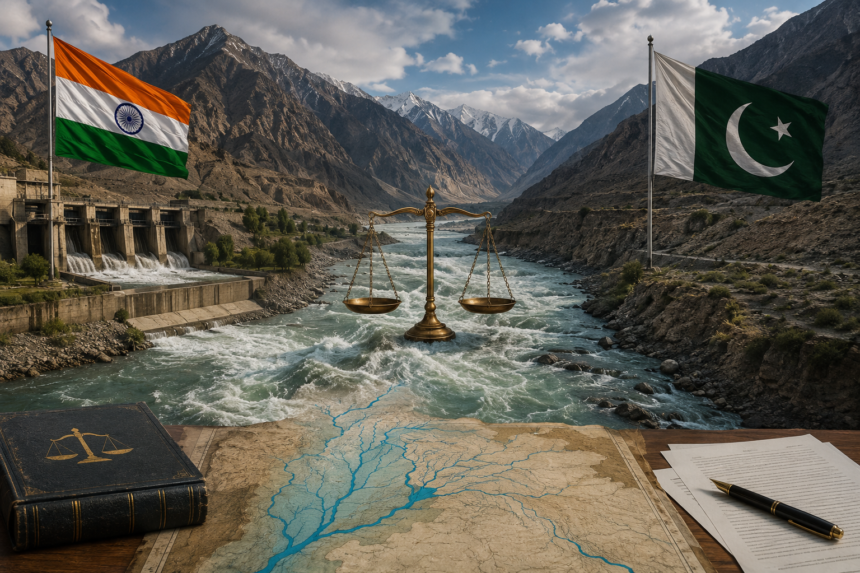
The Permanent Court of Arbitration (PCA) in the Hague on 15 May 2026 has declared India’s unilateral decision regarding the IWT unlawful and stated that under international law, India cannot independently store water through any hydropower project on the western rivers. The court further ruled that India must share all technical information and operational data related to water resources concerning the Kishanganga and Ratle hydropower projects with Pakistan.
Pakistan welcomed the ruling of the PCA on the IWT and described it as a failure of the Indian narrative and a victory for Pakistan’s position. The court upheld Pakistan’s stance as being grounded in justice and rejected India’s arguments.
The court’s observation that India cannot unilaterally suspend or render the IWT ineffective exposed India’s rigidity and insolence toward Pakistan. It is no secret that since the creation of Pakistan, India has allegedly sought to undermine its security, through wars as well as what Pakistan describes as water aggression. Sometimes, this has involved releasing excessive water toward Pakistan to cause flooding, while at other times restricting water flow in an attempt to turn fertile land into barren desert, which caused severe hardship.
The IWT was brokered under the supervision of the World Bank and established to address India’s stubbornness and the water disputes that had emerged between the two countries. Under the agreement, Pakistan’s rights over the waters of the Indus, Jhelum, and Chenab rivers were recognized. However, India violated the spirit of the agreement by constructing numerous small and large dams on these rivers, with the intention of consolidating control over their waters.
On 21 April 2025, following the Pahalgam false-flag operation, India unilaterally suspended the IWT and restricted the flow of water toward Pakistan. In response to this unlawful action, Pakistan raised the issue at international and regional forums and also approached the PCA.
Certainly, the ruling of the PCA has made it clear that no party can unilaterally terminate or suspend this historic agreement. The decision has not only strengthened Pakistan’s position but has also declared India’s narrative through which it sought regional water dominance as unlawful. The verdict concedes that the IWT is the foundation of peaceful water-sharing in South Asia and that any violation of it could adversely affect peace and stability across the region.
Pakistan has constantly raised this issue in accordance with international law, while India has repeatedly attempted to undermine the spirit of the treaty. India’s policy of using water resources as a tool of political and security pressure is not only opposed to international law but also violates humanitarian principles.
Therefore, the arbitration court’s ruling serves as a strong rebuttal to what Pakistan considers India’s deceptive designs against it. Following this verdict, the international community should also urge India to fully comply with the IWT, because lasting peace and cooperation in the region can only be ensured through respect for international agreements.
The author is a senior researcher at CDS and a PhD scholar in Peace and Conflict Studies. Her research focuses on terrorism and extremism. Her work also focuses on peace-based approaches to economic development, growth, and regional cooperation. She also writes on geopolitics, regional security, and global power dynamics.