

Asif Haroon Raja
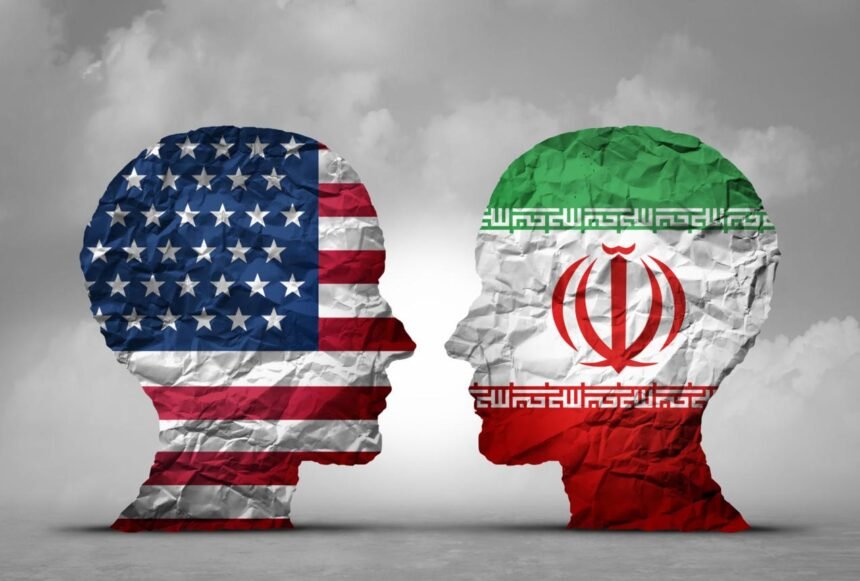
The Trump administration presented Iran with a fifteen-point framework for peace and normalization. Tehran’s response was not a counteroffer in the conventional diplomatic sense. It was a categorical rejection, followed by a counterproposal that effectively demanded the withdrawal of the entire American military presence from the Middle East.
To understand the scale of the disagreement, it is important to examine the principal elements of the American framework and the reasoning behind Iran’s rejection.
The American Fifteen-Point Framework
Points 1–3: Complete Dismantlement of Iran’s Nuclear Program
The first three points called for the total dismantlement of Iran’s nuclear infrastructure — including all centrifuges, enrichment facilities, and associated capabilities.
This demand appeared contradictory to earlier American claims that Iran’s nuclear program had already been destroyed, or rendered ineffective through military strikes. Both assertions cannot simultaneously be true.
Either:
The nuclear infrastructure had already been destroyed, making dismantlement unnecessary; or
The infrastructure survived, implying that earlier official claims were overstated.
The framework itself implicitly acknowledged that key components of the program remained intact.
Point 4: Transfer of Enriched Uranium
Iran was asked to transfer its stockpile of enriched uranium to the IAEA under international supervision.
From Tehran’s perspective, such a transfer would mean surrendering strategic leverage without any guaranteed mechanism for recovery should the agreement later collapse.
Points 5–7: Closure of Natanz, Isfahan, and Fordow.
The framework reportedly demanded the closure of the nuclear facilities at Natanz, Isfahan, and Fordow — sites that had already been targeted during the conflict.
The very demand for closure suggested that these facilities, despite repeated strikes and the use of advanced bunker-buster munitions, had not been completely neutralized.
Point 8: Unrestricted Inspections
The United States also sought unrestricted inspection access across Iranian territory.
This exceeded the inspection arrangements under the 2015 JCPOA and, from Iran’s viewpoint, crossed into an unacceptable infringement upon national sovereignty.
Tehran viewed such unrestricted access as incompatible with the rights of an independent state.
Points 9–11: Severing Regional Alliances
Iran was asked to terminate its relationships with Hezbollah, the Houthis, and allied militias in Iraq and Syria.
For Tehran, these networks constitute a central pillar of its regional deterrence strategy, developed over four decades specifically to offset American and Israeli military superiority.
Dismantling them would fundamentally alter Iran’s regional posture.
Points 12–13: Restrictions on Missile Capabilities
The framework also sought limitations on Iran’s missile program, which Iran considers its principal conventional deterrent.
Western and Israeli sources dispute many of the battlefield claims made by Iranian media regarding the destruction of advanced American assets. Nevertheless, Tehran continues to portray its missile capability as the central factor preventing direct military coercion.
Points 14–15: Conditional Sanctions Relief
In return, Iran would receive sanctions relief, but with automatic “snapback” provisions allowing the United States to reimpose sanctions unilaterally if Washington judged Iran to be in violation of any part of the agreement.
From Tehran’s perspective, this meant that the United States would retain full leverage while Iran would permanently surrender much of its strategic deterrent capability.
Tehran’s Perspective
Iranian officials viewed the proposal not as a peace settlement, but as a demand for strategic capitulation.
Their distrust was rooted in several developments over the past decade:
- The American withdrawal from the 2015 nuclear agreement despite Iranian compliance verified at the time by international inspectors;
- The assassination of General Qasem Soleimani in Baghdad;
- Continued sanctions despite intermittent diplomatic engagement; and
- Military strikes conducted during periods of negotiation.
From Tehran’s viewpoint, the framework required Iran to surrender its deterrent capabilities in exchange for promises that could later be revoked unilaterally.
Iran’s Counterposition
Iran’s publicly stated position was equally uncompromising.
Tehran reportedly insisted that any future negotiations would require:
the withdrawal of American military forces from the region;
an end to military pressure;
guarantees against future aggression; and
recognition of Iran’s sovereign rights.
Iranian officials also sharply criticized the credibility of the negotiating process itself, describing some American interlocutors as untrustworthy and accusing Washington of using diplomacy as a tool of pressure rather than reconciliation.
Statements issued by the Islamic Revolutionary Guard Corps (IRGC) reflected a tone of defiance rather than concession.
Iranian messaging consistently sought to project resilience and strategic confidence.
Competing Narratives of the War
The dispute is no longer merely about nuclear enrichment or sanctions. It reflects two entirely different interpretations of the outcome of the conflict.
The American View
The American position appears to rest on the assumption that sustained military and economic pressure has weakened Iran sufficiently to compel major concessions.
Under this interpretation, Tehran’s alternatives are so costly that it will eventually accept terms previously deemed unacceptable.
Iran presents the conflict differently. Tehran argues that:
its state structure survived sustained military pressure;
its missile and regional deterrence systems remain operational;
maritime leverage around the Strait of Hormuz persists; and external support from Russia and China has prevented strategic isolation.
The key issue is not necessarily the factual accuracy of every battlefield assertion, but rather Iran’s own perception of the strategic balance.
Iran’s rhetoric and negotiating posture indicate that it does not believe itself to be in a defeated position.
The Wider Geopolitical Dimension
China’s Position
China has adopted a cautious but increasingly active diplomatic posture.
Beijing’s primary concern is not Iran’s nuclear program, but the stability of energy routes, especially the Strait of Hormuz, through which a substantial portion of global oil and LNG supplies pass.
China therefore seeks:
de-escalation of the conflict;
uninterrupted maritime commerce; and
prevention of a broader regional war that could destabilize global energy markets.
At the same time, Beijing is positioning itself as a diplomatic counterweight to Washington by advocating restraint and negotiated settlement.
The Gulf States
The Gulf monarchies remain deeply concerned about escalation.
While many GCC States share concerns regarding Iran’s regional ambitions, they are equally fearful of becoming direct battlegrounds in a wider war between the United States, Israel, and Iran.
This explains repeated Gulf efforts to encourage de-escalation and avoid attacks on energy infrastructure.
Iran’s Reported Five-Point Proposal
Iran’s own proposals reportedly included:
an immediate end to hostilities;
removal of sanctions;
release of frozen Iranian assets;
guarantees regarding maritime security and sovereignty; and
credible assurances against future military aggression.
The United States, however, maintained that any settlement must first address Iran’s nuclear and missile capabilities.
Escalation and Uncertainty
Despite intermittent diplomatic signals, the rhetoric from both sides has remained volatile.
President Donald Trump repeatedly warned Tehran of severe consequences if American demands were rejected, while Iranian officials continued to insist that the country was prepared for prolonged confrontation if necessary.
At the same time, both sides periodically signaled openness to indirect diplomacy, suggesting that neither fully seeks an uncontrolled regional war.
Role of Regional Spoilers
The conflict environment has also become increasingly vulnerable to covert operations, proxy attacks, drone strikes, cyber disruption, and disinformation campaigns. Israel is the villain of the peace and is using the UAE as its proxy.
In such a volatile environment, attribution becomes difficult and every incident risks triggering broader escalation. Competing narratives from regional actors further complicate the search for diplomatic off-ramps.
Conclusion
The present crisis reflects far more than a disagreement over nuclear enrichment. It is fundamentally a struggle over regional order, deterrence, sovereignty, and the balance of power in the Middle East.
The United States seeks to curb Iran’s military and strategic reach. Iran seeks security guarantees, sanctions relief, and recognition as a regional power unwilling to negotiate under coercion.
The central problem is that both sides appear to believe they possess leverage sufficient to force the other into eventual compromise.
As a result, diplomacy remains trapped between two incompatible narratives:
Washington believes pressure can compel compliance;
Tehran believes resistance can compel accommodation.
Until that contradiction is resolved, the region is likely to remain suspended between uneasy diplomacy and the constant danger of wider war.
About the Author
Brigadier (Retd) Asif Haroon Raja, SI (M) is a war veteran. He is Command and Staff Course and War Course qualified, holds an MSc in War Studies, and served as Defence Attaché in Egypt and Sudan, as well as Dean of the Corps of Military Attachés in Cairo.
He is a defence, security, and geopolitical analyst, international columnist, author of five books, former Chairman of Thinkers Forum Pakistan, Patron-in-Chief of Centre for Development Studies Think Tank, Director of Meesakh Research Centre; he regularly appears on media platforms.
Lorem ipsum dolor sit amet, consectetur adipiscing elit. Ut elit tellus, luctus nec ullamcorper mattis, pulvinar dapibus leo.